

Photos by Wendi Poole
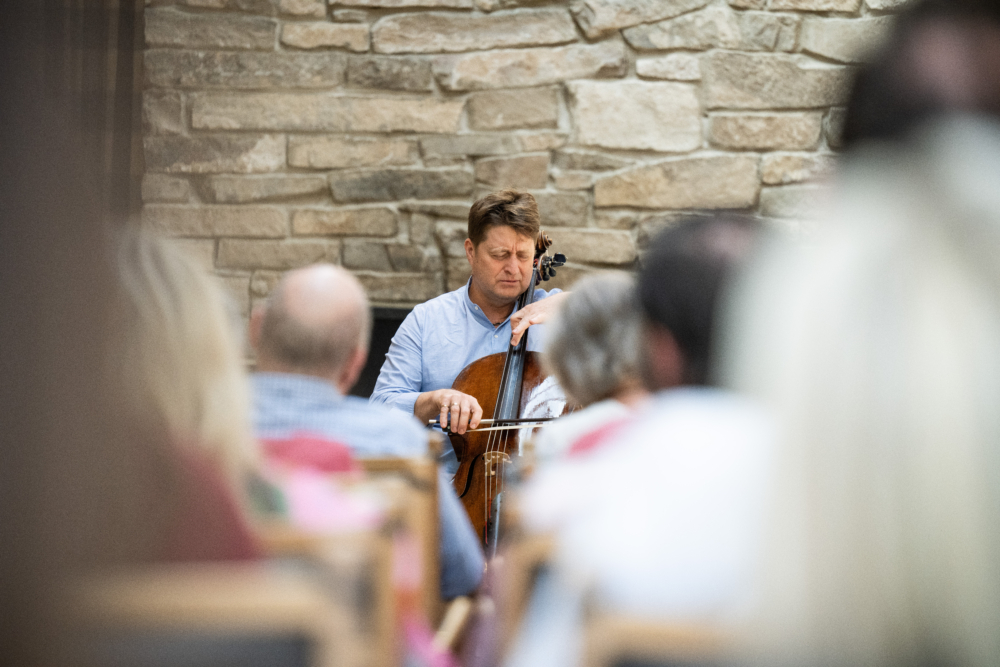
At Laity Lodge, without any coordination among musicians, all creatures tend to sing the same hymns time and again.

ith full bellies from a glorious, tone-setting meal, Laity Lodge guests shuffle leisurely into the Great Hall for the first time during their long weekend stay. Taking note of the cool evening breeze and the nighttime sounds of crickets and cicadas in the Canyon, their senses have already become more attuned to all that surrounds them. They take their seats together in the Great Hall, perhaps expecting too soon join together in song.
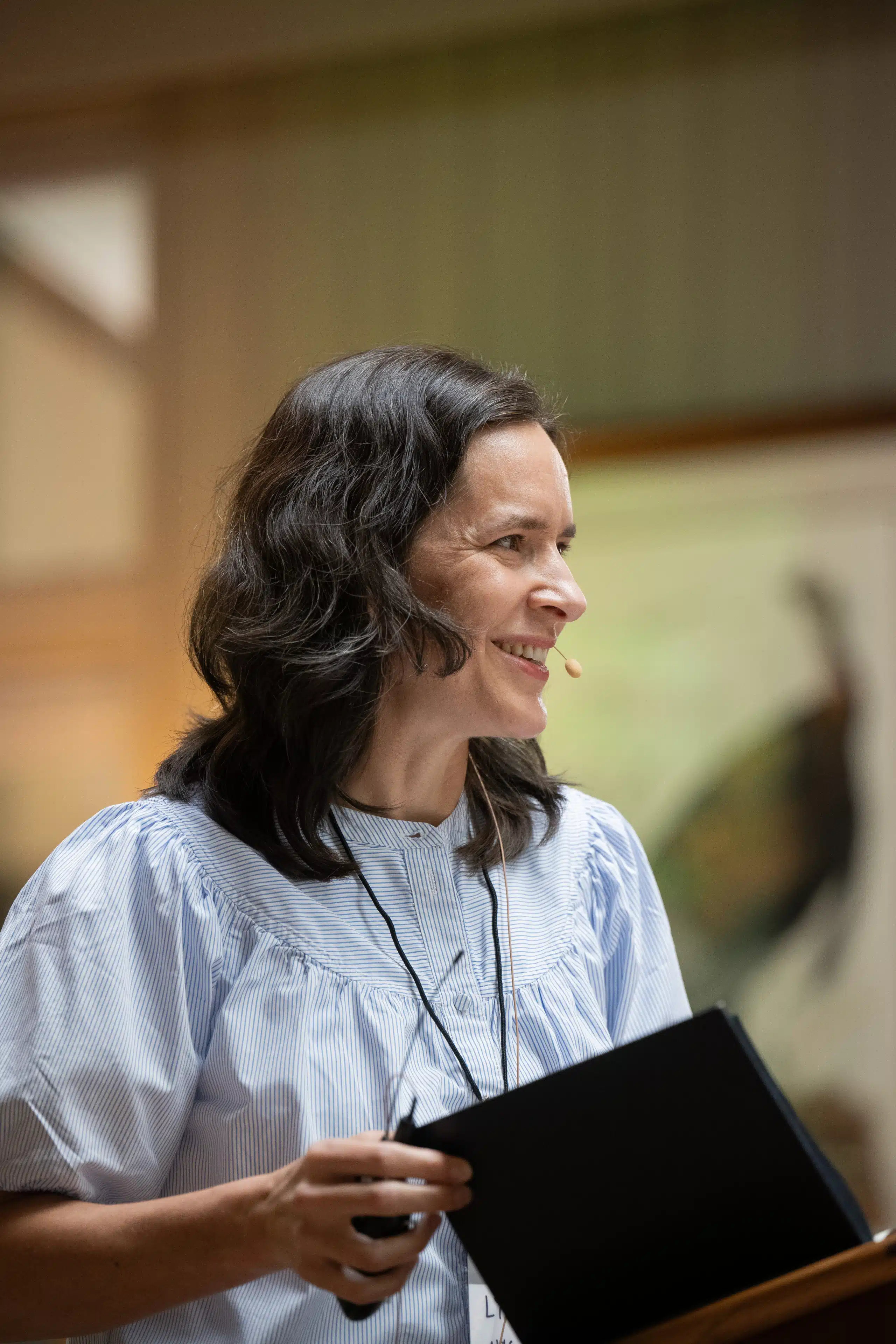
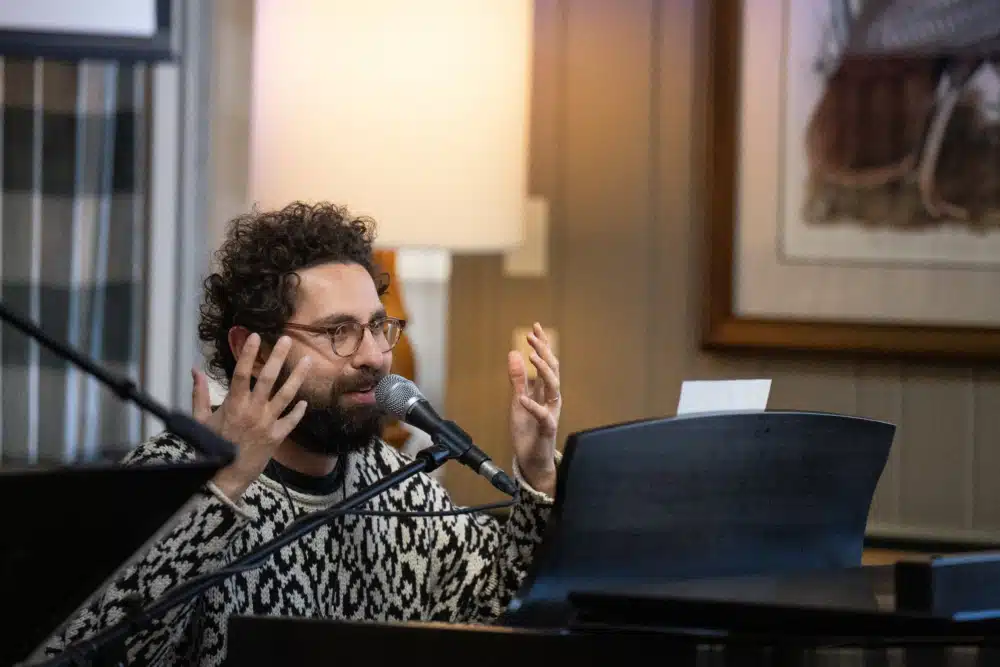
While Lodge musicians often play a song for guests on the first night, “we purposely don’t sing a congregational song,” Hannah Smith, Laity Lodge hospitality manager notes. “It’s a way to sort of take down as many barriers as possible and ease people in.”
That first evening is the start of a weekend of introductions and gettingto-know-you’s. Of unplugging and engaging. Of connecting over meals. Over art projects. Over learning and growth. And—starting the next morning—through singing together.
And although musicians who lead worship at the Lodge for retreats can choose any songs they’d like for the weekend, there’s a good chance that many of the songs they lead will be hymns.
Laity Lodge doesn’t prescribe or require hymns of musical artists, though if they ask what sorts of songs work well in the space, the team will note that hymns are always a safe bet.
Why is that? Laity Lodge brings together guests of varied backgrounds. Denominations and worship traditions run the gamut. Even denominations that sing hymns may have different hymnals, with only some of the songs overlapping.
But these hymns, steeped in tradition—well worn, tried and true— have stood the test of time for a reason.
In fact, hymns have been sung for centuries, with the word “hymn” deriving from the Greek word “hymnos,” meaning “a song of praise,” originally referencing a variety of religious and celebratory songs. By the 16th century, hymns saw a significant uptick in popularity, spurred by the advent of the printing press, which allowed for the printing of hymnals.
And so, just as it has for two thousand years all over the world, music plays an integral role in a weekend retreat at Laity Lodge. On day two of retreats, guests, refreshed from a cozy night’s sleep and cheerful breakfast banter, return to the Great Hall for the first session of the weekend—including the first songs sung together.
Although musical artists have hundreds of hymns to choose from and do not confer with each other while planning, over the years, Lodge staff has begun to see a pattern in the leaders’ selections. A handful of songs show up time and time again: “This is My Father’s World,” “For the Beauty of the Earth,” and “All Creatures of Our God and King.”
All three songs have an obvious commonality: strewn throughout the memorable lyrics is picturesque nature imagery—descriptions of the wondrous works of God’s creation.
And it only takes one visit to the Frio River Canyon, home of Laity Lodge, to understand what inspires musicians to choose hymns filled with nature references. Long-time featured Lodge musician Sandra McCracken says, “I remember hearing about this place, and it sounded like something from another planet.” Lodge mainstay Jon Guerra says, “It feels as though you’re walking into a worship service, just in creation. So, the trees are singing, the hills are singing, the Canyon is singing. And so, when we sing, it feels like we don’t have to be that loud or forceful. We just need to join the song that’s already happening.”
Kevin Germer, the associate director of Laity Lodge, echoed the sentiment, saying, “the Lodge affords space and time for people to get connected with that beauty in a unique way and maybe to reflect on it differently.”
“… the trees are singing, the hills are singing,
the Canyon is singing …
we just need to join the song
that’s already happening.”
Without cell phone service and enveloped in natural splendor at nearly every turn, guests find it easier to reflect. People simply feel more in touch with it all out there. At night, the stars shine so brightly, guests look up and stop in their tracks, marveling at what so many miss due to light pollution in big cities. McCracken remarks, “When we go out in creation, when we put our feet on the grass barefoot, when we jump into Blue Hole, it’s like this experience is … what we’re made for.”
And, of course, it’s not just the environment or the specific songs that move guests. The act of singing together is itself significant. Researchers have discovered notable physical benefits related to choir singing, such as regulating heart rate (choral singers’ hearts begin to beat in unison) and improving immune function. Singing together can also lead to substantial psychological benefits, including improving feelings of social well-being, reducing stress and depression, and deepening feelings of togetherness.
It all makes sense, really. That feeling of togetherness—the feeling of open arms, of all are welcome and all are seen—is central to the ethos of Laity Lodge. The nature, the singing, the hymns, they’re all a part of the hospitality that is fundamental to the core of the place.
By the end of day three, previously timid voices now sing with more confidence and passionate praise. These hymns, with words of sober humility—coupled with the faithfulness of God to meet us exactly where we are—read like shared prayers.
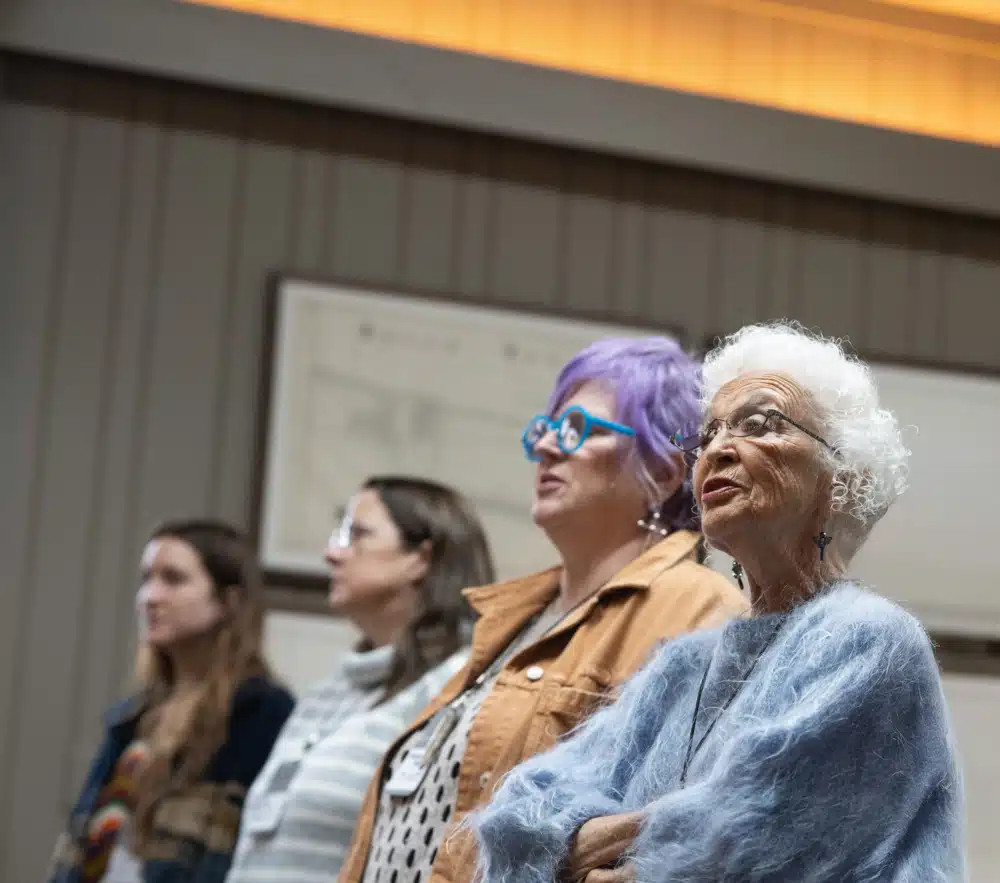
By the final day of the retreat, guests are sharing hymnals and singing as one. They have grown closer—in proximity and in feeling known. “It’s sweet to see people who you’ve spent the weekend with wiping a tear away or raising their hand or putting their arm around someone next to them [who just days before was a stranger]—it opens up this tenderness,” Hannah remarks. A comradery is borne around those hymnals (and around dining tables and river kayaks and pickleball courts, too).
Because no matter what’s going on in the world, no matter the circumstances of one’s life, there’s something about the beauty of nature and singing praises of gratitude to the God who created it all. It brings things into proper perspective. Just as familiar lyrics remind us,
“This is my Father’s World
O let me ne’er forget
That though the wrong
seems oft so strong,
God is the ruler yet.”

Little Love Notes From The Lord
First published as a poem in 1901 written by Rev. Maltbie Babcock and later set to music in 1915, “This is My Father’s World” includes lyrics such as,
“All nature sings, and round me rings
The music of the spheres,” and
“The birds their carols raise,
The morning light, the lily white,
Declare their maker’s praise.”
Similarly, “For the Beauty of the Earth,” first written as a poem by Folliott Pierpoint in 1864 and later set to a familiar tune, has well-known lines that include,
“Hill and vale, and tree and flower,
Sun and moon and stars of light:
Christ, our God, to Thee we raise
This our Sacrifice of Praise.”
And with recognizable refrains such as,
“Thou flowing water, pure and clear,
Make music for thy Lord to hear,
O praise Him! Alleluia.”
“All Creatures of Our God and King,” based on a poem written by St. Francis of Assisi in 1225, is one of the oldest known hymns, though it’s translation and publication as a hymn came much later between 1899 and 1919. Other favorites mentioned include “Come Thou Fount of Every Blessing,” “Great is Thy Faithfulness,” “Be Thou My Vision,” “Amazing Grace,” “It Is Well with My Soul,” and “Holy, Holy, Holy.”
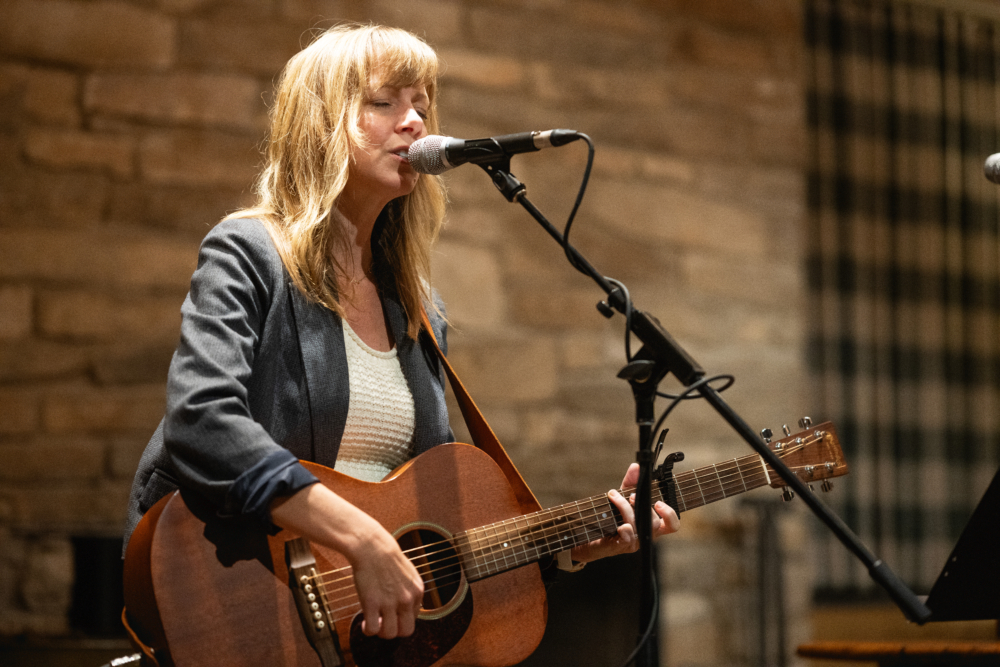
Ashley Cleveland, Grammy award-winning musical artist and friend of Laity Lodge shared why hymns like these move her and so many others, saying, “Sometimes in the middle of the night … when I was in such despair, out of nowhere, when I hadn’t thought of them for years, these hymns would just start floating through my mind. And I felt then, and I feel now, that they were little love notes from the Lord saying, “Hey, you are loved.”