

Photos by Wendi Poole
Dr. Lydia Dugdale’s research shows that hope is more than a careless wish—it’s fundamental to our health.
Closing his poem on love in 1 Corinthians 13, the apostle Paul declares that three things are eternal: faith, love, and hope.
We talk a lot about faith and love, but “hope” is one of those terms that can get used without much thought. We invoke it causally—hope you’re well, hope things turn around, hope for the best—even as we seem, at times, to distrust it as a concept. “Hope” can seem theoretical and lightweight, a placeholder for action, a weak response to whatever we can’t control.
But Dr. Lydia Dugdale sees hope differently. Hope is not a platitude, a sentiment, or a fingers-crossed wish. It’s a virtue, a discipline, and it’s fundamental to our health and our lives together.
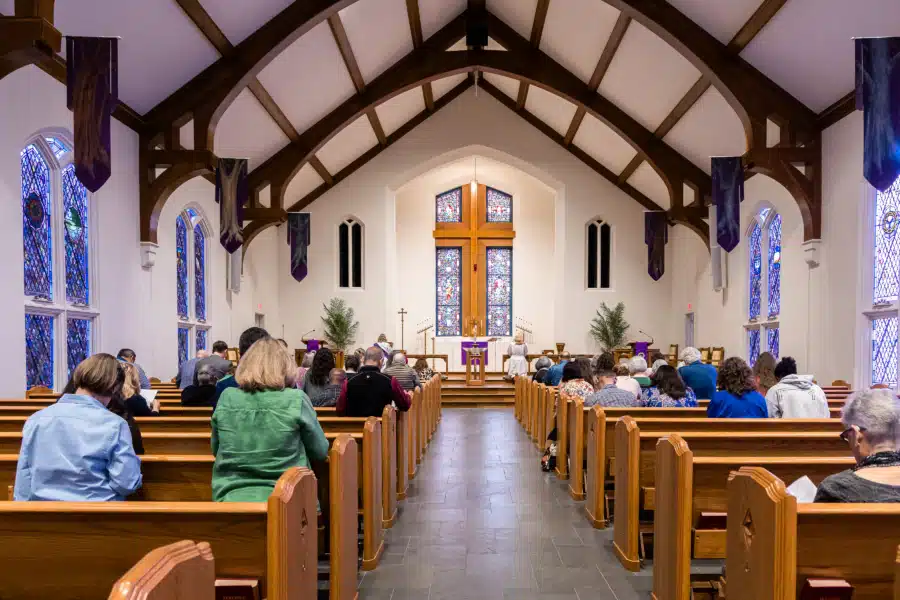
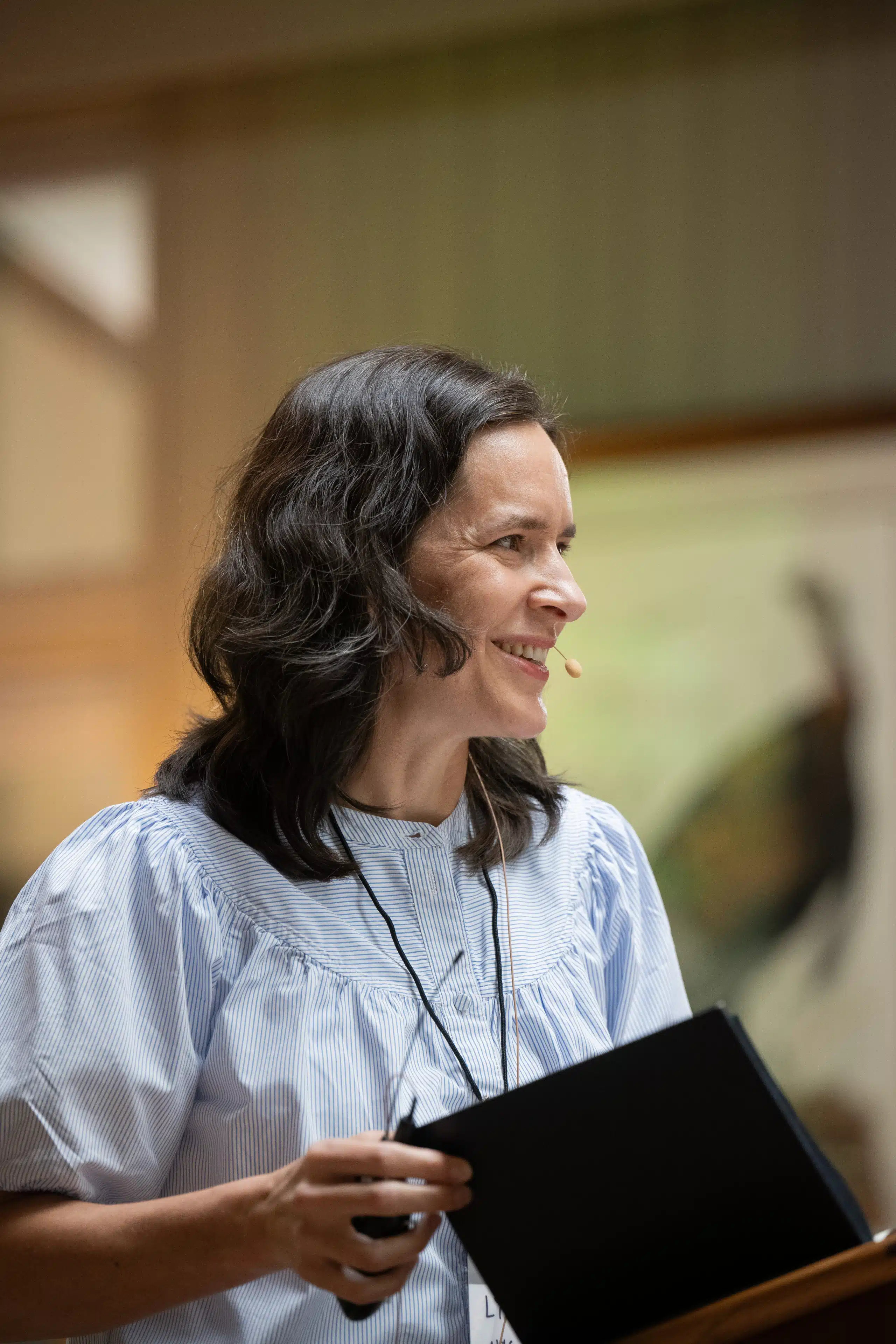
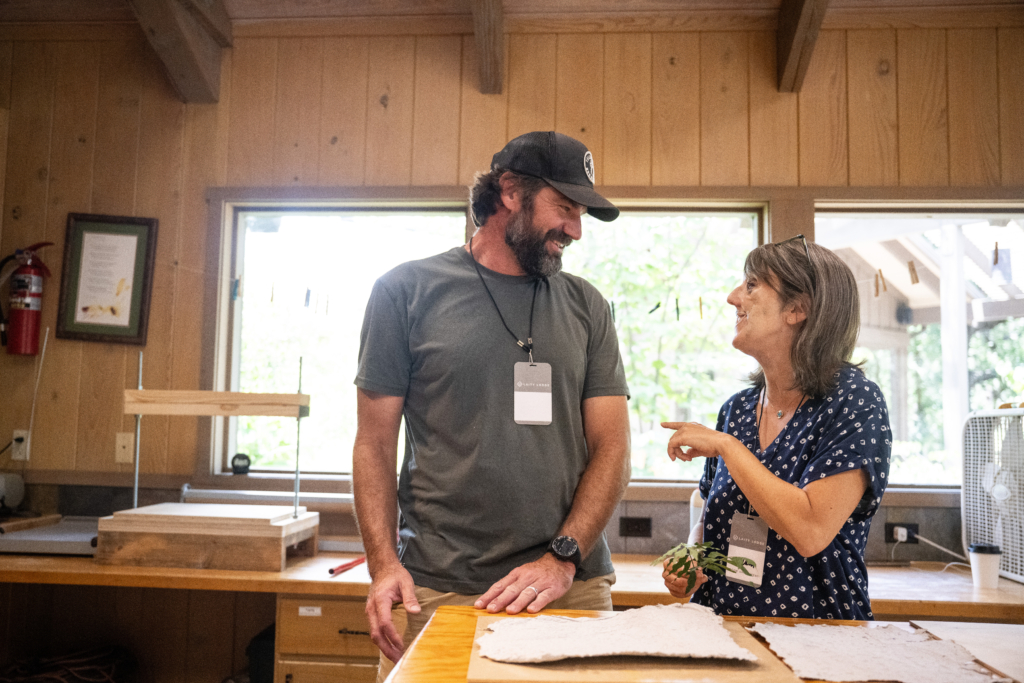
This July, Dugdale led a retreat at Laity Lodge, inviting participants to consider what it means to hope well. Dugdale is Professor of Medicine and Director of the Center for Clinical Medical Ethics at Columbia University. She’s spent years walking with patients through illness and death, listening in the quiet spaces where ultimate questions emerge. Her 2020 book The Lost Art of Dying explored ancient wisdom for rethinking how we prepare for death. Now, in the retreat and in her upcoming book on the virtue of hope, she turns to the spiritual, moral, and communal work of cultivating hope in a time that often hollows out its meaning.
Hope is Not a Feeling
Dugdale’s work as a doctor is key to her insights. Hope, after all, is a big part of medical care: patients hope to become well, doctors try to give patients appropriate hope, technologies offer hope that can seem miraculous. Hope and its inverse qualities, like despair, are an integral part of life in hospitals and doctors’ offices.
Dugdale became convinced that when we reduce hope to something we merely receive, we’re not seeing the full picture. “There’s a whole stream of Christian thought that says hope is a God-infused virtue, that you can’t actually work at hope – it’s either something God grants you or doesn’t,” she says. “But I’m persuaded by a number of thinkers that hope can be something we work at.” Drawing on ancient philosophical traditions as well as Christian theology, she says hope is a habit of character developed through repeated action: “We can exercise our hope muscles and get stronger at hope.”
Drawing on Aquinas, Dugdale defines hope as orienting and reorienting “toward a future good that may not be entirely clearly defined—a future good that is possible, yet difficult to achieve.” It’s not wishing or crossing our fingers, nor is it a passive Pollyanna posture. Instead, it’s continually directing our gaze and our actions toward something we believe is down the road, even as we leave our hands open to how and when that might happen, and fully commit to the endurance required to get there.
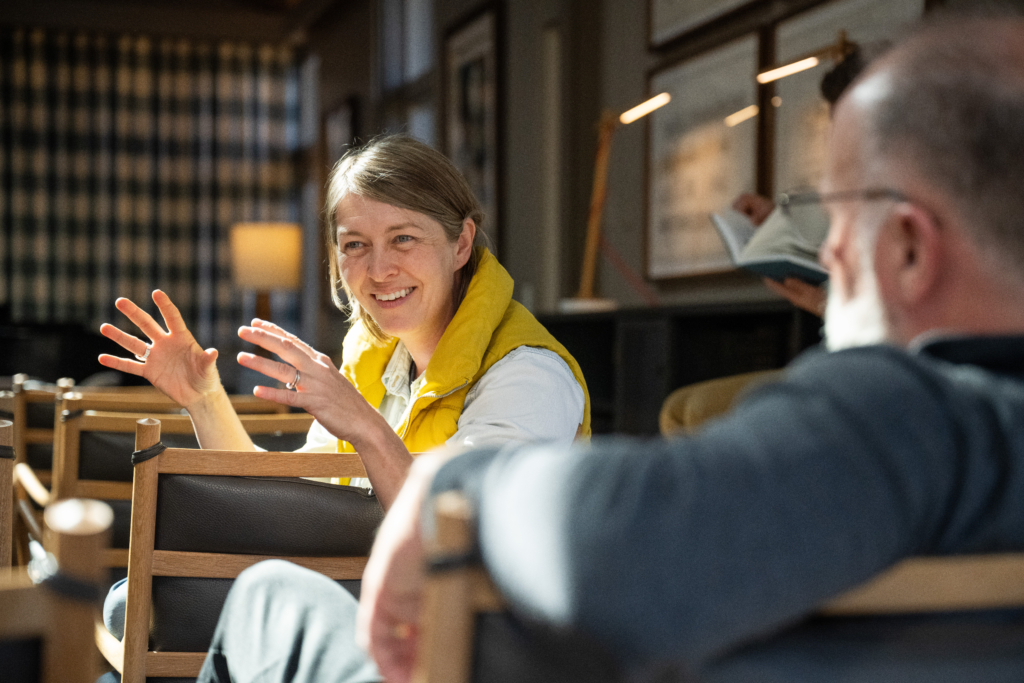
Endurance is key, even if it’s frustrating to admit. Dugdale says that what often gets in the way of our hope is our human tendency to avoid suffering as much as possible. “Nietzsche and others have said that ‘to live is to suffer,’” she notes. “And yet somehow, especially in the affluent West, we’ve bought into the idea that maybe suffering is optional, and if we just control things well enough, we’ll be fine. But that’s not at all the human story: we aren’t going to get everything we want, life is not going to be the way we expected it to be, and yet we don’t need to be trapped by that.”
Acknowledging the grief that comes with this suffering, and yet looking for the redemptive quality in it, is where hope starts. Dugdale points to Romans 5:3-5, in which Paul writes that “suffering produces perseverance; perseverance, character; and character, hope.” That progression goes far beyond wishful thinking: “Hoping is a long game. It’s not instant.”
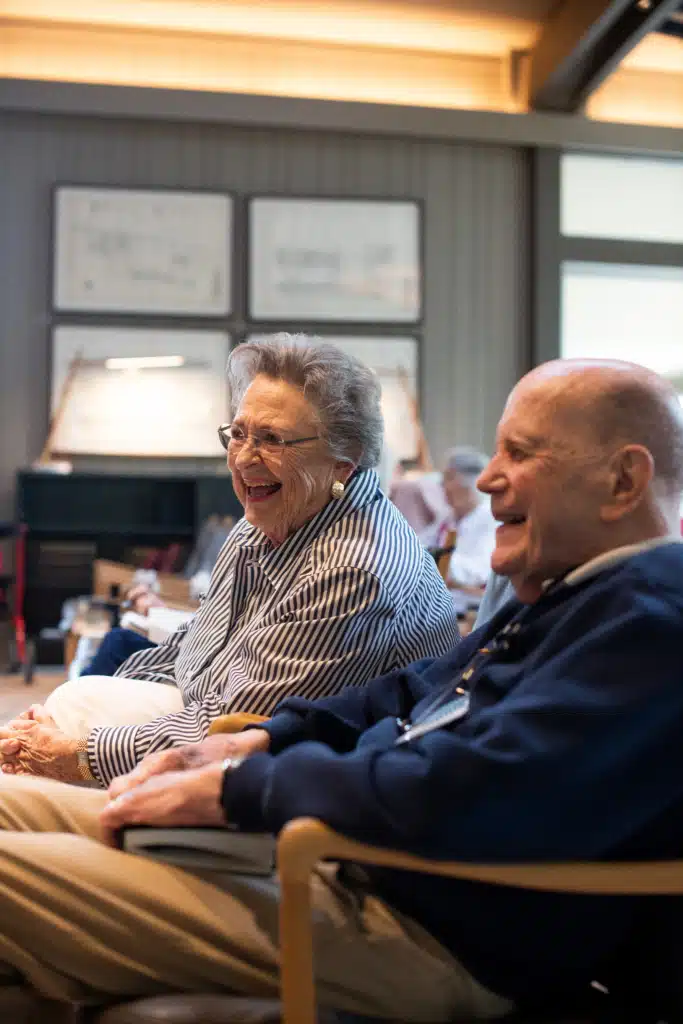
And like any habit, it’s shaped by the people around us: we learn how to hope from our community. Practicing hope is not only a personal effort. It’s a collective one. When we find that we can’t endure in hope, others can hope for us. And when they lose hope, we can hope on their behalf.

Hope in the Doctor’s Office
In her work as a physician, Dugdale sees patients and their loved ones struggle with false hope and despair all the time. But it’s not just the people being treated who grapple with hope; those who administer care are constantly caught in the tension, too. Augustine, she says, sees hope as the intermediary between despair on the one hand and false hope on the other. “The etymology of despair is ‘lack of hope,’” she notes. “But then too much hope is actually a false hope or a presumption.” Often, she says, patients and their loved ones want something that isn’t attainable at all, something specific—and that can create false hope, which leads to despair. “If we’re too specific about what it is that we’re yearning for, and we don’t get it, that’s a setup for despair,” she says.
The rise of medical technology has only sharpened this dilemma, because it can remove some of those vital elements of hope, like acknowledgement of the inevitability of suffering. “The whole medical machine has enabled us to live this illusion that mortality is optional,” she says. “Medical technology has given us a veneer of immortality that has caused us to not dig in and cultivate these deep virtues.”
Even technologies like CPR, which in reality has low success rates for elderly patients, are seen—largely thanks to TV portrayals—as foolproof interventions. “Most CPR doesn’t lead to successful outcomes, like it always does on TV,” she says. We have these expectations that this is the way it’s going to be with medicine.”
More recently, artificial intelligence has entered the picture, complicating our relationship with hope in medical situations. Culturally, we sustain a tricky relationship with AI: there’s a mix of fascination, trust, and fear in the air. Is AI a savior or a destroyer? Some people have started using AI to create avatars of loved ones designed to comfort their grieving families after their death, giving loved ones a way to “communicate” with the deceased beyond the grave.
“Somehow, we’ve been bought into the idea that maybe suffering is optional, and if we just control things well enough, we’ll be fine. But that’s not at all the human story.”
Dugdale is not a doomsayer about AI overall, but she’s cautious. “Grieving people naturally hallucinate about their loved ones, dream about them, think they’re hearing from their loved ones,” she says. “What AI avatars do is make that more concrete.” This may combat despair and bring comfort to the bereaved – but it can also be an attempt to bypass the long game of exercising the virtue of hope.
Dugdale points to the practice of lament, to expressing grief and moving away from despair and false hope toward what could actually be. It is a practice that’s both individual and communal.
Developing a spiritual practice of hope also involves imagination, because “you can’t hope for something you can’t imagine,” Dugdale says, citing psychologists who describe imagination as a train that runs on the tracks of knowledge.
We imagine best when we’re with others. Dugdale cites the Crow Nation, for instance, who would send their young people into the wilderness to await visions. When they returned, the community gathered to discern what those visions might mean for their collective future. We need to “come together in communities to imagine different possibilities for the future together, and iterate on those,” she says.
Communities can even prove vital to continuing our hope: “We can hope on behalf of others, and when we ourselves are unable to hope, and are feeling pulled toward despair, others can hope on our behalf.”
Hope as a Way of Being
Whether or not we’re currently living through a medical crisis, or supporting a loved one through a health struggle, we’re likely to face those at some point in our lives. Hope is key to living (and dying) well, Dugdale notes. And if hope is a virtue developed through practice, then it’s something we need to work on cultivating long before we’re facing the crisis moment.
Furthermore, for Christians, hope is one of the eternal virtues, an essential part of a life lived with Christ’s resurrection in sight. So how do we develop hope?
Dugdale resists reducing hope to a list of action steps. But she does offer a few starting points.
First, build community. This isn’t about gathering a mass of people around you to distract you from reality. Instead, it’s about intention and love. “We’re not talking about a collection of people. We’re talking about that one person who you know will be there for you no matter what—how are you working to cultivate that relationship?”
Next, we need to learn how to suffer well, and how to express our feelings with honesty and candor. That comes from practicing lament: honestly acknowledging when we feel grief, refusing to hide from it. We can write it down, pray it, and speak it together.
Small acts of contemplation are also part of this practice: journaling, reading and meditating on Scripture, experiencing stillness, dwelling alongside others. “I heard a woman say recently, ‘If you have trouble loving people, you should just look them in the eye,’” Dugdale said.
And for Christians in particular, Dugdale emphasized that hope is rooted in more than practice. It comes entwined with love and faith. But the faith that provides a foundation for hope is not blind faith—it’s a deep trust because others have proven themselves trustworthy. “Faith is actually rooted in the truth of the resurrection, the claim of the resurrection,” she says.
In other words,hope is not escapism.It is enduring, staying in the room, living in community even when it’s tough. It’s imagining a future good and repeating it to one another, day after day. Hope begins in the present, acknowledges suffering, and yet turns toward what might be. To live with hope is a practice: to keep orienting yourself toward the future good—even when we must lean on others to help us imagine it.
“If hope is a virtue developed through practice, then it’s something we need to work on cultivating long before we’re facing the crisis moment.”