

How sacred spaces make us more human.
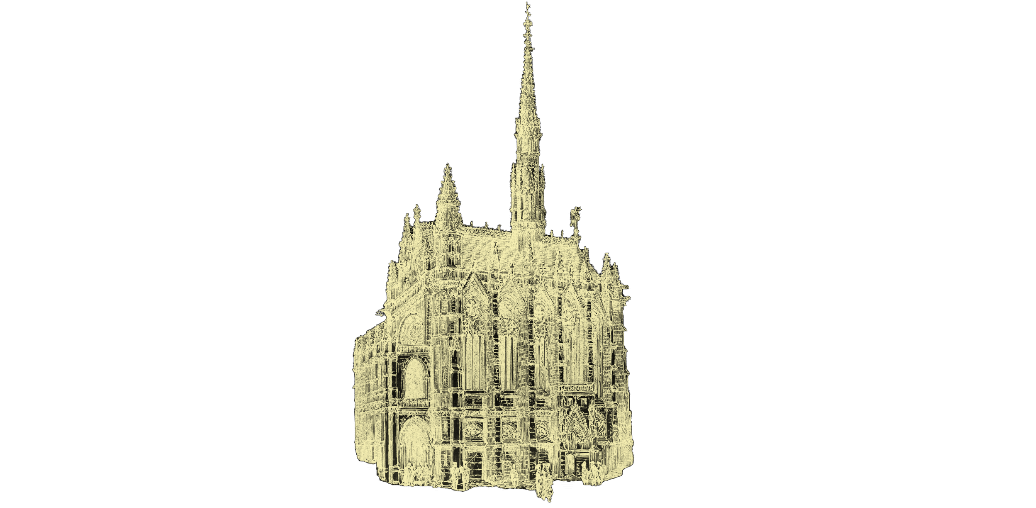
Among the most stunning of Europe’s spectacular churches is Sainte-Chapelle, a Gothic chapel consecrated in 1248 and located only a few blocks from the Notre-Dame Cathedral in Paris. King Louis IX of France, who was known to be very devout, wanted a royal chapel to house his beloved relics of Christ’s Passion. He needed a building suited to such a task. He needed somewhere sacred.
Many people assume sacred buildings are those set apart for religion: a church, a synagogue, a mosque, a temple. But architect Rick Archer, a founding principal and design principal at Overland Partners, sees it a little differently. “The most sacred spaces are profoundly provocative,” he says. “They provoke us to a different place.”
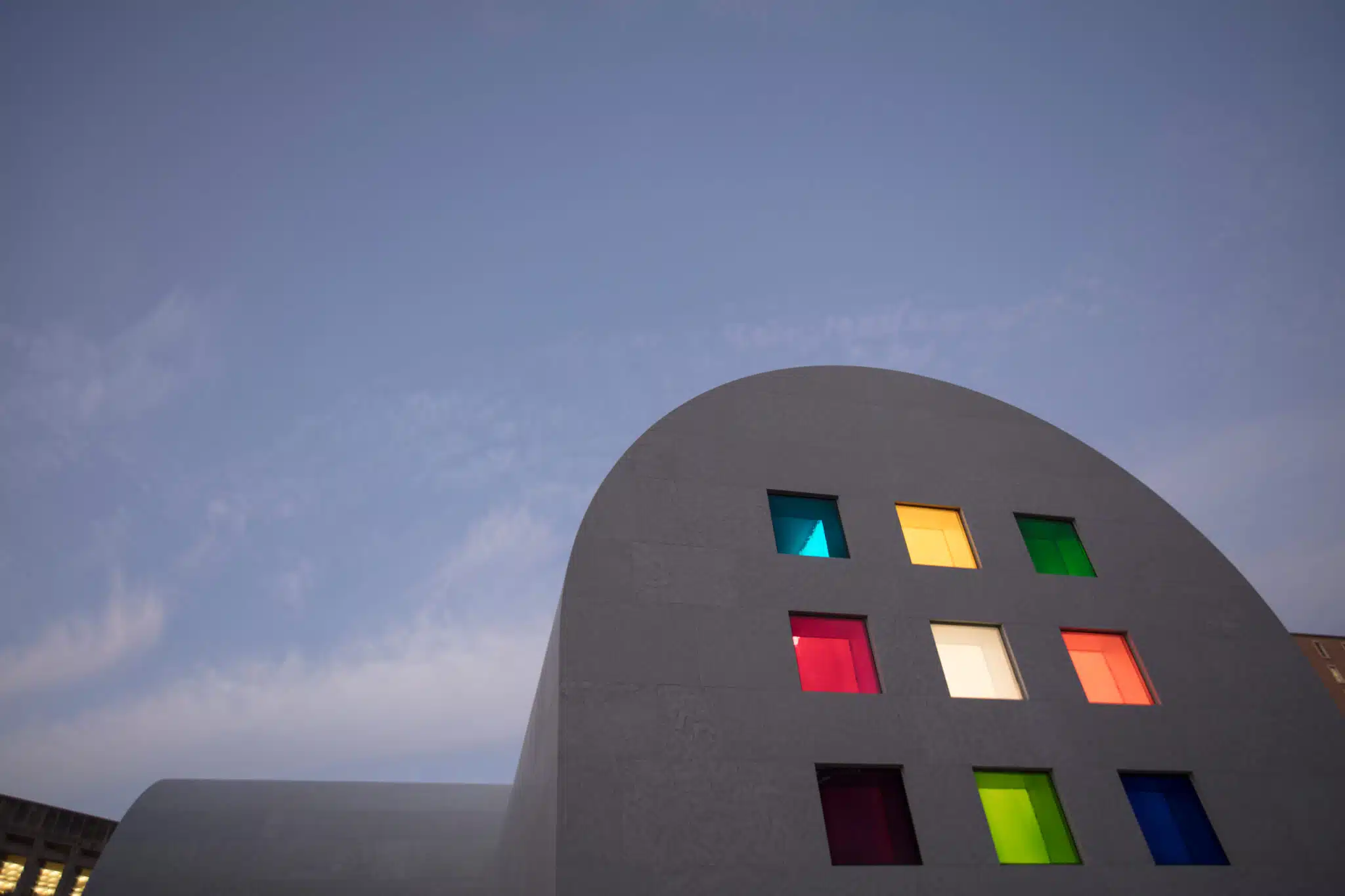
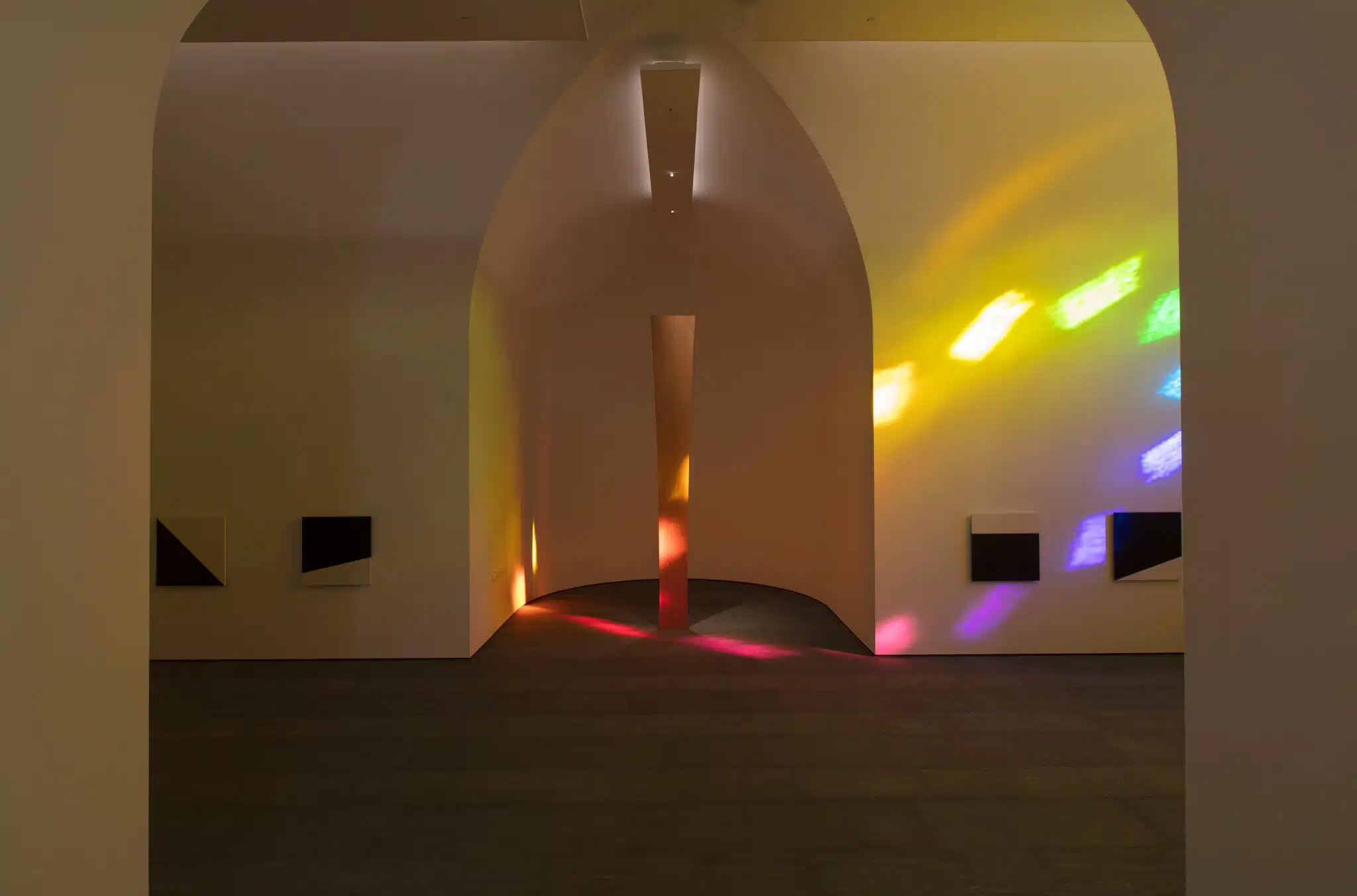
Recently, Archer was part of a private retreat at Laity Lodge exploring this topic. He certainly has worked on many spaces that might be called sacred, including projects with Laity Lodge and the H. E. Butt Foundation. His projects include Austin, an immersive installation designed by the artist Ellsworth Kelly on the grounds of the Blanton Museum of Art at the University of Texas at Austin; Lady Bird Johnson’s Wildflower Center; and a series of gardens at the Children’s Hospital of San Antonio. Every one of these places is sacred, in their own way: they are spots for encounters, both among humans and between humans and the divine. Archer, who is a practicing Christian, sees their sacredness as rooted in their ability to connect with visitors in a way that goes far beyond the intellect. “These places are inviting us into a relationship with them that takes us someplace we wouldn’t go on our own,” he says. “And I think perhaps, in some ways, our presence there actually changes them.”
That’s certainly the case for Sainte-Chapelle.
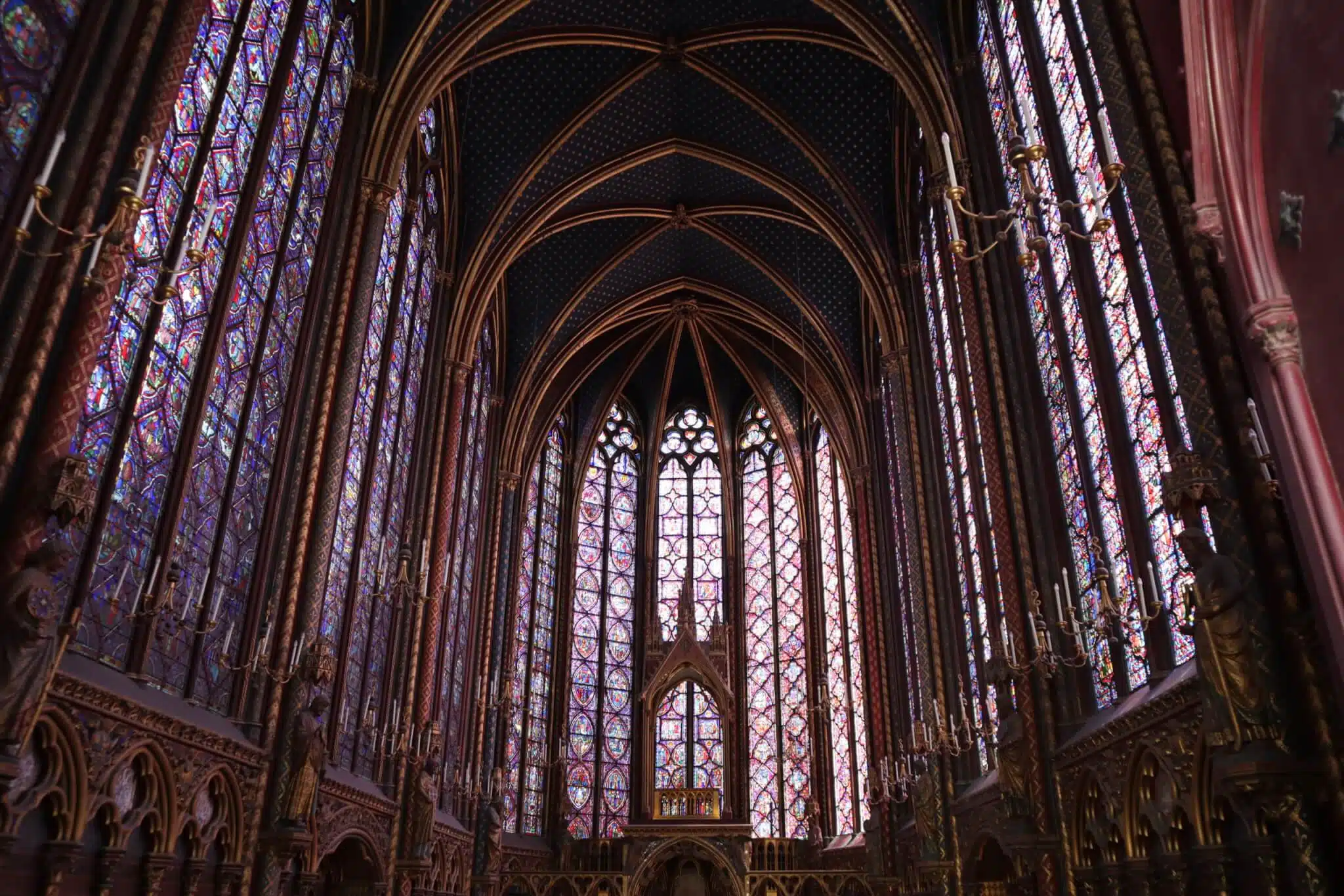
When you climb a narrow staircase and emerge into the upper chapel, the building’s true glory is unleashed—especially if you catch it just when the light is right. An almost unimaginably glorious series of stained-glass windows await, with intricate illustrations and patterns that turn the sunlight to something like rose gold. Its organizing principle is obvious: Fiat lux. Let there be light.
Even to the jaded visitor, Sainte-Chapelle’s luminosity can provoke a gasp, a catch in the throat, or tears in the eyes. It’s not easy to put into words (or, to many a tourist’s dismay, to catch in a snapshot). One might say it’s beautiful, or stunning, or even transcendent, lifting the observer briefly away from earthly realities and into what feels like another realm. Sainte-Chapelle operates not just on the visitor’s mind, but their body. Standing inside the chapel, we become part of its work. The light reflects off our retinas and our skin, and the divine glory it’s designed to harness and illustrate permeates us, in a way that’s tangible. In turn, our bodies trap and reflect the light, changing the shape of the rays as long as we remain. It’s as if we’ve crossed a border from earthly realities into some glimpse of the heavenly realm.

The simple experience of being a body in the midst of Saint-Chapelle’s light somehow shifts the attention outward and upward; visitors instantly lift their heads and crane their necks, a physical interaction with the physical space. And though it would be easy to believe that all of the best sacred spaces were made long ago, the truth is that sacred space is everywhere we look, no matter the era.
It might be helpful to think of sacred space in metaphorical terms borrowed from the contemporary philosopher Jean-Luc Marion, who writes about the contrast between idols and icons. When we look at an idol, it arrests our attention toward only itself. But an icon points our gaze toward something beyond itself. It redirects our attention toward what might otherwise remain unseen. In religious art, an icon is thought of as a window into a greater reality, a way to prompt us toward contemplation and come away changed.
A sacred space, then, might be thought of as an icon we can walk around inside. A truly human-focused space, one designed for visitors to stay a while and slip into a state of contemplation, will engage all of the senses and honor a person’s bodily presence.
Take Austin, for instance, the shape of which is influenced by Romanesque churches but purposely omits any explicit religious imagery.
The late Ellsworth Kelly, an eminent Modernist painter and sculptor who designed the space, considered himself an atheist and resisted the idea that art has to have “meaning.” However, Archer says that when Kelly took on the commission, “he wanted to create a place of profound joy.” Through shape, light, color, and space, he succeeded, creating an environment in which the rotation of the earth and the passage of time affect the way hues shimmer and settle across the walls, floor, and fixtures. Archer tells a story of an acquaintance suffering from intense depression who entered Austin and experienced, for the first time in his life, profound peace and healing. “Some of it’s the color, the quality of the light, the proportions of the space, the attention to detail, even the sound in the space, which is very reverberant,” he explains. “It truly is extraordinary.”
A Threshold to A Sacred Space
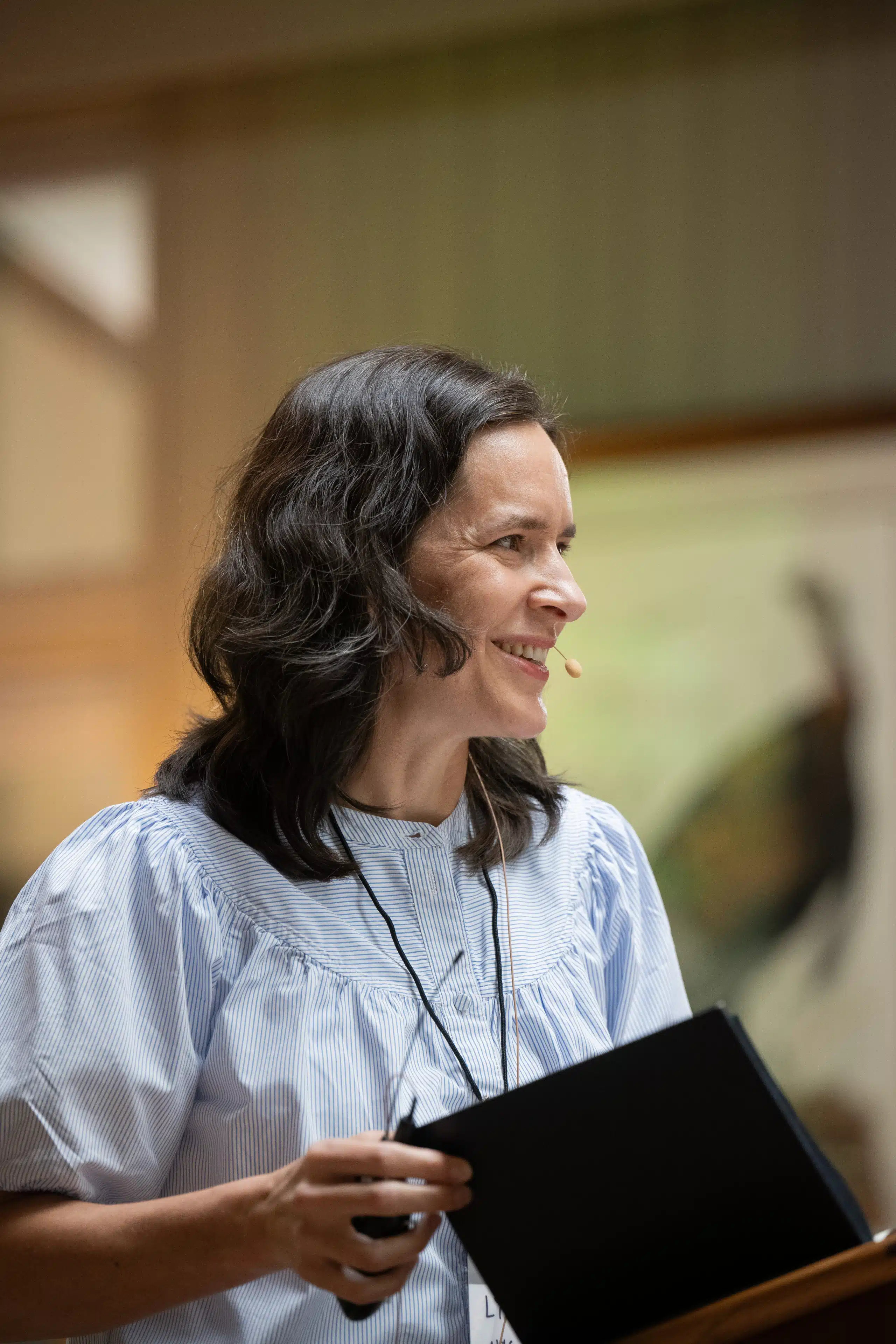
New York-based architect Amanda Iglesias, whose research focuses on expanding the church’s architectural imagination, thinks of a well-designed sacred space as a kind of doorway. “The architecture actually acts as a threshold,” she said. “It’s this beautiful place of anticipating, and it’s conversational. It’s dynamic.” In her work, she sees these kinds of spaces around the world, in buildings that employ all kinds of architectural vocabulary, styles, and references. To Iglesias, a great church building tunes into humans as not just thinkers, but desiring beings that experience longings for something beyond ourselves. “A good and beautiful church doesn’t satisfy, but stokes and ignites,” she says.

Both Iglesias and Archer acknowledge the role of beauty in a sacred space, while noting that “beauty” can be viewed as a dirty word in architecture circles, associated with an attachment to a shallow and decorative aesthetic ideal rather than a robust attention to function, form, and history. “We’ve associated beauty with some surface level question: What does something look like?” Archer explains. “But I think it is so much deeper than that. It’s about excellence, and it’s about integrity, and it’s about proportion. And for me, it has to be rooted in some deeper sense of meaning.”
These are important considerations for designers of churches and other buildings for worship, but they’re not restricted to those more traditionally “sacred” spaces. The same principles apply in designing and cultivating places of joy and peace in homes and other more domestic spaces. After all, Iglesias points out, in pre-Constantinian history, Christians gathered exclusively in homes. “The best architecture elevates the everyday,” she says. “It takes ordinary material and subverts your assumption about what that should look like.” A well-designed home “understands the heartbeat of how a person lives and what drives them, and their home is basically a portrait of that person.”
“Beauty is about excellence, and it’s about integrity, and it’s about proportion. And for me, it has to be rooted in some deeper sense of meaning.”
Archer sees this as a matter of importance even in a domestic setting. Even when choosing colors for paint and home decor, creating sacred space for peace and hospitality can mean eschewing trends, instead considering some of the same factors that go into creating chapels and churches. In his own home, for instance, he and his family have been particularly “attuned to the quality of light coming into the space, and how to capture light in meaningful and beautiful ways.” This consideration needn’t be expensive, nor does it have to replace other considerations: often some thought, thrift, and creativity can turn a room into a haven.
This is, on the one hand, intuitive. Any of us can attest to the difference in mood when we trade a harsh overhead light for softly glowing Japanese paper lanterns, or trade fluorescent light for candlelight.
But the difference isn’t merely aesthetic: it is spiritual, even sacred. With care, we can redirect our attention and create spaces for reflection and connection with one another. “When we’ve stripped away all the things that don’t actually need to be there,” Archer says, “and we’ve gotten down to the real essence of who we are, what the space wants to be, and what it’s intended to be for, then we have the courage to let go of all the other stuff.”
The result is, in the truest sense, space: room for the visitor to that room or that home or that chapel or that cathedral to have their own encounter. Sacred spaces, in the end, are all havens—spots where the line between the reality we can see and the one we can’t becomes thinner, and we feel ourselves expanded. “I think that something is happening in the invisible world that we don’t necessarily understand, but that resonates with us when we’re in a sacred place,” Archer says. That encounter changes us. And the space, having held us there, is changed, too.
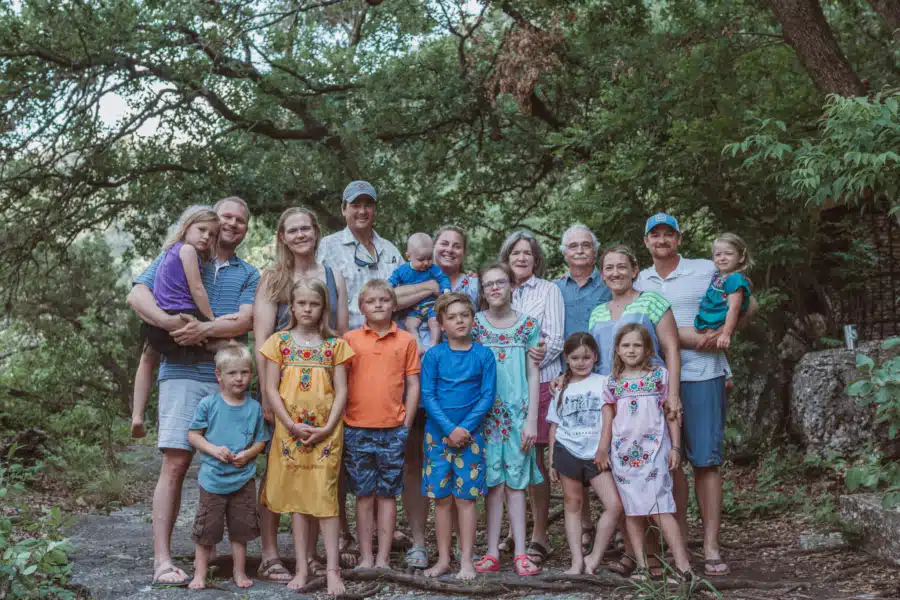
FROM KEVIN GERMER AT LAITY LODGE The Frio River Canyon has long borne quiet witness to the reality that God cares about beauty and design. A well-designed space can help a person feel wonder and welcome and peace. In mid-September, Rick Archer, Amanda Iglesias, and Roberta Ahmanson joined architects with 100 Fold Studio for a retreat at Laity Lodge. Rick, whose firm, Overland Partners, was part of the Laity Lodge renovations in 2017, shared stories from his own diverse work on sacred spaces. Amanda shared her research on modern sacred spaces, intertwining her experience of these places with her own spiritual journey. Writer and philanthropist Roberta Ahmanson reflected on her many experiences as a pilgrim to and student of Christian sacred spaces. The group explored how their work intersects with and is informed by the Christian faith, shared with one another about personal and vocational challenges, and enjoyed good food and conversations around the dining hall’s tables. They lived, for a few days, in the haven that the Lodge provides. |
|---|