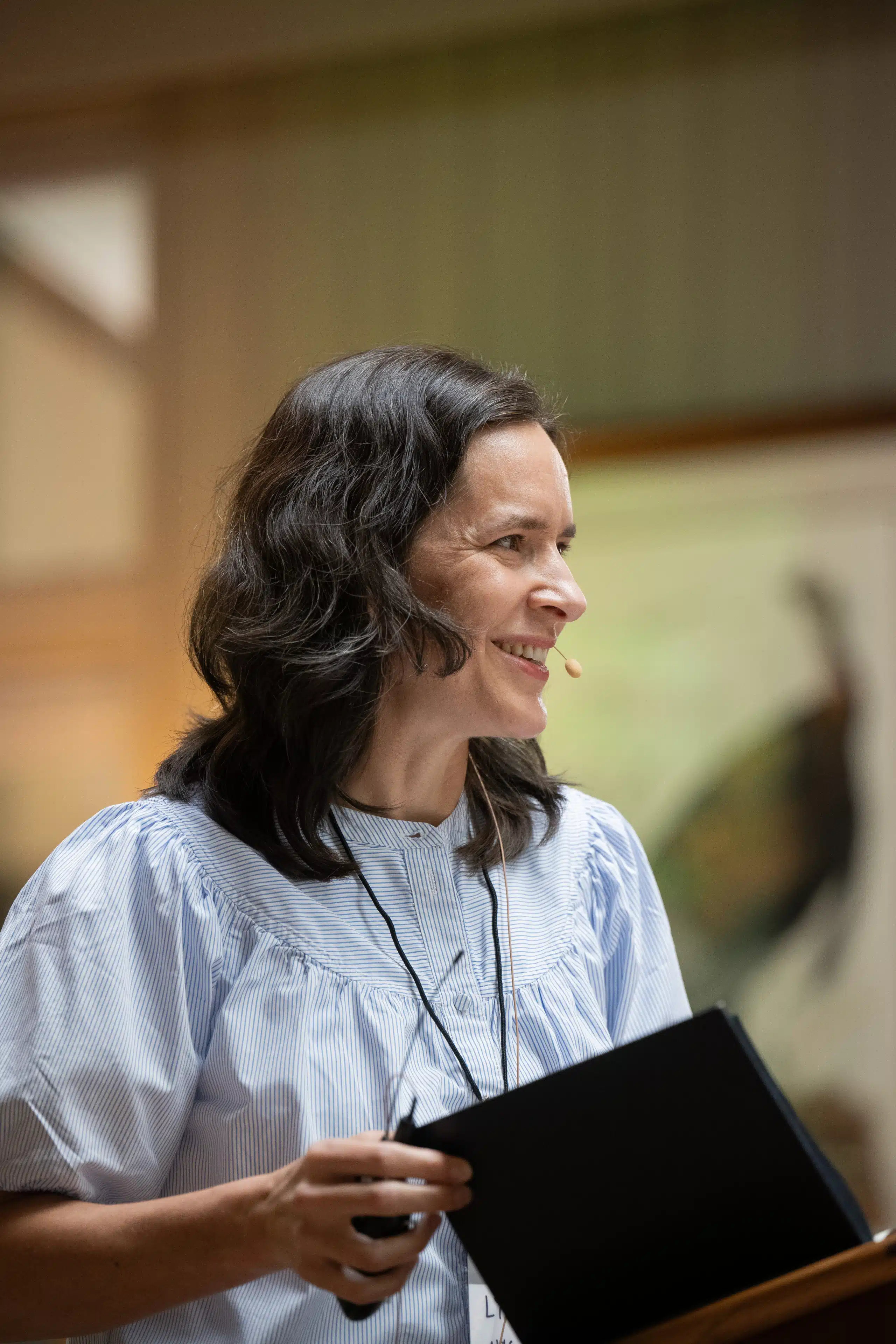


“I love being old.” That comment from a woman in her late 80s stuck with Mark D. Roberts. Today he helps people think about how to flourish in the “third third” of life. In this episode of The Echoes Podcast, we cover why relationships at 20–50 shape our health at 80, what the U.S. Surgeon General calls the loneliness epidemic, how churches can foster intergenerational community, when moving in your 60s+ helps—or hurts—your social fabric, and why “it’s all about you” is a terrible retirement story. Practical, hopeful, and unapologetically positive about how to age well.
Listen to the Podcast
Watch The Podcast
- “Third Third of Life” work from the De Pree Center Third Third Flourishing – De Pree Center
- Making It Work podcast (co-hosted by Roberts)
- Our Epidemic of Loneliness and Isolation U.S. Surgeon General Advisory on the “15 cigarettes a day” stat
- Laity Lodge (Texas)
- Christina Rossetti’s Up-Hill | The Poetry Foundation
- Psalm 103
- Echoes Magazine (free subscription)
- H. E. Butt Foundation (mission/vision)
00:00:11:03 – 00:00:28:22
Marcus Goodyear
20 years ago, Howard Butt junior hired me to be on his writing team. We had lots of fun for a few years, writing books together and writing radio spots for The High Calling. Mr. Butt we always called him. Mr. Butt was 78 years old when I started working with him. I remember presenting a project to him at his house when he was 85.
00:00:28:22 – 00:00:52:04
Marcus Goodyear
Can you imagine that? In America we don’t talk about time like it’s working against us? Where did the years go? I’m not as young as I used to be, but time is doing more than slipping away and making us older. Aging is natural when we age well, we call that maturity. So how do we age well? How do we flourish in their 60s and beyond?
00:00:52:06 – 00:01:11:14
Marcus Goodyear
Maybe there are specific practices we can start in our 20s and 30s to help us age well. And I’m not just talking about investing in like, the stock market or money for retirement. I wonder what does it look like to invest in ourselves? Today we’re talking about planning for our future and our legacy and flourishing. No matter our age.
00:01:11:16 – 00:01:32:06
Marcus Goodyear
I’m Marcus Goodyear from the H. E. Butt Foundation, and this is The Echoes Podcast. Our guest today is Mark D. Roberts, a senior fellow from the Max Dupree Center for Leadership at Fuller Seminary. And full disclosure, Mark used to be my boss, and he was a great boss. Mark has written numerous books, including Can We Trust the Gospels and an incredible commentary in the Book of Ephesians.
00:01:32:08 – 00:01:40:05
Marcus Goodyear
Mark also co-hosted his own podcast for many years called Making It Work. I have a co-host, too. Ladies and gentlemen, Camille Hall-Ortega. My friend and colleague.
00:01:40:08 – 00:01:41:21
Camille Hall-Ortega
Hi, Marcus. Good to be here.
00:01:41:23 – 00:01:44:19
Marcus Goodyear
Mark Roberts, welcome to The Echoes Podcast.
00:01:44:21 – 00:01:47:10
Mark Roberts
Thanks. It’s a blast to be with you folks.
00:01:47:12 – 00:02:01:22
Marcus Goodyear
You, were the director of Laity Lodge for many years, and you’ve told a story about Laity Lodge that I want to start with. You were at a retreat, and you overheard Betty and Cody say, I love being old. Can you tell us about that moment?
00:02:02:00 – 00:02:21:16
Mark Roberts
Sure. Betty and Cody, for those who don’t know, it was, the wife of a former director of Lady Lodge. And so she was leading a devotion one morning. So it’s kind of early. And that’s her first line. I love being old. And, you know, I’m still kind of sleeping on my floor. Did I hear that right?
00:02:21:18 – 00:02:42:23
Mark Roberts
Because, honestly, I don’t think I ever, ever heard anybody say that in my whole life. And she sort of knew that was a bit of a surprise. So she said, no, let me say that again. I love being old. And then she went on, in her devotion to talk about why she loved being old and her devotion was about wisdom and how God gives us wisdom as we age.
00:02:42:23 – 00:03:03:20
Mark Roberts
And but I just was so struck by the fact that here is somebody who is not ashamed of being old. For one thing, she called herself old. She was 80, in her 80s. So, you know, I guess that’s all. But a lot of times people don’t want to acknowledge that. And it it it really shook me up, and I always remembered it.
00:03:03:20 – 00:03:25:12
Mark Roberts
I mean, that’s partly why I talk about it, because it was like, wow, wouldn’t that be something if when I was her age, if I got that far, I could say that I love being old? I love what, what I’ve learned in life and the richer life that I live now and the wisdom God has given me and the opportunity to use that wisdom to serve others.
00:03:25:12 – 00:03:34:14
Mark Roberts
And it was just, it was a surprise. And it’s a great encouragement. It’s really inspired a lot of my life and work since then.
00:03:34:16 – 00:03:48:16
Camille Hall-Ortega
Wow. I can imagine what an impactful time that would have been. I know that we’re making reference to the third third, and I just want to just right up front, have you kind of define what we mean by that?
00:03:48:18 – 00:04:12:00
Mark Roberts
Yeah, we talk at the Dupre Center at Fuller, and I talk about the third third of life, which we use that language because people kind of get it. I mean, there’s probably anybody listening to it kind of gets it. And so that’s part of it. But the to talk about the third third doesn’t assume a particular story of life.
00:04:12:00 – 00:04:35:02
Mark Roberts
So for example, a lot of folks would say, well, you’re talking about retirement. Well yes, for those who experience retirement, but many don’t. Or the retirement story can be a very diverse one. Sometimes people will talk about on corps or something. There’s certain language we avoid, right? We people in my age bracket really don’t like to be called elderly or, you know, there are other things there.
00:04:35:03 – 00:05:00:04
Mark Roberts
So third third is neutral. If you actually wanted to know when does it actually start? If you look at current statistics in the United States, the third third of life starts at 52 years and nine months. It went down and down and Covid, the age expectancy went down. But really, what we’re talking about is serving folk generally in their late 50s on and sometimes that’s a long one too.
00:05:00:06 – 00:05:23:12
Marcus Goodyear
So we have the magazine, the median age is 51. So in one sense, this conversation is right at our target. We have a second group of readers who are in their 20s. So the median age of 51, they’re going to pick up this conversation. No problem. Why would those 20 year olds be interested in this? How is it relevant to them?
00:05:23:16 – 00:05:44:16
Mark Roberts
Yeah, great. Great question I love it. So for a number of reasons, I mean, one in the most obvious would be many of those 20 year olds are going to have parents and or grandparents in the third third of what people they really love and care about and learning about how those folks can flourish and how one can live a healthy and good life.
00:05:44:16 – 00:06:04:14
Mark Roberts
That’s going to matter. But here’s the other thing. So much of what we’ve discovered about what it, what helps us flourish in the third third of life are things that if we began them earlier, it would have made a huge difference. Now, the most obvious people would think, oh, yeah, kind of like health. Yeah. Kind of like health.
00:06:04:14 – 00:06:26:08
Mark Roberts
You know, if you eat well and get exercise when you’re younger, odds are you’re going to be healthier when you’re older. But as it turns out, there actually are other sort of basic practices and disciplines of life that if we start early, we will in all likelihood have a longer and a better life. And I’ll give just the most amazing example.
00:06:26:08 – 00:06:51:02
Mark Roberts
So there is this study called it used to be called the Grant study. Now it’s a Harvard study of adult development. And they have studied people. They started in in the late 30s, 1930s and followed people for a lifetime, basically asking the question, what enables people to live well? And they just they did surveys and medical tests and followed these people throughout their lives.
00:06:51:04 – 00:07:10:20
Mark Roberts
I think all of them are now are now dead, actually, because that was a long time ago. And he says, you know, what do we find helps us live best and live longer and better? And he said, you know, it’s not working harder. It’s not making more money. It’s not even having better cholesterol and that sort of thing.
00:07:10:22 – 00:07:11:14
Mark Roberts
The most.
00:07:11:14 – 00:07:12:17
Marcus Goodyear
Important.
00:07:12:19 – 00:07:24:07
Mark Roberts
Yes, the most important contributor to living well at age 80 is the quality of our relationships at age 50 and younger.
00:07:24:09 – 00:07:25:11
Camille Hall-Ortega
Wow.
00:07:25:13 – 00:07:54:22
Mark Roberts
Now that. Yes. Wow. And, you know, folk in their 20s spoke in their teens, for that matter. I mean, if we if we really believe that. Wait, the quality of my relationships is going to be the most important, contributor to my living long and living well in all seasons of life. Well, then I think I want to start investing in and building really good and healthy relationships in communities.
00:07:55:00 – 00:08:15:19
Camille Hall-Ortega
I love this, I told my mom I have two young kids, so I have a six-year-old little boy, and I have a three-and-a-half-year-old little girl, and my mom watches my kids when they’re not in school. And when I tell my parents, you’re welcome, because I’m seeing studies come out that that say, this is making you happier, and this is going to make you live longer.
00:08:15:23 – 00:08:34:00
Camille Hall-Ortega
And know similarly, I’ve seen things where, you know, they’re telling older folks, having a dog that you have a relationship with is going to make you live a longer, healthier life. And so I’m imagining that people are picking up on these things. Are you seeing some of that in your work?
00:08:34:01 – 00:08:59:00
Mark Roberts
Oh, you know, absolutely. And people resonate with it. But it’s a real problem. So, a few years back, the surgeon general came out with this major report on loneliness and isolation in the United States. And this, that what a huge problem it is, especially for older adults. And again, you think, well, why would that be? Well, many older adults say they lost a spouse.
00:08:59:00 – 00:09:21:16
Mark Roberts
So all of a sudden, they’re living alone or they’re, you know, and the cost of loneliness and isolation to our physical health, not to mention just, you know, our mental health and well-being, our physical health is huge. So, the surgeon general says experiencing pretty extreme loneliness and isolation the way millions and millions of Americans do is, for your health.
00:09:21:16 – 00:09:25:16
Mark Roberts
The equivalent to smoking 15 cigarettes a day.
00:09:25:18 – 00:09:32:06
Marcus Goodyear
So, Mark, I have a practical question for you. First of all, I should confess that I just turned 51, so I’m very close to entering.
00:09:32:07 – 00:09:33:07
Mark Roberts
Oh, who you are.
00:09:33:07 – 00:09:54:23
Marcus Goodyear
This is all super top of mind for me. And I did a couple of things when I was 50 to sort of prove to myself that, you know, whatever. And I was aging well. Although I do find that language creeping in, thinking about that I’m aging, that I feel a little older for the probably the first time in my life, actually, things are certain things that used to be very easier are just a little bit harder.
00:09:55:01 – 00:10:16:03
Marcus Goodyear
But my kids don’t live where I live. So, I don’t have a situation like Camille where if I want to be around my grandkids, they’re just going to be here. Which means my wife and I are facing the question of moving. And I know that you moved in your third, third, I think, twice because you were probably 50 when you came to Laity Lodge.
00:10:16:05 – 00:10:17:01
Mark Roberts
Yes.
00:10:17:03 – 00:10:32:17
Marcus Goodyear
And I’m curious. Moving essentially cuts off some of those relationships. You have to start them over. How do you do that. Well, especially given that so many older adults retire and then move somewhere and sever their relationships.
00:10:32:20 – 00:10:57:12
Mark Roberts
You know, great question. And the way you’re framing it is great. And I mean, part of the answer to your question is, well, there’s no one answer to that. You know, people are different and will make different choices. But what you’re pointing at. So, what? Here’s what happens not infrequently. People leave, you know, they’re colder city they’ve lived in or town they’ve lived in for, you know, 30 or 40 years.
00:10:57:12 – 00:11:21:00
Mark Roberts
They move to someplace that’s warm. It’s great the warmth and the activities and all that sort of thing. But they have lost all of their core and key relationships and that really cost them. And they feel it. And some people move home even to the cold. Now some who are able will split their year, you know, between warm and cold and that sort of thing.
00:11:21:04 – 00:11:44:20
Mark Roberts
But the point is, there is a significant cost to moving from your cold place where you’ve lived your whole life to warm place. Now, there may be advantages to, okay, that’s one thing. Here’s another thing that sometimes happen. So parents will leave. Parents, grandparents will again move away from everything they’ve known their church, their friends, their activities, their jobs.
00:11:44:22 – 00:12:12:14
Mark Roberts
And they’ll move to be close to the grandchildren. And sometimes that’s great. And sometimes it’s not so good that that’s too much relationship. And they’re totally cut off. And then sometimes the children and grandchildren get a job switch and they move. So now all of a sudden, you’ve moved from all of your core relationships throughout your whole life, and now you’re living all by yourself in a brand new place and you don’t know anybody.
00:12:12:15 – 00:12:37:17
Mark Roberts
As we think about where we’re going to live in in the latter that seasons of life. There’s so many questions. Most, most Americans want to live in their home. They want to stay where they are. There are some real benefits to that, but sometimes that contributes to the loneliness and isolation. Sometimes our homes are not very well suited for us when we’re older, that maybe they’re not equipped.
00:12:37:17 – 00:12:47:04
Mark Roberts
And so again, lots of issues. It’s probably the work we’re doing is to help people think about these things in a way that perhaps they haven’t thought about before.
00:12:47:06 – 00:13:04:20
Camille Hall-Ortega
Really interesting. We have, on previous episodes, discussed the importance of community and different ways to kind of achieve community in your life, have community in your life. How have you seen, spiritual life, faith church come into play, especially for folks in their third third?
00:13:04:22 – 00:13:35:07
Mark Roberts
I’m impressed at churches that are working on helping, multi-generational relationships happen. And I think, for example, of Highland Park Presbyterian Church down in Dallas. I have many friends there and know them well, and they have done a lot of different things to try and help folks who are older be with folk who are younger, but you don’t exactly walk up to a stranger on Sunday morning and say, hey, young person, you know, do you want to hang out?
00:13:35:09 – 00:13:47:15
Mark Roberts
Yeah. And so I think churches can provide the context in which this can happen. But then what needs to happen? There are different ways to help facilitate this and advance it.
00:13:47:21 – 00:14:18:13
Marcus Goodyear
And Mark, you’ve also talked in your third, third materials about looking for new narratives of aging. We’ve talked about a few of those. And that’s in contrast to what you have understood to be damaging narratives about aging, damaging cultural messages. So, I’m curious. I’d love to hear you talk a little bit about some of the, you know, the risk of being negative, some of the more damaging things people in our culture believe about aging and how you respond to that and how you find alternatives.
00:14:18:15 – 00:14:41:11
Mark Roberts
Well, ironically, the first negative narrative I would mention is the one that a lot of folks think is the great narrative. And that is sort of you retire and now it’s all for you. It’s all about you. It’s and you’ll find it. You’ll find this language in in promoting of, senior adult communities and other things. It’s like you’ve worked hard, you gave, you raise your children was all for others.
00:14:41:16 – 00:15:07:22
Mark Roberts
Now it’s all for you. You know what you did? Yeah. And I mean, often people are living into that narrative. Maybe at 60 years old, they might have 25, 30 or even more years of life left. And all of a sudden it’s all for you. And so that can at first feel like, wow, this is a real positive narrative.
00:15:07:22 – 00:15:28:14
Mark Roberts
I get to just live for myself. But, I mean, from a from a Christian point of view, we’d say, well, that’s not quite what God has called us, right? But there’s also a lot of research that says people who just live for themselves often do not flourish because there is something in us. I mean, we were we were created and called to be people who serve and care for others.
00:15:28:16 – 00:16:00:01
Mark Roberts
And the older adults who really do well are not just living for themselves, but they found ways to live for others. The second big narrative is you really have outlived your usefulness and your fruitfulness. It’s like you’ve heard this. You’ll hear this a lot, often in association with whoever happens to be president. Now that we’ve had older folk on, you know, both parties in a new Partizan thing anymore, but it’s like, oh, you’ve sort of you’ve, you’ve had your chance.
00:16:00:02 – 00:16:25:05
Mark Roberts
You don’t have much to contribute anymore. And there and that’s a very common negative narrative. The one that’s associated with that is and you’re basically you’re going to drag down our whole society and economy. You know, you’re not contributing. You sometimes hear the language. It’s very common. They’ll talk about the growth of older adults and the number of older adults as a silver tsunami.
00:16:25:07 – 00:16:53:12
Mark Roberts
In other words, silver as in silver hair. Sure. Right. You know, as in this large thing that’s going to wipe us out. And so there are all these narratives, either the one that says, hey, it’s all for you, or the one that says in and by the way, you really don’t have anything much to contribute anyway. And as a matter of fact, you and all the, all your people are going to really hurt us and even potentially wipe us out.
00:16:53:13 – 00:17:15:23
Mark Roberts
And the problem is that a lot of older, it’s not only that younger people might think that, and that’s not a good thing, but many who are older actually internalize that, you know? And then when you think about it, it begins to make a little sense because you think, well, if I just think, you know, getting old is terrible and yeah, I’m going to be sick and it’s going to be awful, maybe I won’t go to the doctor, you know, or.
00:17:16:03 – 00:17:37:05
Mark Roberts
Yeah, I’m old, I can’t contribute anymore. I got nothing to give. So I don’t give. And the things that help us to live well and live longer, I stop doing because I say, well, I’m old and, Anyway, stunning. But the challenge then for all of us. And again, this starts when you’re younger. How do you think about being older?
00:17:37:05 – 00:17:47:20
Mark Roberts
Can we reframe this in a way that is both more truthful, but also it’s going to be more healthful? Marcus, how old were you when you were hired at Laity Lodge?
00:17:47:22 – 00:17:50:00
Marcus Goodyear
I was 31. Yeah, okay. 35.
00:17:50:00 – 00:17:55:20
Mark Roberts
You’re this 31-year-old person working with 78-year-old Howard Butt.
00:17:55:22 – 00:17:56:11
Marcus Goodyear
Yeah.
00:17:56:12 – 00:18:28:16
Mark Roberts
Yeah. Okay. If you had any sort of prejudice about older people not being creative, not having vision, not having energy, not having mission, I mean, because you had that relationship, you would say, oh, that’s not it. In fact, you were experiencing someone of who was old, living with tremendous vitality and contribution. And you know, that sort of thing that can really change the way we think about aging in general and the way you envision our own lives.
00:18:28:18 – 00:19:07:05
Camille Hall-Ortega
That’s huge, Mark. And it’s perfect because we’re very curious about what it looks like to relate well across generations. Yes. And so for even for us. So for me, I’m a millennial and Marcus is Gen X. And of course, you know, my parents are boomers. And so what we see quite often is that although perhaps in faith communities there is of course, this knowledge that we’re meant to be, treating the elderly with respect for their wisdom and this and such, there’s often sort of a little bit of an eye roll of like, those guys can’t get it.
00:19:07:06 – 00:19:30:00
Camille Hall-Ortega
These guys from this generation, they just don’t get it. And even that goes the opposite direction to where kind of all of us can be looking at Gen Alpha and Gen Z going, oh my goodness, please. You know, with all of, all of whatever you’re doing, what do you see as sort of important practical steps for treating each other with respect among the generations?
00:19:30:02 – 00:19:34:11
Mark Roberts
You know, I love that question. And, you know, so I’m a boomer. So, you know, there’s okay. Boomer.
00:19:34:16 – 00:19:37:04
Marcus Goodyear
Yeah, I guess so much anymore. You don’t hear it as often.
00:19:37:05 – 00:20:06:19
Mark Roberts
No you don’t as much. But it’s such a great question because one of the things that used to be true in our, in our world, but in our country was that there was a fair amount of intergenerational relationship. People lived in smaller towns, families lived together. Right. Increasingly that is less true. And part of what that means is, a lot of times we don’t know people out of outside of our own cohort, our own people, the folk we hang out with.
00:20:06:21 – 00:20:32:13
Mark Roberts
And when you don’t know people, it’s really easy to stereotype or to have prejudice or you see the extremes. And of course, you know, the media and especially social media, I’m going to point out the extremes of whatever it is. And so, you know, it would be easy for a person of my age to look down on, you know, a Gen X or a millennial and say, look at though they don’t want to work and they’re lazy.
00:20:32:13 – 00:20:58:23
Mark Roberts
They’re only thinking about their own well-being. They’re on their phones all the time, etc., etc.. Right. But when you really get to know somebody that those kinds of stereotypes turn out not to be accurate. And one of the things we desperately need in our world and in the church, I think the church can be a great place for this, is to actually get to know people who are not like I am.
00:20:59:01 – 00:21:05:04
Mark Roberts
And by the way, we could obviously be having this conversation about other things, about race and other ways. Yeah. Where?
00:21:05:05 – 00:21:06:00
Marcus Goodyear
Yeah.
00:21:06:02 – 00:21:27:18
Mark Roberts
Because when you really and some of us have been greatly blessed to have those kinds of intergenerational relationships. So in my case, I mean, when I started working with Howard, but and knowing him, I mean, I was 50, so I was older, but I grew up very close to my mom’s father, my grandfather, I would say he was really my best friend in life.
00:21:27:23 – 00:21:35:19
Mark Roberts
And so I didn’t think of it at the time. But that was profoundly shaping my view of what it is to be older.
00:21:35:22 – 00:22:08:14
Camille Hall-Ortega
I love the notion of it being reciprocal, because we’re seeing that in studies as well, that it’s not one sided, that these intergenerational relationships really are beneficial for both sides, whether it’s mentor, whether it’s actual familial relationships, whether it’s seeking community. And in your church, I love, I think about a story that something you said sparked is that when my parents first got married, my dad’s mother, less than a year into their marriage, my dad’s mother was tragically killed in a car accident.
00:22:08:16 – 00:22:32:04
Camille Hall-Ortega
And so for us growing up, you know, we didn’t have that relationship. My other grandmother lived in Memphis, Tennessee, so she was in we’re in Texas, so we didn’t have that. And so my dad’s best friend, his mother, called my dad in and she said, you’re my son now. She said, my kids are your brothers and your sisters and your kids can call me grandma.
00:22:32:07 – 00:22:58:19
Camille Hall-Ortega
In the communication and psychology research, they sometimes call this fictive kin. But so we grew up with these important fictive kin relationships where intergenerational, where we were able to call my dad’s best friend’s mother “Granny” and call her kids, “Uncle” and “Aunt.” And just because they weren’t actual familial relationships, they were deeply formative for us.
00:22:59:00 – 00:23:00:07
Mark Roberts
I love that. That’s great.
00:23:00:10 – 00:23:29:08
Marcus Goodyear
Yeah, I have the same story. You know, my mom was adopted and, my, the only grandparents I ever really knew were her foster parents. She wasn’t adopted. She was fostered, and I called them grandpa. I called them grandma. My grandma was still alive. Yeah. So I never thought of calling that a fictive relationship. That’s really interesting. All of this talk about generational healing and the institution of the church and the institution of towns, it reminds me of Howard Butt Jr., who we’ve been talking about a lot.
00:23:29:08 – 00:23:49:23
Marcus Goodyear
He’s been behind a lot of this conversation, much more so than our normal podcast episodes. I think partially, Mark, because, you know, you came on and we both worked for him, but we have a clip. This is from 2009. He was 81 when he gave this clip. He was at Laity Lodge. And this is, I think, the last time we spoke at Laity Lodge.
00:23:49:23 – 00:24:08:09
Marcus Goodyear
And this is actually the end of the talk. So, he’s giving this talk, he’s talking about generational healing and its connection to institutional healing at Laity Lodge. And at the end, he segues into a poem and the basically the very last thing he ever said at Laity Lodge officially is this, to quote this poem by Christina Rossetti.
00:24:08:11 – 00:24:18:21
Marcus Goodyear
So you’ll hear his voice, change a bit as he starts reciting the poem. But I’d love to play this for you, Mark, and just get your get your take.
00:24:18:23 – 00:24:52:18
Howard Butt Jr.
Our greatest earthly need is generational healing. Well, now, why do I say that? Generational healing is crucial. Generational healing offers us institutional peace. We must aspire to relationships of love with our parents and our children. I am an unapologetic institutionalist. I believe in institutions. I’m sure that’s part of the reason I have. I spent my life in two institutions H-E-Butt grocery company, the H. E. Butt Foundation.
00:24:52:19 – 00:25:07:18
Howard Butt Jr.
Anyone who wants to think institutionally is going to go against the culture of our society. Does the road win uphill all the way?
00:25:07:20 – 00:25:24:00
Howard Butt Jr.
Yes, to the very end. Will the day’s journey take the whole long day from morning to night? My friend.
00:25:24:02 – 00:25:27:16
Camille Hall-Ortega
Love to get your thoughts on that clip, Mark.
00:25:27:18 – 00:25:51:21
Mark Roberts
I’m honestly a little choked up. Because Howard meant the world to me. He was about the age as my dad and my dad died at a fairly young age. And so along the way, the Lord put men in my life who were like a father. And he was very much like a father to me. And he was also one from whom I learned so much about all kinds of things.
00:25:51:23 – 00:25:56:12
Mark Roberts
And it was so interesting. I mean, here he is. So market cities, what, 81?
00:25:56:13 – 00:25:57:06
Marcus Goodyear
Yeah.
00:25:57:07 – 00:26:25:19
Mark Roberts
When he started out in his initial sort of influence, was not talking about institutions and intergenerational healing. He was about the ministry of the laity, why we had Laity Lodge. He was about faith, work and the integration of faith work. The high calling of your daily work. And he never lost those deep commitments, but he was the kind of person who was just living and learning and new things.
00:26:25:22 – 00:26:55:04
Mark Roberts
And so by the end of his life, there were all these new things that he cares about is speaking about, learning about, growing about and I mean, and one of them being the intergenerational healing and recognizing, that for there to be the quality of relationships that we seek in family and in other institutions, right? Is it that we yes, we need to understand each other and we need to discover who we are.
00:26:55:04 – 00:27:26:06
Mark Roberts
But there’s also there’s healing that needs to happen. Howard was pretty open about some of the challenges he experienced from his own father, and, needing to come to a place of forgiveness and acceptance. Families are the greatest, and it’s also where we do some of the greatest harm to each other. Yeah. And so this notion of intergenerational healing, but also his concern for institutions, I mean, that his language about that came rather late.
00:27:26:08 – 00:27:47:09
Mark Roberts
It and I just think here, here’s a man who in his late 70s and early 80s is, as I said, learning, growing, thinking creatively, trying new ideas, giving of himself to others, people like me and others whom he mentored. But a gift.
00:27:47:11 – 00:27:55:08
Camille Hall-Ortega
Marcus, I’m really curious your thoughts on this audio as well, especially just because it’s Howard and his last talk at Laity Lodge. And yeah.
00:27:55:10 – 00:28:20:18
Marcus Goodyear
Yeah, well, I mean, like, Mark it, I get a little choked up. He was he was incredibly, influential in my life. And, in, in a lot of ways, he really helped me break away from, some, some dysfunctional things in my life that I had. I just didn’t even realize were problems. And he was so gentle about it and so caring.
00:28:20:18 – 00:28:42:10
Marcus Goodyear
And I was I was a little bit of a handful in my 30s, and he, he never got rid of me. I’m still here. So that’s part of what’s underneath all of that as I’m listening, the ideas of institutional renewal come from several different places, but he was especially fixated on a thinker named Hugh Heckler, at the end.
00:28:42:10 – 00:29:09:23
Marcus Goodyear
And I think that’s what he was actually referencing in that talk and just this idea that in order for society to flourish, we need to believe in each other and we need to trust each other. And Howard would talk about institutions like they were individuals. And so the same kinds of language he would apply to individual renewal and kind of relationships between two people.
00:29:10:01 – 00:29:36:06
Marcus Goodyear
He would think about the relationships between two institutions, or the relationship between the person in the institution and the institution itself, like, like my relationship to the foundation or my relationship to Kerrville or Kerrville is relationship to the foundation. And he yeah, he was just really he was really a genius. And I wouldn’t have had access to any of that if I hadn’t been able to work with him.
00:29:36:08 – 00:30:00:10
Mark Roberts
You know, Marcus, you mentioned, thinking institutionally that was you have closed book which Howard read, and it was very influential for him. So here’s the way Howard approached things. You read the book, we worked on the ideas, but then the relational part of him says to me, well, you have to go meet him and think, well, really, he’s a professor, you know, you have to meet him.
00:30:00:12 – 00:30:22:12
Mark Roberts
And so I and one other organization reached out, and he was, in fact, glad to meet with us. And we met with him in his home. And he was a delightful man. Turned out he’s also a person of faith and there was this sweet thing. So it’s institutional in the broader sense. And it was deeply, profoundly relational, a very personal sense.
00:30:22:12 – 00:30:24:15
Mark Roberts
And everything in between. That’s pretty amazing.
00:30:24:18 – 00:30:57:01
Camille Hall-Ortega
But I love that because that’s just highlighting how Howard knew the importance of relationship, that it just harkens back to what you were speaking about before. Mark, that there is, of course, sometimes difficulty when we go, oh, this person really doesn’t get it, or there’s so much older, there’s so much younger. But when we take the time to be intentional about getting to know others, it is so often hugely, impactful and fruitful.
00:30:57:01 – 00:30:59:15
Camille Hall-Ortega
And so I just love that notion.
00:30:59:17 – 00:31:02:19
Marcus Goodyear
Mark, are you ready to say you love being old?
00:31:02:21 – 00:31:05:06
Camille Hall-Ortega
Oh.
00:31:05:08 – 00:31:31:21
Mark Roberts
You know, it’s so interesting because I think about that. I can’t say it as, unapologetically as Betty did, but. And she owned and or taught there are some hard things about being old, and I, I’m still, you know, the, the, you know, physical things come up that you didn’t have when you were younger. And it’s harder to sleep often when you get older, these things like, oh, man.
00:31:31:23 – 00:31:59:10
Mark Roberts
And that’s why a lot of people will, will say, you know, getting older and easier. It’s a drag being are there and people will complain about it. Sure. The thing that that Betty first alerted me to and now I am much more attentive to, is some of the amazing gifts of being older. When I turned, 65, I had, a very unexpected use my birthday get up in the morning.
00:31:59:12 – 00:32:22:01
Mark Roberts
And I found myself. I was really down. I was thinking, like, most of my life is over, and I wasn’t expecting this. I’m not usually that kind of person. And I was really like, oh, man. So I went down and I sat down to do my devotions. And it was one of those times in life where I it was like God really spoke to me.
00:32:22:03 – 00:32:52:00
Mark Roberts
And what God said to me is, is read Psalm 103. Well, some of you would know Psalm 103 is is it is amazing sort of chronicle of the wonderful ways that God has blessed and ministered to the psalmist. And it so, you know. So I start out reading it and, you know, it’s bless the Lord all my so all that in me, bless his holy name, bless do don’t forget all his benefits who forgives all your iniquity.
00:32:52:02 – 00:33:17:09
Mark Roberts
I started thinking of the ways God has forgiven me when I really messed up. Who heals all your diseases? I’d been. I almost died of a rocky mountain spotted fever. And the Lord healed me. And who redeems your life from the pit? And on and on. And as I, I started reflecting on this, I mean, literally, I was just weeping with gratitude for how rich my life was.
00:33:17:09 – 00:33:19:18
Mark Roberts
And how much God had blessed me.
00:33:19:20 – 00:33:26:21
Marcus Goodyear
To be fair, I don’t know if you fully qualify as old yet, but I’m 51. Just throwing the question back at you.
00:33:26:23 – 00:33:31:22
Mark Roberts
68 I have all white hair, so that’s I think.
00:33:32:03 – 00:33:35:12
Marcus Goodyear
Yeah. 75 I think it’s like the beginning of old.
00:33:35:12 – 00:33:51:07
Mark Roberts
Maybe it’s so funny because when you ask people generally there are all these surveys, younger people tend to think old is like 55 and 60 all the time in the time you’re in your 70s. Yes. People in their 70s. Well, what is old? It’ll be like 85 and 90. Yeah. I always say putting it on, push.
00:33:51:07 – 00:33:52:12
Camille Hall-Ortega
It backs a little.
00:33:52:14 – 00:33:56:05
Marcus Goodyear
But I just want to make sure, you know, I don’t think you’re old.
00:33:56:07 – 00:34:11:09
Mark Roberts
But you know, but I want to get to the point. And I think we would want to get to the point in our in our culture and in our world where it wouldn’t even be thought of as a bad thing to be old. Right? But that was part of the thing about Betty. I let me go. She won’t be embarrassed.
00:34:11:09 – 00:34:28:04
Mark Roberts
She’s. I’m old. And yeah, I think many of us can think, well, it isn’t good to be old, you know. And I’m thinking, well, wouldn’t it be great if we could say, yeah, it is great to be old? Partly because the only alternative is. Well, you didn’t live that long, right?
00:34:28:06 – 00:34:28:19
Marcus Goodyear
Right.
00:34:28:19 – 00:34:41:12
Mark Roberts
And come to, to cherish and be grateful for the gifts that go with being older. And that’s what I’m trying to live into. And sometimes I can, sometimes not as much.
00:34:41:13 – 00:34:59:22
Marcus Goodyear
I love it, I love it. I think that’s a great place to end. Yes. Mark, thank you so much for being with us. This is The Echoes Podcast. It’s written and produced by Camille Ortega, Rob Stennett and me, Marcus Goodyear. It’s edited by Rob Stennett and Kim Stone. Our executive producers are David Rogers and Patton Dodd.
00:35:00:00 – 00:35:06:05
Marcus Goodyear
Special thanks to our guest today, Mark D Roberts. Mark, do you do you get Echoes Magazine?
00:35:06:07 – 00:35:10:15
Mark Roberts
I do get Echoes. Megan saying, I always read Echoes Magazine.
00:35:10:17 – 00:35:17:17
Marcus Goodyear
That is fantastic. And if you’re listening to this podcast, you should get it too, because it’s free. Go to echoes magazine.org to subscribe.
00:35:17:19 – 00:35:22:09
Mark Roberts
You might say, because it has really great stories in it.
00:35:22:10 – 00:35:23:03
Camille Hall-Ortega
Yes.
00:35:23:03 – 00:35:37:04
Mark Roberts
Even if you don’t know anything about the foundation, it’s where any of that the stories are really very engaging and moving and wonderful. So get it, get it because it’s free and there’s some great stories.
00:35:37:06 – 00:35:50:14
Marcus Goodyear
That’s right. You can find a link in our show notes. Thank you, Mark. The Echoes Podcast, Echoes magazine are both productions of the H. E. Butt Foundation. You can learn more about our vision and mission at hebfdn.org.