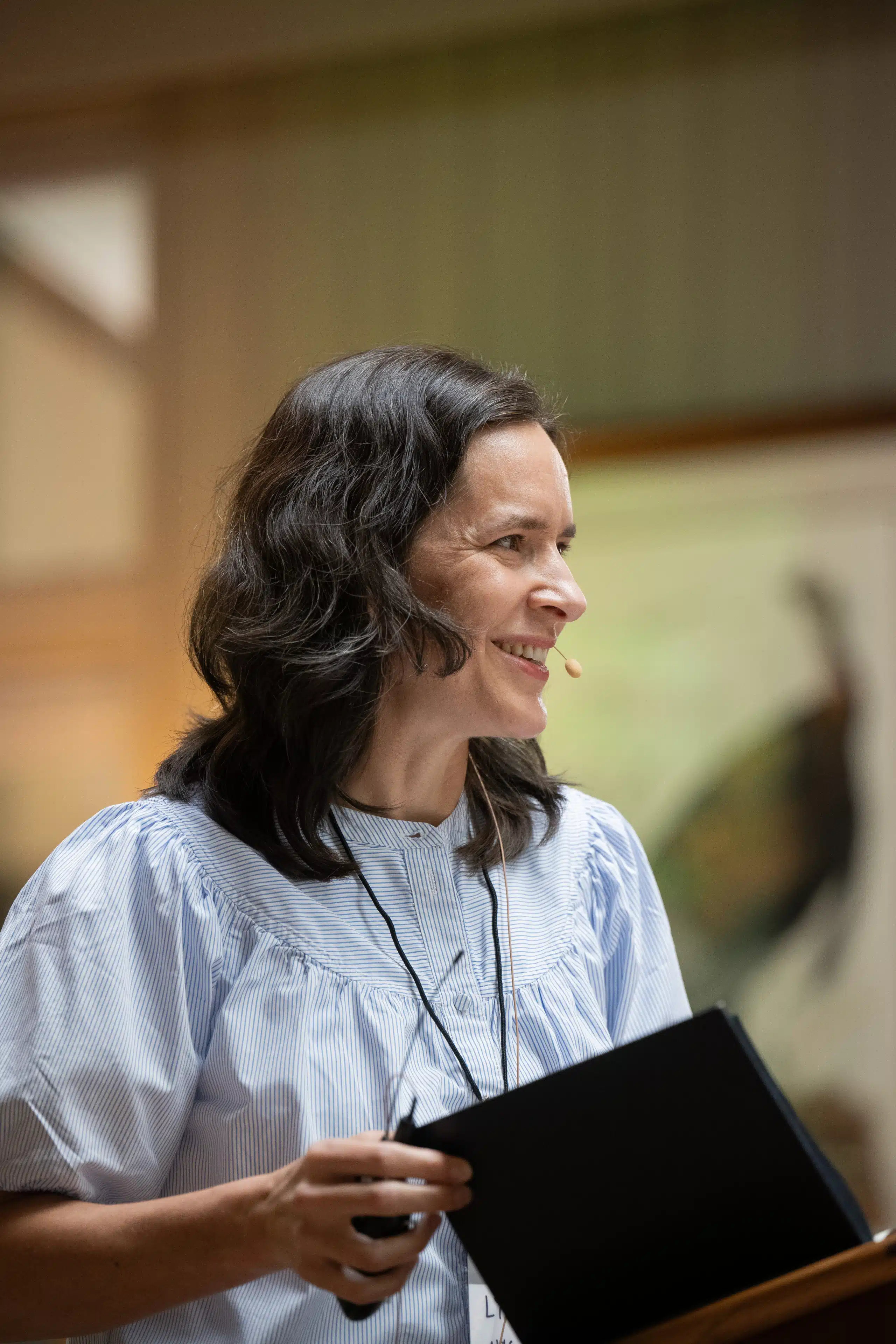


A frank talk about fathers—what we inherit, what we can repair, and how faith communities help (or don’t). Patton Dodd, author of The Father You Get, shares the story behind his new memoir and the “father hunger” that shaped him. We discuss money and manhood and honest family conversations. The Father You Get released in 2025 and is available in print, audio, and at your local bookstore.
Anna Machin – The Life of Dad: The Making of Modern Father
Echoes Podcast – “The Cure for Loneliness” (Kinghorn)
Echoes feature – “Loneliness Is Killing Us”
U.S. Surgeon General Advisory (PDF)
Subscribe to Echoes magazine (free)
H. E. Butt Foundation (about/programs):https://hebfdn.org/
The music of Jonny Rodgers: CINDERTALK
The Prodigal Son (Luke 15): https://www.biblegateway.com/passage/?search=Luke+15%3A11-32&version=NIV
00;00;00;00 – 00;01;38;00
Marcus Goodyear
When my older brother played high school football, we never missed a game. My dad was in the stands watching every play. It’s the same for all of his kids. He watched my sister marching the band. He read my stories and helped with my science fair projects. And later, when I became a parent, he showed up for his grandkids, attending my daughter’s orchestra concerts and traveling with my son’s robotics team.
There’s something sacred about the way my dad showed up for all of us, all of the time. But not everyone has a dad like mine. And of course, my dad was not perfect. Far from it. And I’ve had other father figures in my life. Some of those were very difficult. Many of us have complicated relationships with our fathers, either actual fathers or father figures.
Our dads might have been abusive or unstable or addicted, or just simply human in ways that are hard for kids. Whatever kind of father you had, you did have one, even if your father wasn’t in your life. His absence was a kind of father. And if you’re a father now, you probably know how hard it is to get it right.
Today we’re talking about fathers and masculinity and what it takes to begin repairing what’s been broken. I’m Marcus Goodyear from the H. E. Butt Foundation, and this is The Echoes Podcast. Our guest today is Patton Dodd. Full disclosure he is our boss and the executive producer of this podcast, but he’s also my friend of more than 15 years. Patton’s memoir, The Father You Get, just came out.
It invites all of us to consider the fathers and the father figures in our lives. I’m here with my co-host, Camille Hall-Ortega. Hi, Patton. We’re so glad to have you.
Patton Dodd
Thanks, y’all.
00;01;38;01 – 00;03;24;00
Marcus Goodyear
So, you open your book with a powerful story where you’re in a bar and a stranger asks you, was your dad in the military? And you suddenly break down in tears?
Can you take us back to that moment and what that question touched in you?
Patton Dodd
Yeah, that was, those tears were surprising to me. It was really a story about encountering what is often like an overused word these days, which is trauma. But, yeah, we’re throwing a goodbye party for a friend of ours, and people are arriving, and we’re introducing ourselves to each other, and someone asks me, you know, where are you from?
Which is a normal question to ask. And I talk about how I’ve always struggled to answer that question because we moved so much when I was a kid. I went to six different schools. My first seven years of school, all over the country, and there’s no easy way to say why. It wasn’t because my dad was in the military.
It wasn’t because he was just changing jobs for better opportunities. It was because he was an addict, an alcoholic, and he kept burning bridges and running from things, and we had to run with him. So, you know, I did not feel like even though I had a very troubled childhood, I have it out through a lot of my adulthood, felt like I was really troubled by it.
I feel like I kind of put it in the past and for some reason that night, talking to a stranger, he kept pressing me on. Why did you guys move so much? And at some point I decided to say, well, it was because my dad was a mess. And when I did, I burst into tears and. Wow. And it was really awkward and embarrassing, and I gathered myself and kind of avoided that guy the rest of the night.
But yeah, it was a bit of a wake up call. I thought, I probably need to address this at some point. And eventually I started doing that, by writing this book.
00;03;24;30 – 00;04;37;19
Camille Hall-Ortega
You say that that was kind of a wake up call for you and that you needed to address what was being brought up there. You started to write this book. What other things did you do to sort of start to address what was what was being triggered there?
Patton Dodd
I mean, yeah, in some ways, like, you know, I it’s not like I, had never thought about it before. I had lost my mom the year before as well. There was a lot of kind of, family grief my sister and I had been processing for a long time. She was a kind of a confidante and just fellow traveler. With me through our family issues. She’s five years older than me. We’re very close. So we would talk about these things a lot, and, you know, therapy, spiritual direction, good friends. I mean, people who knew me knew these things were in my life. But honestly, I was avoiding digging deep, especially into who my dad was, why he was the way he was, what he had wrought in our family.
I thought I had thought about it, but that was one. That night was one of many indications I was getting that I had a lot more work to do to kind of understand my own story, understand the story of the family that I have come from.
00;04;37;20 – 00;06;03;00
Marcus Goodyear
In the book, you talk about this idea of father hunger. Is that something that came to you through the process of the book, or is that something you’ve been aware of for some time?
It’s sort of looking for father figures.
Patton Dodd
It’s something I would not have admitted that I had like this in this book. I’m sort of admitting, finally, that I have been hungry for a father figure, for father figures. I’ve been seeking them my whole life. I’ve been making them my whole life. But I would not have been able to admit that to you.
Kind of plainly, the way that I am now, until just a year or two ago. I kind of kind of came to terms with that in the process of, of working on this. And now I actually yeah, I think a lot of people have I mean, sort of obviously how do people have father hunger? We’re kind of born with it.
Like we are wired for parenting. We’re wired for nurturing all of us, for wired, for mothering and fathering. And there’s like a theological way of talking about that. There’s also a scientific way of talking about that. I, I learned a lot from the evolutionary anthropologist and a mason at Oxford University who has shown that we like like the primates.
Part of the reason the species survived is that parents stuck around their kids with their kids, especially dads, to provide and, you know, together. And there’s evidence of those small family units sticking together hundreds of thousands of years ago. And so it’s in our brain stems, like we are literally wired, for nurturing.
00;06;03;00 – 00;07;59;05
Camille Hall-Ortega
So important. You talked a little bit there about needing to kind of go back and understand your story.
Why do you think it’s important to kind of know story in order to or do you think it’s important to know story in order to sort of move forward?
Patton Dodd
I mean, I think story making is a way of understanding, right? We are, you know, our our lives don’t, like, exist to us as stories in the way that we experience them day in and day out. But when we reflect on them, I guess I would say it can just be. It can be useful to to turn your life into a story, to think about what was the origin, who were the major characters and influences, what’s the kind of the rising action of my life? What are the climatic moments? And for me, story making about my father meant that I had to think a lot about who he was.
I didn’t know much about my dad. My dad raised me. He was in our home. He was a major character in a way. But he was pretty. He was pretty vacant. He was he was an alcoholic. He was passed out most every night of my life. And he just wasn’t present. He didn’t we didn’t interact that much. You know, Marcus talked about his dad showing up for stuff.
That is not my story. My dad did not show up for things. He just really he was there. But he I see in the book, he was present, but absent our whole entire lives.
Marcus Goodyear
I love the idea of tying your. I’m hearing identity language here that you’re saying in order to understand yourself and your identity, you wanted to understand your father and where you came from and shape a story with intentionality. On the one hand, that seems really hopeful because it means we can shape ourselves into new stories, and we’re not trapped by the patterns that that come before us. I’m curious, were you that intentional about it or.
00;07;59;05 – 00;09;14;03
Patton Dodd
You know, I don’t think so. I do not like who my father was. In fact, I tried to break up with.
He died in 2007, and the year before he died, through the advice of a therapist, I kind of broke up with him and told him, like, there’s no more contact between us. There’s been too much damage, too much pain. I don’t trust you. I don’t trust you to interact with your grandkids. At that time, there was two, grandkids on my side, so I had to cut them off.
And, And when he died, it was a relief to me. And it’s hard. It’s hard. It’s the hard truth. It was it was a relief to have him gone. So the horror to me, as I got older and older, was to find that I did resemble this man who I didn’t like. And he’s in me.
You know, I have some of his traits, some of it’s visual and look a little bit like him. I’m 50. I think I look a little bit like my dad when he was 50. And I, I have some tics, some some physical and maybe verbal tics that are like him. Right? We’re just. We are. We come from our parents, right?
There’s just no way around it. And I try to avoid that truth for a long time, but eventually, you know, there’s no shake in this off. I am Bill, dad’s son, and I need to take a close look at that and understand better who he was so that I can understand myself.
00;09;14;03 – 00;10;23;14
Camille Hall-Ortega
Do you think that that’s something that could be useful to everyone? And if so, what kind of other ways could that would that look like? Obviously, not everyone’s a writer that’s going to kind of go back and tell their story in those ways. What are their ways? Can you imagine people sort of beginning to unpack the stories of their fathers or parenting that shaped them, or just the history that shaped them?
Patton Dodd
Sure. I mean, whether you had a happy, vibrant childhood like Marcus, could you described or one like mine or anywhere in between? We all do have pain, right? That we have to deal with. We all have things that are mysterious to us, you know, about how we were formed. And I absolutely think that anyone and everyone, should, should, could do the work of, of, of reflecting on how you were formed, what were the influences that made you into who you are.
And yeah, it does not have to look like writing a book. Lord knows it can look. It can look like journaling. I think the main thing it needs to look like is talking. Talking to your other loved ones, to someone that you trust. One of the things that I arrive at and as I said, it’s so much about my father.
One of the things that that pains me for him is that he just never did, that he would not share anything about himself with anyone. His wife of almost 40 years did not really know much about him at all, and it would have done him a lot of good to talk about himself with her, with us, with a pastor, with a therapist, with one of the many people in Alcoholics Anonymous that he that he saw or rehab that he saw over the years.
I just get the sense that he never could quite work up the courage, I guess, to talk about who he was and, and the things that he hated about himself. The things he hated about his past. And I wish he would have had that, that, that kind of courage or temerity because I think it could have, brought some healing into his life.
And so, yeah, I think we all need some version of that, some version of truth telling about who we are.
00;11;37;11- 00;12;52;12
Camille Hall-Ortega
That’s really good. I, I’m just thinking about how that’s true in so many of our relationships and that we just see that play out, that as we learn more about the people in our lives and where they come from and their standpoint, it elucidates things that can be really valuable. And that kind of sounds simplistic, but I just think about even in your friendships, which, you know, are low, often lower stakes than a father daughter or father son relationship or just learning about where someone came from can help us to relate to them in more healthy ways. Even if you’re like, okay, this doesn’t excuse this bad behavior that I’m seeing or this doesn’t excuse, you know, whatever I might be having a problem with, but it’s allowing me to do some sense making that goes well.
That tracks a little bit where you’re going. Oh, okay. Now I understand a little bit more about you. And in some way that can help me relate to you in a, in a more healthy way or love you better.
Patton Dodd
100%. There’s always more going on in your interactions with people. They are bringing things with them to their interactions with you that they may not have even reflected on.
But there is a story kind of trailing behind them, that they’re living through. And that especially if you’re in conflict with them, what do you both a lot of good to be curious about, about that context, you know, what else are they bringing to bear in their in their every day? Yeah. I think we could all do to bring some more curiosity about each other.
00;12;52;12 – 00;16;12;06
Marcus Goodyear
Yes. And you have discovered some of those stories for us. So I want to highlight one and ask you about it. And kind of I don’t know if I’m like putting you on the couch here or what, but, there’s a scene in your book where your dad asks you for money. You’ve just, I think it’s one of your first jobs. Maybe your first job. I don’t remember exactly. No, it is your first paycheck. That’s right.
Patton Dodd
Yeah. First paycheck. Well, chick fil A, chick fil A, money.
Marcus Goodyear
Yes. Oh, All right. Waffle fries. All right, so you already know what he’s asking the money for. Yeah. And you kind of don’t want to admit it to yourself. And I am curious, for me as a man, money and making a wage, all of that stuff is tied into it. And so here’s your dad sort of, failing in this deep way and imposing on you. And I am really curious, how did that experience and experiences like it shape your understanding of of fatherhood and manhood and responsibility and all of the ways we expect men to be breadwinners in our culture, you know, for better or worse, it’s just kind of the expectation.
Patton Dodd
Yeah. At one point I was tempted. I’m writing this book just about money, just about my dad. Wow. Money and what I learned about money. That would have been a very focused way into it. And I wrote a lot about this that didn’t make it into the book. And so I’m glad you asked this question. I mean, I was for all of 14, I think, or maybe. Yeah, I think I was a late 14, early 15 when this first interaction with my father happened and, you know, I had no leverage. And so, I don’t know, it’s like, this is a long story. My father’s relationship with money. How money works in our home.
We were at the edge of poverty much of my childhood. He spent everything that he got as soon as he could. And a lot of it went to his addictions. And, and we, you know, we subsisted on help from churches and the government and other family, a lot, to make ends meet, to stay housed, to, to have food and clothes and, you know, unfortunately, I carried my father’s money lessons with me a long time.
I probably still do. Like, even though I knew that his relationship with money was broken. Even when you know that they’re broken, that can be hard not to repeat. And so, you know, my dad also, when I first began, I got out of college and began to got my first job. I was, you know, I would turn to him for, I mean, stupidly turn to him for financial advice about buying a home and paying down my student loans and how to handle that.
And I mean, who else was I going to turn?
Marcus Goodyear
He’s your dad. He’s my totally natural that you would do that.
Patton Dodd
Yeah. Yeah, exactly. But it trips me up for, a long time. And, you know, all I can say is that, and I have I have definitely done this imperfectly in my own family, with my own children.
But all I can do is. And I’m not, I’m I am I remain imperfect with money, but I am one sort of step of progress that I’m trying to take is to talk about it, to talk about it with my kids, to be transparent about it, but to be specific about, you know, dollar amounts, salary amounts, spending, and all that sort of thing putting.
00;16;12;07 – 00;19;14;05
Camille Hall-Ortega
There’s, a part of your book where you describe a poem written by your father that your mother had printed, and framed, and then, she would hang it in all the houses that you guys would be in. And I would just love to hear more about that. You describe it. You say it’s a poem, but really, it’s a prayer.
Patton Dodd
Lord, make me a man.
Camille Hall-Ortega
Lord, make me a man. I’m just going to read a couple of lines here. Oh, Lord, make me a man. One of integrity, love and devotion. Oh Lord, make me a man who yearns for the highest. Determined to offset mediocrity. And it goes on. And in that fashion, and I, I can totally hear it as a prayer like you describe it.
Can you talk to us more about what this poem meant as you saw it? Constantly, you know, as a presence in your homes, but also as you saw a pretty sharp juxtaposition of what you were experiencing with your father.
Patton Dodd
Yeah. It was like this icon in our house. As I said, we moved all the time, and it was always put in, and it was always put on the wall somewhere, like it was often in a prominent place, like near the near the phone when we used to hang our phones on the wall.
So I passed by this Lord to make me a man poem written by my father, probably in his like mid to late 20s. It was in calligraphy, on pretty paper, in a kind of a plain black frame. And it’s just this the image of it is just part of the image is my childhood. And, you know, it wasn’t until many years later that I realized just how ironic it was.
You know, my dad never talked to me about how to become a man or the values, of being a man. He certainly didn’t model them. But as I began to reflect on him when I first started working on this book, I went and I realized that poem must be somewhere. And I went and found it. And then reading it and rereading, and I realized, you know, there was a moment for this guy who drank his way through life and eventually developed, you know, drug addiction, carried a ton of debt, you know, was a cheat and a liar.
But there was a moment for this guy where he gathered his thoughts and he sat down and he wrote out these feelings and hopes in his heart and in, in poignant language, you know, and, and it clearly touched my mother, who was a young woman in a very troubled marriage. I mean, she knew from her honeymoon that she had made a mistake marrying this guy, but she was touched enough and probably also, maybe aspirational enough to sort of maybe it’ll hold them to account if I remind them he’s he said these things and prayed these things and sort of put it on our wall.
And I don’t know, Camille, I guess it’s just the tension between we all have a version of this really who we aspire to be and who we really are.
00;19;15;00 – 00;22;25;23
Marcus Goodyear
So, Patton, as I was reading your book, you talked about, you know, Lord, make me a man. And I found myself really reflecting on manhood, on masculinity. And that may be the moment that we’re in is part of why my mind went there. Of course, I also reflected on my own father and my own actions as a father, but I was especially struck by your descriptions of broken masculinity, and that made me think about the ways in which it feels like masculinity is broken in our culture. And I wonder if, could you just talk about that a little bit? What are some ways in which you are repairing masculinity in yourself and trying to live in to that poem that your mom put on the wall for your dad? Maybe she put it on the wall for you.
Patton Dodd
Well, one thing I’ll say is that I’ve always been turned off by the culture of masculinity. Like, you know, yeah, I was raised in a world where movies like Braveheart and Gladiator were really important. Not only beloved, but just important. Like depictions of what it meant to be a man and not for me. Like, I could can’t stand that stuff. Like it just doesn’t. I don’t feel drawn to it and never have. And not because I don’t like a lot of regular guys stuff. I’m really into sports. I, really into athletics. I’m not super athletic, but I do a lot of athletic stuff. And it’s not that it’s more about I feel like there there’s two kind of dimensions of masculinity culture, that I think are problematic.
And one of them, I would try to keep it simple, but I would say their isolation and performance, you know, masculinity culture is a lot about singular identity, one person’s kind of formation and way of being, individual strength, individual triumph, heroism, leadership. But leadership where you’re at the very top of the pyramid with everyone that’s below you or behind you.
So you’re essentially we idealize, yeah, individuality and really being alone, being, a leader with followers, a king, you know, and then and then, performance is so much about masculinity, culture. It’s about appearance. It’s about showmanship. It’s about. Yeah, physique and bluster. Yeah.
Marcus Goodyear
Bravado.
Patton Dodd
Bravado. Yes, exactly. And so, yeah, I mean, both of those things are, you know, ultimately, cheap and illusory and not real goods.
And so the men that I have always valued the most that have that have ended up shaping me are men who, now they may be masculine, like, you know, physically speaking, they may or may not be. What they all have in common, really is, is that they live like in a network, that they’re connected to other people.
They’re not alone and they’re not drawn to performance and microphones and stages as much as they are to dinner tables and living room couches and barstools. Those are the men that I think have benefited the most from men who live in a network, men who are, themselves in, in the variety of environments they find themselves in.
00;22;26;23 – 00;24;44;10
Camille Hall-Ortega
It’s really good. What you said about isolation and individualism is making me think about our conversation with Dr. Warren Kinghorn on a previous episode, and about a piece which we’ll put it in the show notes. I believe it’s in the times, but that talked about this loneliness epidemic and how it is prolific, but even more specifically for boys and men and how there’s this difficulty for many young adult men and adolescents, to name three close friends or to name people that they can count on that are not family.
Right. And if we’re connecting that with some of the expectations of masculinity, we can see how that sort of warped definition of masculinity could be problematic. So I think that’s huge and really important.
Patton Dodd
Yeah. The, the maybe the day that I learned one of the most important things about my father, I mean, I knew this already, but the day that I kind of had the goods, in some ways and who he was was the day of his funeral, to which no one came, like, no one showed up for him.
I mean, we were there as his family, my sister, some my sister had some friends come in support of her, but no one who knew my father as a friend, a pastor, a colleague showed up for him and that was.
Marcus Goodyear
Did they know? Did they know he had died?
Patton Dodd
Some family knew, yeah, for sure. There were no friends really to reach out to.
I mean, okay, literally zero zero. I met one of his friends through the reporting on this book, and I and I end up talking with his, an old drinking buddy of his who was a sweet man who I, who gave me a lot of stories to share and that are in the book. But yeah, for the most part, you know, my dad’s the last, I don’t know, a couple of decades, three decades, like no one he just had he had no one.
And I, you know, that’s the that’s the thing about isolation, and the kind of leadership that I was bemoaning a moment ago, ultimately, if you’re if you’re not networked, if you’re not in community. Yeah. It’s all very fragile. And it can end kind of the way that it did for my father. He wasn’t a leader. But he had the kind of the same problem of being so isolated, and I think it was his ruin.
00;24;44;13 – 00;26;23;18
Marcus Goodyear
So the book is actually a delightful read. We’re making it sound kind of happy. Yeah. And, you know, so I want to make sure people know that this is, it’s really engaging and, and, exciting in some ways and, and thoughtful. And I’m just. I would love to hear you share. Like, why? Why do you think people should read this?
Patton Dodd
I appreciate you putting that out, Marcus. I wrote a, a pretty dark, reflective and pretty, but kind of dark, somber book. And then I was like, I don’t want to publish this. Like, this is really sad. And I wanted it to be funny, and I wanted it to be a bit of a page turner. And so I revised, I revised it, and everyone can be the judge of, of whether I did that well or not, but I good stuff.
That was my intent is it is a page turner.
Marcus Goodyear
Yeah. I read it in two sittings. Yeah. Really unusual for me.
Patton Dodd
The 2 or 3 sittings is what I would kept saying to myself. I want this to be able to be read in 2 or 3 sittings. And so I feel like it was important, you know, at some point it’s a family story.
It’s not just about, a destructive father. It’s about really it begins with my own family, which is, I’m grateful to say, a delightful family. I mean, every family has problems, and we certainly do, too. But I love my kids, and they love me, and I know that. And so that’s a place of joy I can right out of.
And so I sort of, you know, was able to sort of start there and end there, the gift of my own, of my own becoming inside of my marriage, and my relationship with my own children. And that allowed me to bring in a lot of, delight and humor. They make fun of me all the time. And so all the best, all the best jokes in the book are about me from them.
00;26;23;22 – 00;26;46;13
Camille Hall-Ortega
Patton I really enjoyed the book and what I thought about when I was reading this book was, some of the differences between how my upbringing and my father and how he was very present and what characteristics I see of him in myself. My dad is a pastor, and he has been for most of my life, since I was nine years old.
And I see so much of what that brings to a family, in myself. He’s a communicator. I’m passionate about communication. He is a speaker. I, enjoy speaking, and, he taught us a lot of lessons, obviously, about faith, but a lot of life lessons. And what I think about that I kind of mentioned earlier is just about relationship to other people and how when that pivotal of a relationship is very different from the one you experienced, what does that mean in relating to those folks?
And even for me, even with my husband, my husband did not grow up with his biological father. He grew up not knowing his biological father. He knew who he was, but he didn’t have a relationship with him. And, he has met him. But there’s no interaction. There’s no relationship whatsoever. He grew up later with a stepfather and then with a lot of father figures and my husband, Mike, talks about how he had, grew up with a wonderful mom that was very present and fulfilled a lot of things for him and that, throughout his life, he would often use the term of affection with other women, older women in his life as mom, his friends, moms. He would say, mom, mom, but he would never call a man dad because it was this very heavy, weighted thing for him of that’s a different that’s a different animal, right?
That’s a different thing. And so it was very meaningful for me when he became close with my family and, spent time and then we got married. And that in meshing to hear him start to call my dad, dad, he just noted for me how meaningful that was. And so I just think about, the fact that this book really is for everyone.
And I don’t say that lightly, that it’s such a great read, and it really does produce this reflection that is so valuable in just a number of ways. I think a lot about some of the ways you describe fatherhood and some of the things that feel like responsibility for fatherhood. I often was reading them as leader because you, and I was seeing some overlap, even with things like, a father needs to know how to say, I don’t know.
And we heard that same line from a guest, Tod Bolsinger, about leaders, about a leader needs to know how to how to be able to say, I don’t know if you don’t know the answer. How do you think fatherhood and this idea of head of household overlaps with just a sort of general category of leader?
Patton Dodd
Yeah, maybe a little bit like your husband. I’ve struggled with the category of father a lot. Throughout my life for reasons described. And so a dad or a husband being a leader, which is something that you hear a lot about, especially like an evangelical circles, is something that I’ve always kind of resisted, to be honest. Leadership can come from so many sources. Leadership is wisdom and direction, and it can come certainly from fathers.
It can come from mothers, it can come from children. And that’s part of what happens in the stories that I tell in this book. My children sometimes are leading me to places that I need to go. I think that sometimes too much emphasis can be placed on individual people, sort of, you know, or types of people, like fathers needing to take up the mantle of leadership.
I think the reality is that we all, we all need leadership and we all can lead. And in a family.
00;28;00;00 – 00;38;39;04
Marcus Goodyear
Underneath the answers to several of these questions I’ve been thinking about. Laity Lodge has this retreat every year. Maybe not every January, but often in January. The men’s retreat. And so these topics come up. They’re a lot.
And people are thinking about what does it mean to to be a man, to think about myself as a father, especially in relationship to God, especially in relationship to some of the ways church leadership, gets talked about and some of the ways that male leadership gets talked about in the church. And so I’d like to bring, another voice into this conversation.
This is Father Thomas McKenzie. He was, an Episcopal priest. He has since died. But in 2013, he was speaking at a Laity Lodge men’s retreat about the strangeness of calling God father.
Father Thomas McKenzie Audio
There’s something really weird about a God who calls himself father. And the thing that’s weird about that is that fathers are all over the map.
There are churches in this country now where they don’t even like to use the word father. You know, there are people who, like they say, the Lord’s Prayer. It’s like our creator, you know, or mother, father or something like, I wouldn’t do that personally is not what I want to do, but it makes sense to me. And the reason to make sense is because we come like fatherhood is so screwed up and it’s not just in this country today.
It’s always been screwed up. It’s weird, the relationship between fathers and their children, and it’s weird that, we often see God in terms of who our father is. Like, that’s the way we often see God. So when I to this day, I would say that when I see God, he sometimes is there for me and sometimes isn’t.
Where did I get that from God? That from dad. And so it’s just so bizarre that God would dare to use that word for himself. I’m your father.
Marcus Goodyear
Does it seem bizarre to you, Patton?
Patton Dodd
It totally does. I’m actually glad he calls it bizarre because it’s so normative in the Christian world worldwide to call God Father. I mean, obviously it’s an old tradition.
Jesus did it. He may have he may have invented it. Calling God, our father. There’s not a lot of references to God as a father in the Jewish scriptures, in the scriptures, that Jesus, God is a messiah, maybe a king. He is, I am, he is. You know, he’s referred to in all kinds of ways. He’s also referred to as a mother at times.
God, our father is really a Christian. You know, a tradition that I think, again, Jesus, really catalyzed and modeled and invited us in, certainly to see God, in that way. And so I feel like it has become, though, so, you know, familiar and natural and sort of obvious to think of God in that way. And I appreciate that this excerpt from Thomas McKenzie invites us to make it weird again, like to summarize the concept of God as father. One of the things that I and I know, one of the things that I struggled with when I was a new Christian, there was a lot of pressure. I felt like put on me to imagine God as a father.
And I really resisted it for the reasons that Mackenzie is describing. I didn’t I didn’t want to think about God that way. Like I hadn’t had. I had not yet had a good experience, of an older man early in my life. And so that was not a natural move for me to make. That invitation didn’t sit right with me.
I like to thinking of God as a savior, as a comforter, as a friend. But father was tough. I do want to say that I, I don’t think it’s he says God calls himself father. I don’t know that God, as I was the one who was doing the naming of himself as father. It’s not like he’s Darth Vader saying, “Luke, I am your father.”
I don’t think that’s his. I don’t think that’s in the scriptures. I think, again, I think Jesus does it. I think Paul does it. I think we have done it, within the tradition of Christianity. But I know that we have to receive that is like a mandate from God to think of him that way.
Camille Hall-Ortega
Interesting. This is very interesting. This was very interesting to me, especially when I was first hearing it, because I just thought that for me, God’s word is really clear that He’s God. God is not just a father, right? He is the perfect father. And I think that’s why it’s not hard for me to get there. That when I think of our human flesh fathers, they are human and not God.
And so for me, of course, they would not be perfect. They there would be some difficulty imagining how can God be father? And because mine is sometimes absent, or mine was this way, or my hurt, my feelings, and you go, well, God, God is making it really clear that he’s not a father here. He’s that all knowing, present father that he is.
If God is love, that I can imagine us going in a place going like, well, okay, well, I’ve experienced love in this really warped way. Isn’t it so bizarre that God saying he’s love? Like, let me tell you about this toxic love situation. I’ve seen it. It’s like, well, no, no, he’s perfect love. He is not just love.
He’s the way it should be. And so for me, this this clip was really interesting because I thought it’s not hard for me to get there. He God has called a lot of names, in the Bible that we know he’s a lot of the Elohim, Emmanuel, ABBA, father. And so it’s saying, this is how it should be.
And even if we don’t experience it that way in our human nature, it’s because of exactly that. It’s human nature. It’s flawed.
Patton Dodd
Well, I think what I appreciate about this conversation, and what McKenzie is saying is that it’s just the acknowledgment that it’s that it is for some of us, no matter sort of thing, no matter what the scriptures say, it can be hard to receive that because of what we’ve done.
Yeah, because of what we’ve experienced. I think the best story Jesus tells is the story about the father who welcomes his wayward son back. What’s so moving about that story isn’t just the open arms, it’s the running down the road to the son who’s returning home after having ruined. And even though this person has had, it’s demolished me in my name, and my, all my investments in him, I’m, when I see him appearing on the horizon.
Yeah. Like I’m going after him and if that’s the image of God as a father that we’re meant to kind of cultivate. Yeah, it’s really beautiful. And even if it’s hard to imagine that it’s true or to have faith in, it’s a it’s a really beautiful idea that can draw us in.
Marcus Goodyear
For me, part of what he’s getting at is God is huge.
This is this is what I hear underneath what Mackenzie’s saying. And so any way in which we talk about God or any image that we bring to understand God is always by just sheer reality, going to be an analogy? Either God is bigger than anything we can describe and can’t fit into any one bucket or in my opinion, I’m just really not interested.
And so when we talk about God as father, that is analogy. God is like a father in certain kinds of ways that are helpful. And, but then he says, like, I understand why they’re trying to resist these analogies. These are not the only analogies we have for God. We don’t have to get trapped in them.
Like you were saying, Patton. This may be more about the church’s language, about God, the New Testament language about God than God’s language about himself.
00;38;38;00 – 00;41;01;08
Camille Hall-Ortega
Really good. Can you talk for about that? And just, kind of your the journey that you experienced and what that journey taught you in what you wanted to handle your kids?
Patton Dodd
Sure.
Yeah. You know, my mother is the reason I survived my father. And, she was the, you know, she was the shelter from the storm. And we always experienced her as calm and as strong, and as consistent. And later in my life, though, I was really troubled over choices that she had made to stay, to stay in a relationship that was really abusive and damaging. And I has a lot of questions, about why she felt like she had to do that, why she feel like she couldn’t leave. She felt she didn’t have any options to leave. And the I meant to write a section on Father God that was really about kind of what we’ve been talking about. The history of this idea, of where it comes from, kind of the intellectual history, of God the Father.
And instead, I ended up just reflecting a lot on how I think about God and my own sort of troubled and tricky relationship with faith over the years. But the reason it has persisted as much as it has is because of my mom. My mom just was, again, consistent in modeling it, and I started to look into her own life and who she was, and I started to read her Bible, which is this Bible full of information about her and about our lives in the margins and her underlying things and things that she wrote, notes that she wrote and her way of being.
I don’t know, I guess I would say just a person of prayer, like prayer was really her, her life, blood and her breath. And, I think her faith was problematic because I think it I think she had some bad ideas that kept her stuck in a situation that she probably should have left. And so I wrestle with the reality of that.
But I also think her faith helped her get through. She was married to a troubled guy for 40 years, until she finally kind of worked up the courage to walk out the door.
Marcus Goodyear
And so she did ultimately leave.
Patton Dodd
Yes, she did.
Marcus Goodyear
Ultimately, it’s important to say I think, absolutely.
Patton Dodd
Yeah. And it was a great cost. Yeah. And I, I what I would say, though, is that I have had a tricky relationship with faith my whole kind of life through it doesn’t come natural to me, but the faith that I do have is due to my mother and the model that she created in our home.
00;41;01;08 – 00;42;32;01
Marcus Goodyear
So hearing you talk and I can hear you as you’re telling the story, like it’ll get dark and then you’ll turn it, you’ll shape that story into a story of hope. You’ll you’ll bring the hope back into it. And I would love to hear, just like, where are you seeing healing in your your family? How are you passing that healing on to your your kids, your son especially?
Maybe just a glimpse of it?
Patton Dodd
That’s a beautiful question. Yeah. I mean, I see it, I see it, I see it all over the place. I see it in the fact that I have a family that I have a marriage, to a woman that I, that I love, very dearly. And we have three kids and we enjoy one another a great deal.
I, my kids and I can can talk about just about anything, I think. I mean, you know, sometimes you learn later on that there are things you, you were talking about a few years before, but I ultimately I think we are we have a kind of a the context for relationships where we can really, yeah. Know each other and be known, within our family.
And my wife and I have that too. And and to me, like I, there’s a lot I could say here, Marcus, but probably the, the the most pointed answer to your question is that one, I think that we have somehow ended up having a family where, yeah, you can you can know each other and you can be known and, there was a lot of hidden things in my family of origin. So I think there are and a lot of families and in the family that. Yeah, that I’m a part of now. Yeah, there’s a lot of, there’s a lot of, truth telling, I think. And honest conversation doesn’t all come out at once. Sometimes it trickles out over time. But ultimately, I think we we have created a place of kind of emotional safety for each other.
And, I’m really grateful for that.
00;43;20;16 – 00;45;16;17
Camille Hall-Ortega
So. Good. Patton, I have about a million more questions, actually. But I think that’s a good place to end it on, on this idea of hope. We’re so grateful for your time.
Marcus Goodyear
Yes.
Patton Dodd
Thank you. This has been wonderful to talk to you about this.
Marcus Goodyear
Thank you. I also think we should point out that, Patton, we had to twist his arm to do this so that, he is here as a bit of a reluctant person.
Not reluctant, but he is here. He is here at our request. We wanted to have this conversation with him. We, We love Peyton. Yeah. And we love this book. And we really we think, I think a lot of other people should, too. Oh, yeah. Wait, what’s not closed without saying? When does the book come out, Patton?
Camille Hall-Ortega
Yes. Where can we get this book and where does it come out? Please, wait a minute. Here.
Patton Dodd
Yeah, yeah, it’s available now. It’s been available since September 23rd. And, And, yeah, you can pick it up at your local bookstore at any other outlets and Audible.com. Your library, from a friend who gives it to you for free. Whatever. Just, read The Father You Get.
Camille Hall-Ortega
Yes. Thanks again, Patton. We appreciate it. Yeah. Thanks.
Patton Dodd
Thanks. Thanks very much.
Marcus Goodyear
The Echoes Podcast is written and produced by Camille Hall-Ortega, Rob Stennett and me, Marcus Goodyear. It’s edited by Rob Stennett and Kim Stone. Our executive producers are David Rogers and Patton Dodd. And of course, today Patton Dodd was also our guest, so thanks for that. Patton subscribes to Echoes Magazine and you can too because it’s free. Go to echoesmagazin.org to subscribe and you’ll receive a beautiful print magazine each quarter. And did we mention that it’s free? It really is. You can find a link in our show notes. The Echoes Podcast and Echoes magazine are both productions of the H. E. Butt Foundation. You can learn more about our vision and mission at hebfdn.org.