

Pairing service with travel, Students of Service—an organization we came to know through the H. E. Butt Foundation’s Capacity Building Program—invites teens to reimagine their communities and their roles within them.
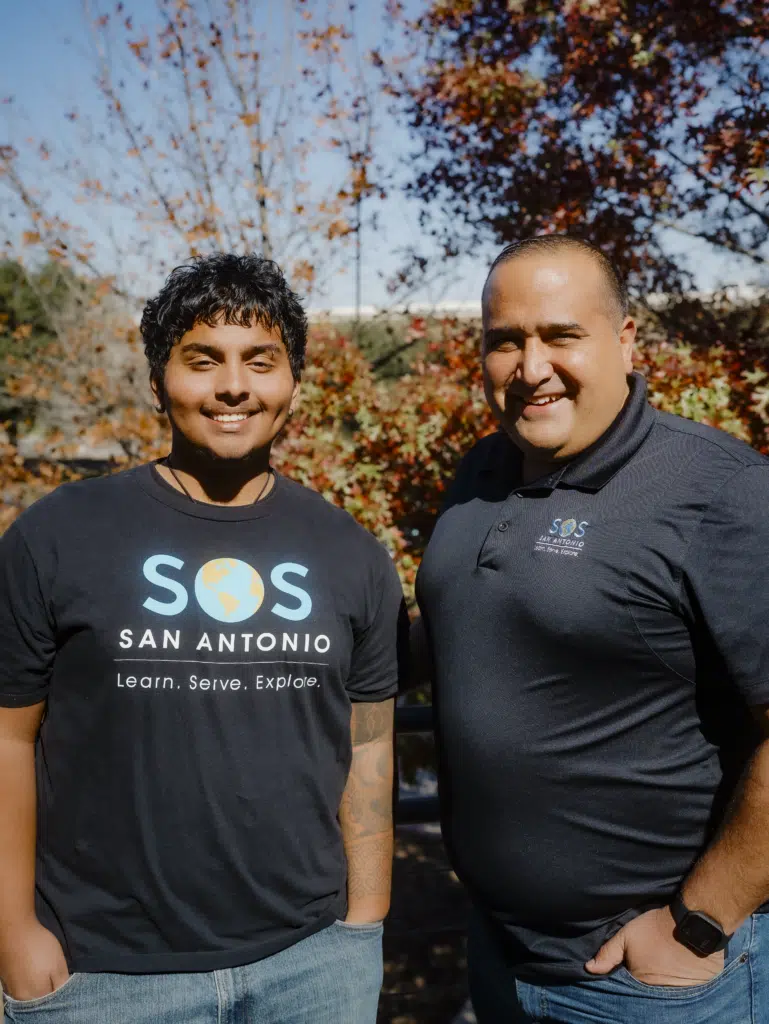
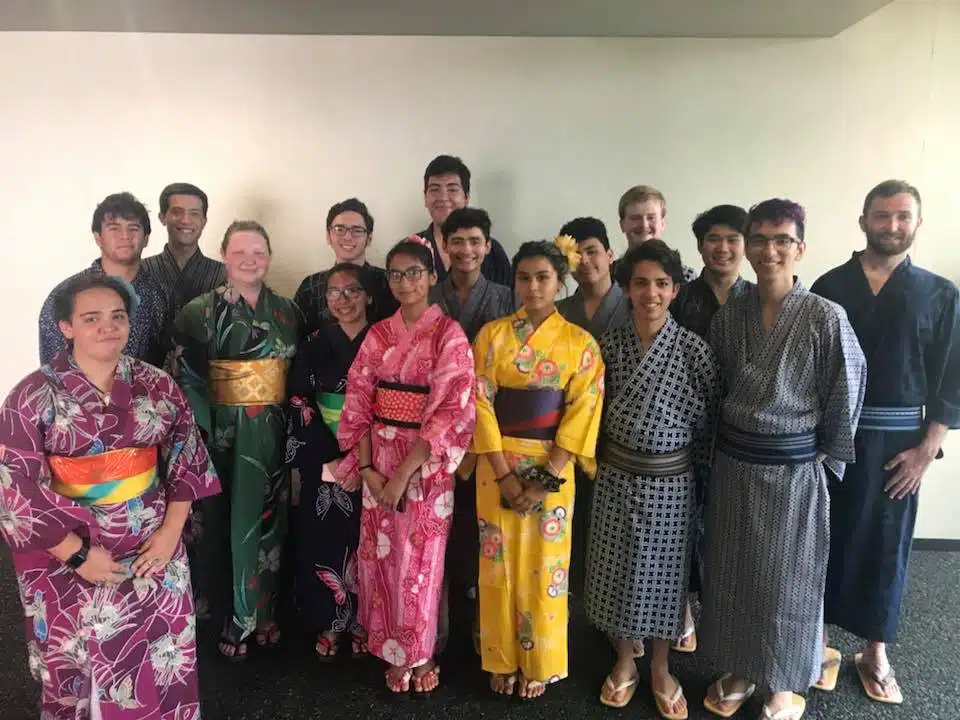
More than once in the past two years, 17-year-old Jathan Benavidez has donned a suit and tie to serve on panels and summits alongside business leaders and academics in San Antonio and Washington, D.C. He’s traveled to South Korea and Japan to participate in diplomatic programs. His resume is, as the kids say, “stacked.”
That wasn’t always the case. As a sophomore, the star football player was arrogant. “I was selfish. I had a big head,” he said. “It had gotten to the point where I could hardly recognize myself.”
Then, at the urging of his high school counselor at South San Antonio High School, Benavidez signed up to volunteer at the Special Olympics with Students of Service (SOS), a volunteer organization that participated in the H. E. Butt Foundation’s Capacity Building Program last year. The counselor suspected that SOS would expand Benavidez’s perspective, just as it has for hundreds of kids across the city—and will for hundreds more.
Benavidez’s world began to open on day one. At the Special Olympics he met John, a young swimmer with special needs. As he walked John to the starting blocks, Benavidez kept mostly to himself—polite, but not exactly warm. John hopped in the water and looked back at him.
“Do you believe in me?” John asked.
Benavidez felt his heart soften a little in his chest. “Yes! You got this,” he said. “You’re here and you’re doing it and that’s what matters.”
Then the race started, and “John smoked ‘em,” Benavidez said. His own excitement was real as he speed-walked (no running!) to the other end of the pool to greet the victor. John hugged Benavidez—a beefy, tattooed, lineman from the South Side—and the unlikely pair waved together to John’s parents in the stands.
That day, said Benavidez, “flipped me on my side. Like, my whole life.”
That’s what SOS does. It changes the way teenagers see themselves, their communities, and their worlds.
“That’s what SOS does. It changes the way teenagers see themselves, their communities, and their worlds.”
Service That Reorders a Life
When SOS founder Amir Samandi was teaching middle school in San Antonio in 2014, he already believed that education could open doors for students and strengthen the neighborhoods they grew up in. Conscientious, curious young people would become the leaders who lifted their communities. That belief had pulled him into the classroom in the first place.
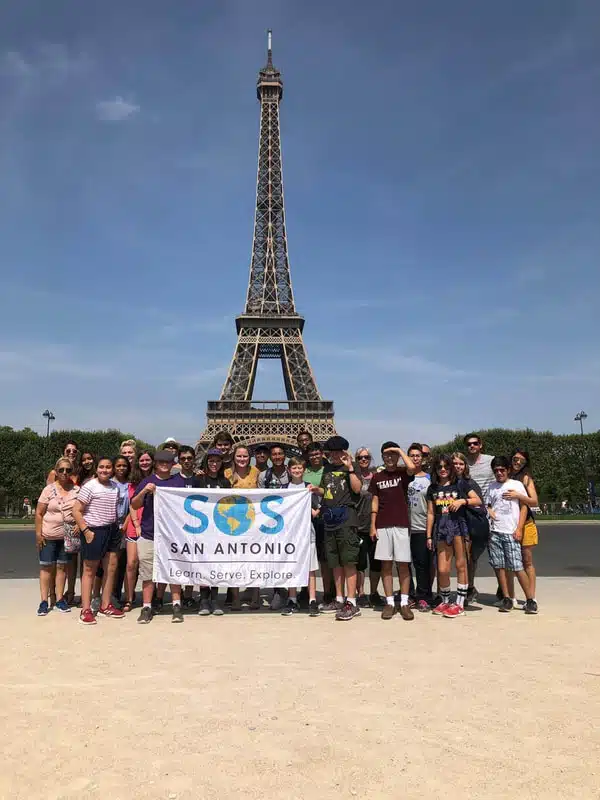
One day, a student saw a photo of the Eiffel Tower and asked if their class could visit. She had no idea there were 5,000 miles between San Antonio and Paris. When Samandi showed the class a map of their proposed field trip, the letdown was immediate. International travel felt unreachable for most families at the school.
Samandi couldn’t leave them in their disappointment. He mentioned that some schools managed to organize trips abroad, and his students immediately decided he was the teacher who would take them. “They put me on notice,” he said, laughing.
“Travel changes lives, if you let travel change your life.”
The principal explained that the school couldn’t host an overseas trip, although a nonprofit could. So Samandi launched a GoFundMe that grew into a nonprofit.
He wanted more than a sightseeing experience. “Travel changes lives, if you let travel change your life,” he said.
But for the travel component to really be effective, students needed to develop an appetite for growth and service back home in San Antonio.
The SOS Framework
The organization’s mission took shape around what Samandi calls “a good formula for making a better human”: learn, serve, explore.
The Career Atlas Program’s “Learn” pillar draws on the Japanese concept of ikigai. “Similar to the Christian concept of a calling,” Samandi said, invoking language familiar to anyone who remembers Howard Butt Jr.’s radio program The High Calling. Today, the H. E. But Foundation continues to honor this core belief in our faith convictions, where we state: “There is no ordinary person with an ordinary call.” We all have a high calling to bring “renewal and healing in the world.”
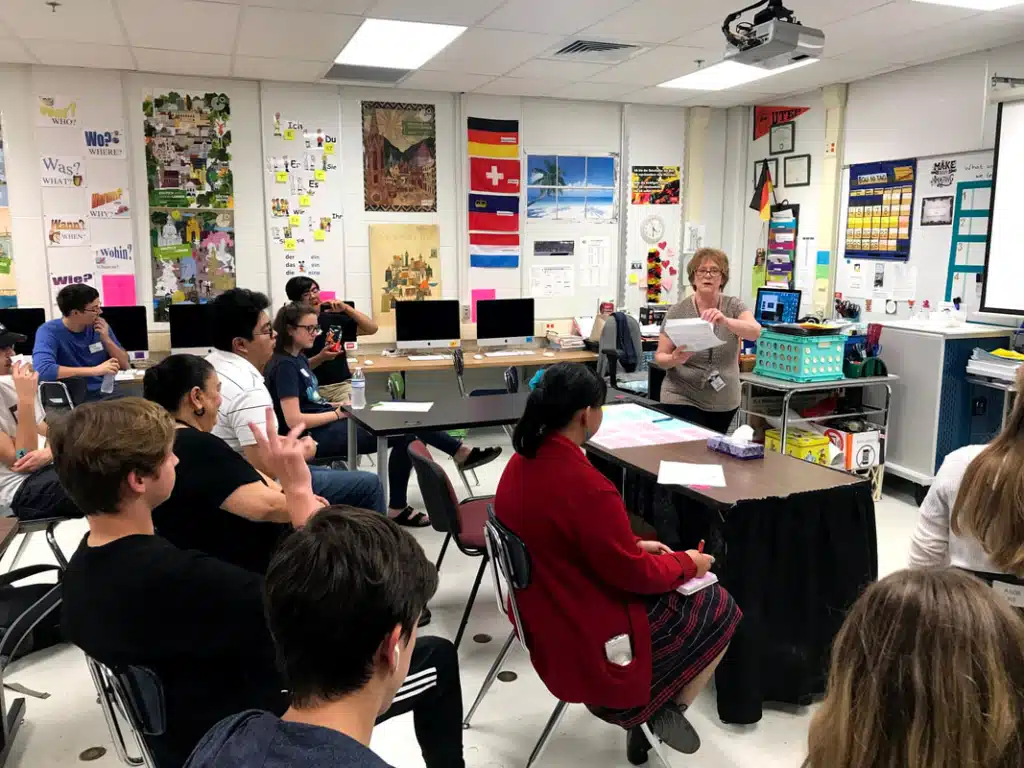
Similarly, Samandi wants students to see their jobs not just as a way to make money, but a way to put their values into practice. With partners like Methodist Healthcare, Saint Mary’s Law, the CAST Network, and H-E-B, the SOS team has built immersive programs that introduce students to careers in medicine, law, and other fields. Students meet practitioners and try hands-on activities to see what the work feels like. He is developing similar pathways in other areas.
Capacity Building and Collaboration
Samdani and SOS were a natural fit for the 2025 capacity building cohort, said Meg Loomis, who leads the initiative—because the focus of this cohort was not only on individual growth, but on becoming more effective through collaboration.
“Amir has a posture as a leader to learn and grow, and a whole organization about building connections,” Meg said.
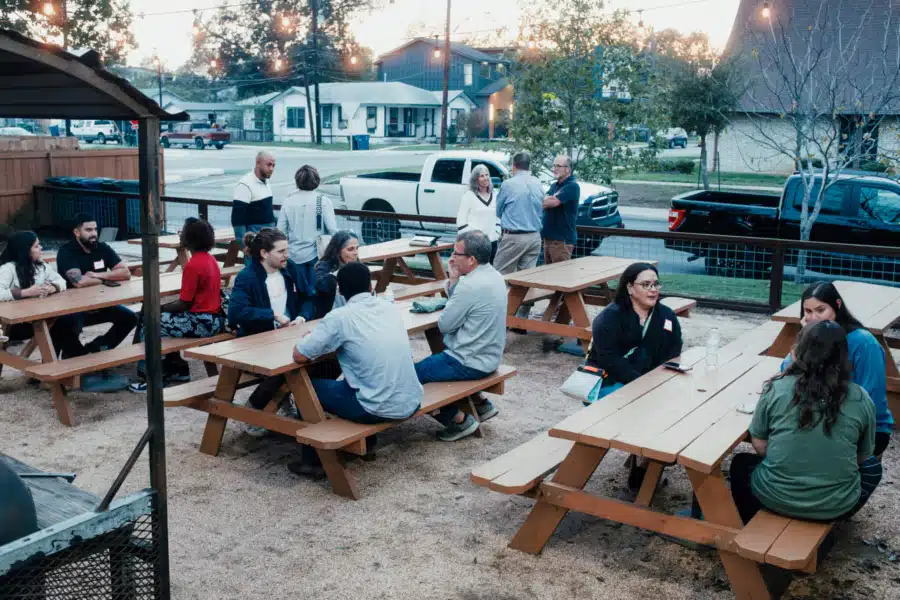
Collaborating with other youth-focused nonprofits has led to pivotal growth for SOS, Samdani said. Through the Capacity Building cohort, he found a kindred spirit in Say Sí, a celebrated youth arts program in San Antonio’s Southtown that does for kids in the arts what some of SOS’s career exploration modules do. They offered him office space, and he brought the SOS “serve” and “explore” pillars to the doorstep of their students. “No one nonprofit can do it all for every kid,” he said.
“If you’re doing these things right now, you’re going to do great things.”
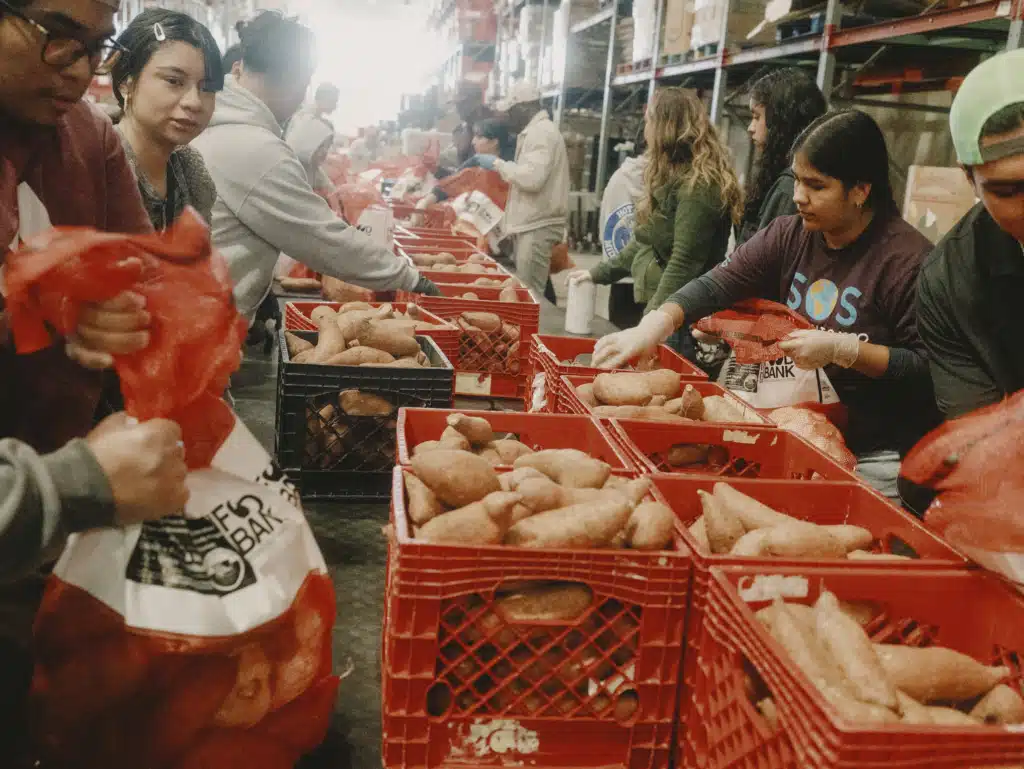
The service projects at the core of SOS are also built on connection and collaboration. Last year more than a thousand students volunteered across the city at organizations like Good Samaritan, Haven for Hope, Catholic Charities, and the Food Bank, plus community gardens, graffiti cleanup efforts, wounded warrior centers, migrant assistance organizations, animal shelters, and other sites.
As they serve, kids meet peers from across the city and learn how different life can be only a few miles away. As different as their lives are, they all share a desire to serve their community and travel. When service project sign-ups open on the SOS website every month, they fill within hours. Students often create their own service projects, and some help organize campus-based SOS Clubs.
Seeing the World Without Leaving Your Values Behind
To qualify for a trip, each student completes at least 15 hours of community service—a manageable requirement to allow for students who have to work to support their families. Many do far more.
Exploration only comes after service and learning. So far, SOS has sent around 600 students to 22 different countries. A student’s first airplane trip can be transformative, and standing in front of the Eiffel Tower or Machu Picchu brings a thrill that stays with them. Yet even the trips abroad keep service at the center. Students usually volunteer with organizations in the countries they visit.
“These are not vacations. They are informed travel experiences,” Samdani said.
There’s no question that experiences like this are transformative. Benavidez is proof positive—he is profoundly different today than when he started high school.
Since the day John the swimmer changed his life trajectory, Benavidez has rung the Peace Bell at Hiroshima, looked at colleges near and far, and made friends all over the world. No longer the arrogant sophomore, he is outgoing and generous. At one event, he shook hands with the grandson of Dwight D. Eisenhower, who complimented his handshake and said, “If you’re doing these things right now, you’re going to do great things.”
Benavidez is determined to make it so.