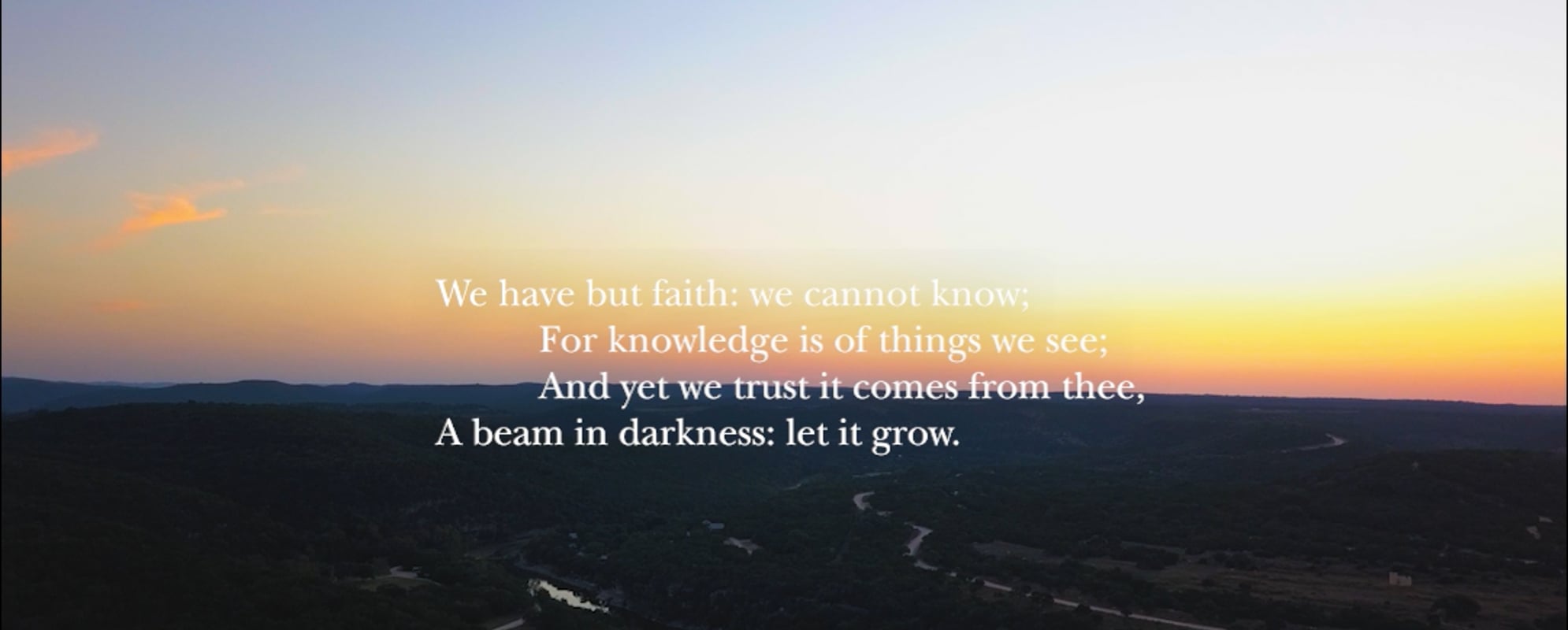


Even as Tennyson appeals to God, he also insists on questioning God.
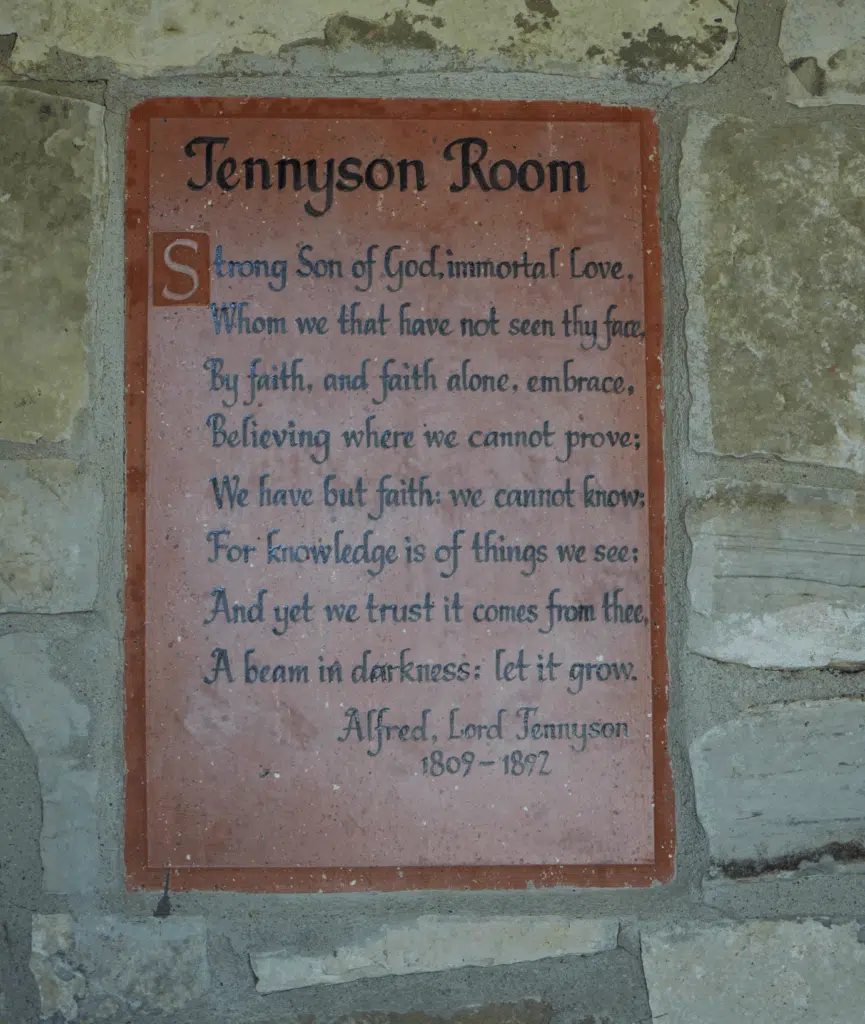
Excerpt from In Memoriam A. H. H. OBIIT MDCCCXXXIII: [Prelude]
By Alfred, Lord Tennyson
Strong Son of God, immortal Love,
Whom we, that have not seen thy face,
By faith, and faith alone, embrace,
Believing where we cannot prove;
Thine are these orbs of light and shade;
Thou madest Life in man and brute;
Thou madest Death; and lo, thy foot
Is on the skull which thou hast made.
Thou wilt not leave us in the dust:
Thou madest man, he knows not why,
He thinks he was not made to die;
And thou hast made him: thou art just.
Thou seemest human and divine,
The highest, holiest manhood, thou.
Our wills are ours, we know not how,
Our wills are ours, to make them thine.
Our little systems have their day;
They have their day and cease to be:
They are but broken lights of thee,
And thou, O Lord, art more than they.
We have but faith: we cannot know;
For knowledge is of things we see;
And yet we trust it comes from thee,
A beam in darkness: let it grow.
Reflection by Marcus Goodyear
Alfred, Lord Tennyson’s masterpiece In Memoriam is quoted in five places throughout the Foundation camps and offices. He wrote the piece—130 poems long in its entirety—as a way to process the death of a close friend. The prelude starts strong—confidently invoking the “Strong Son of God, Immortal Love.”
Even as the poem appeals to God, it also insists on questioning God. God’s foot is on our skulls. God may have created us just so we can die. God seems divine. God gives us free will so we can set it aside for God’s will. We believe because “we cannot prove.” Our knowledge is merely “a beam in the darkness.”
These are real doubts.
But Tennyson refuses to let doubt win. He asks forgiveness in each of the last three stanzas, mourning his friend and moving toward God’s wisdom. This faith is an act of will.
When grief tempts us toward despair, we too can hope there is something more. “Our little systems have their day,” but we can choose to believe God is bigger than they are.