

Visitors at an upcoming art exhibit may discover what many San Antonio youth say they already know: inequality makes life feel like a maze.
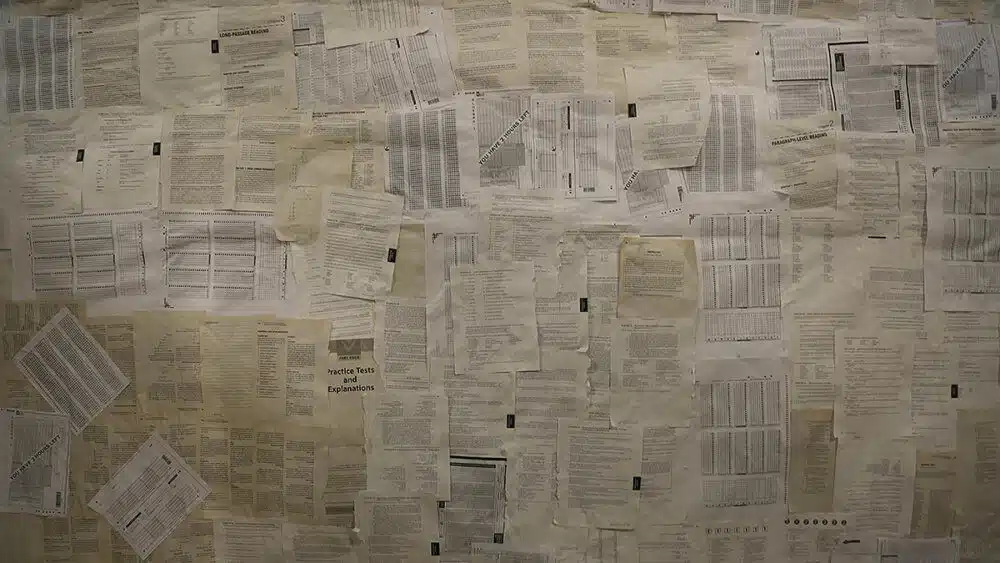
The largest installation at the exhibit, which is hosted by the educational arts program SAY Sí, is a paper mache maze completely covered with copies of standardized tests.
According to Rick Stemm, SAY Sí’s new media instructor, the maze, titled “Scientia Potentia Est,” represents the gauntlet of tests students are forced through—tests which he says have no proven effectiveness.
People who enter the maze will be given navigation tools based on an assigned ZIP code. Some zip codes are given help and proper instruction on how to get through the maze; some are given incorrect instructions and are pushed out.
“It’s a big simulation and interaction symbolizing both inequality and the bizarre and almost occult standards students have to go through in order to succeed,” Stemm said.
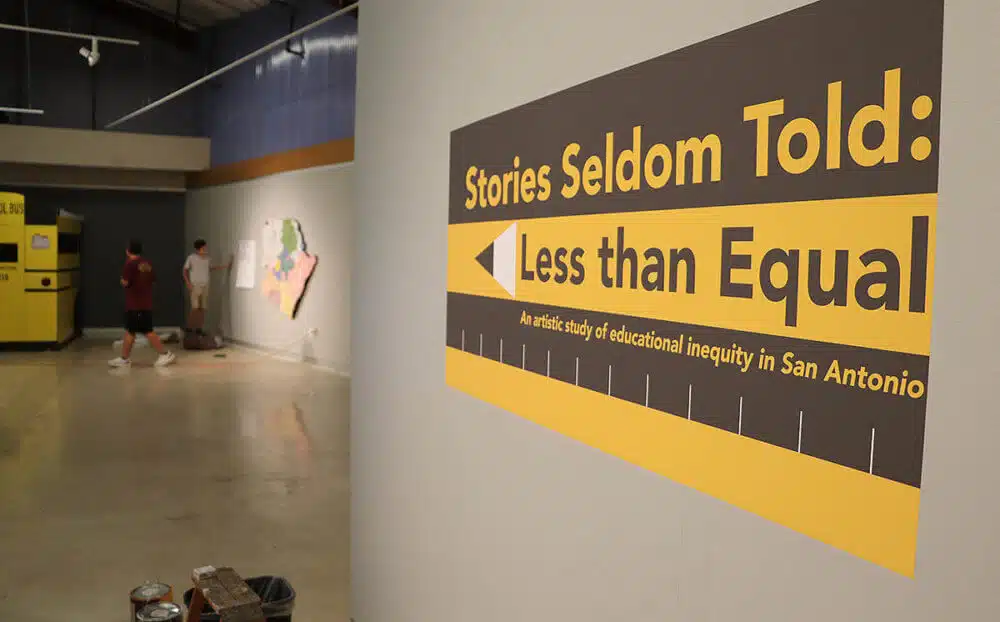
The exhibit is part of “Stories Seldom Told: Less than Equal,” an artistic study of educational inequity in San Antonio and its effects on the youth who experience it on a daily basis. Student choose topics for the event.
“It’s no secret that San Antonio is a segregated city, but no one ever asks young people about that. How are they affected? What are their experiences like?” Stemm said.
Students are courageously speaking up about inequality with their art, said Nicole Amri, SAY Sí’s program director. It only takes one passionate parent or individual to come through the exhibit and say, “I didn’t know my district — I didn’t realize this, that or the other,” Amri said.
Amri hopes the exhibit provokes audiences to consider how young people are affected by issues like standardized testing and unequal access to resources. Ideally, Amri said, the art installations will trigger some sort of “ah-ha” moment for patrons.
“If you grew up in San Antonio, if you live here, if you own a house here, if you rent here,” Amri said, “if you fall in any of those categories, then this should interest you.”
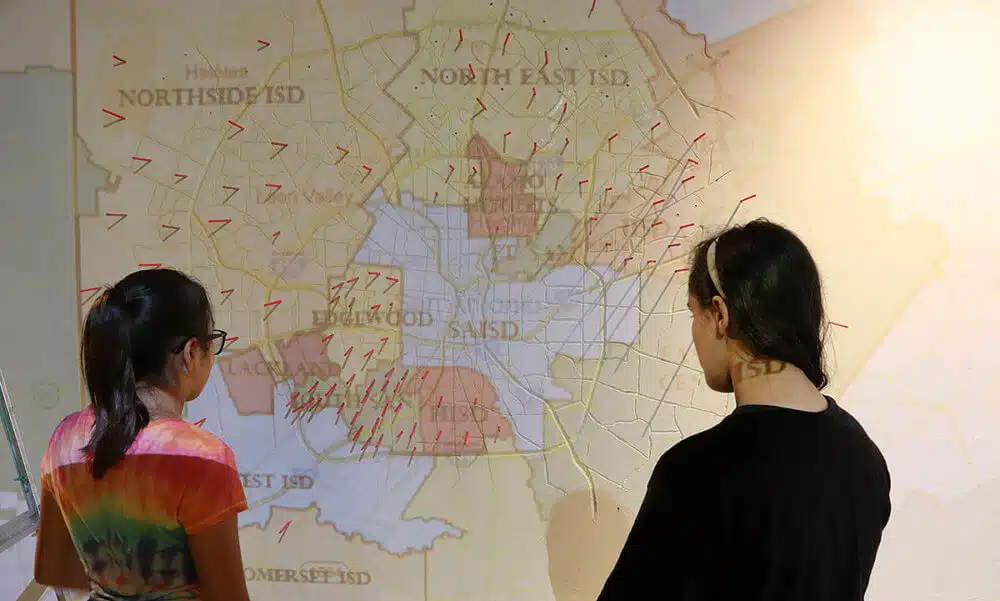
Another one of the larger installations is a wall projection that shows a map of San Antonio and its school districts represented by different colors. Variously colored pencils pinned onto the map represent a student’s ethnicity and the number of dropouts within that district.

Further into the exhibit is a plywood school bus large enough to carry about five people inside—the brainchild of Jesus Mancha, 16, a junior at Brackenridge High School. Softball-sized holes along the sides of the bus are bandaged with fake paper money, which Mancha says symbolizes the belief that money is the solution to deeper education issues.
Mancha says his school is often called a “ghetto” school. “We have a bad reputation in students, and teachers who aren’t adequate enough (to teach),” he said.
His sisters, who have already graduated from Brackenridge, told him that the high school didn’t prepare them for life outside public school.
“The stuff you learn there doesn’t prepare you for life. It’s an inadequate type of education,” Mancha said. “You have to guide yourself through it with those limited resources and try to make the best of it.”
This article was originally published by the H. E. Butt Foundation’s Folo Media initiative in 2017.