

A conversation with Patton Dodd, Executive Director of Echoes magazine.
Interview by Marcus Goodyear and Camille Hall-Ortega
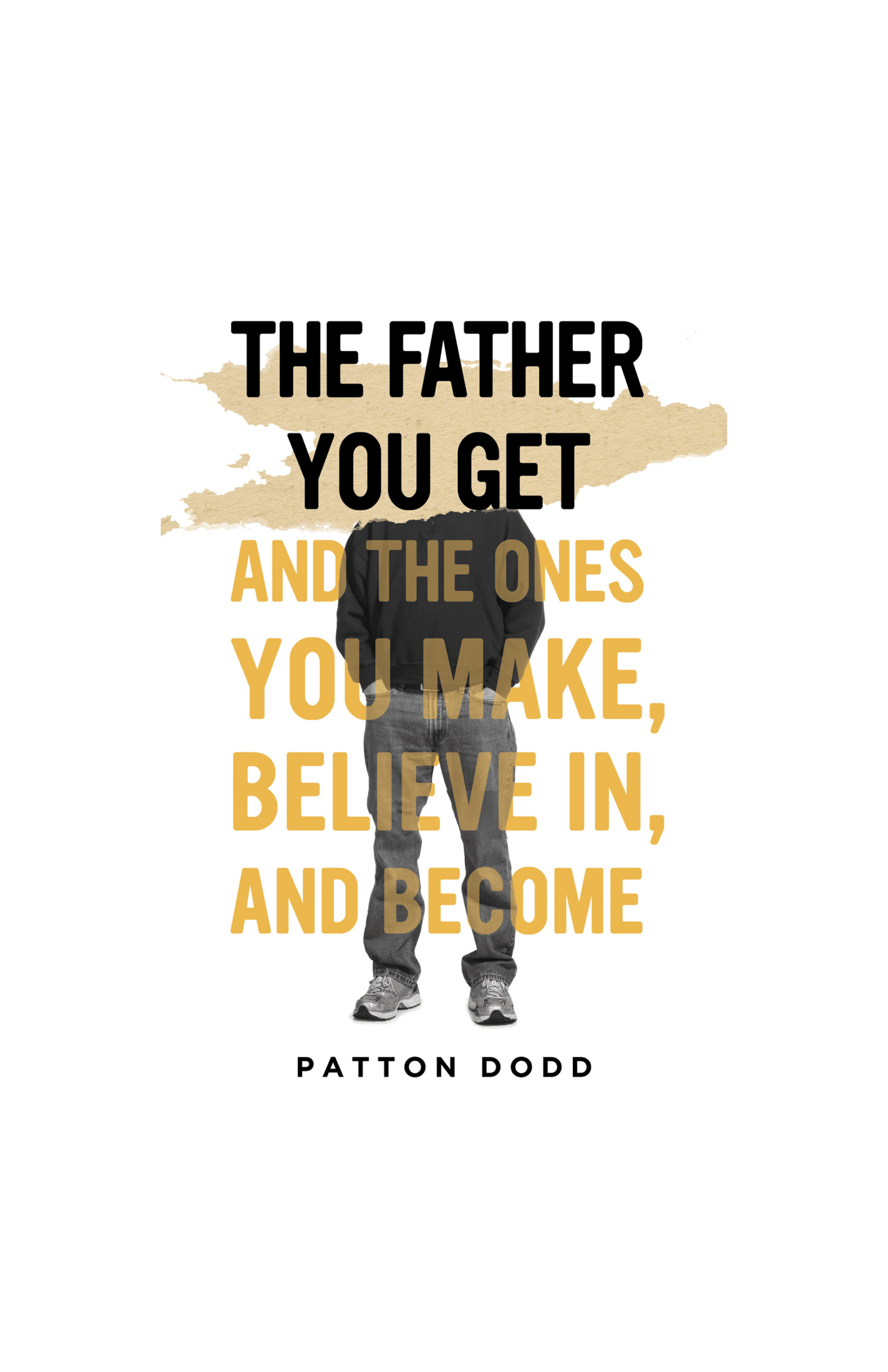
Fathers shape us—sometimes through presence, sometimes through absence. In his memoir The Father You Get, Patton Dodd explores growing up with an alcoholic father and the lasting questions that experience left behind. On The Echoes Podcast, he joins hosts Marcus Goodyear and Camille Hall-Ortega to discuss the work behind making sense of our family stories. This interview has been edited for space. Visit us online to hear the full conversation.
MARCUS: You open your book with a powerful story: you’re in a bar, a stranger asks, “Was your dad in the military?” and you suddenly break down in tears. What did that question touch in you?
PATTON: Those tears were surprising to me. We were throwing a goodbye party for a friend—normal introductions, normal questions. Someone asked where I was from, and I’ve always struggled to answer that because we moved so much when I was a kid. I went to six different schools in my first seven years.
It wasn’t because my dad was in the military. It wasn’t because he was changing jobs for better opportunities. It was because he was an addict, an alcoholic. He kept burning bridges and running from things, and we had to run with him.
That night, I was talking to a stranger, and he kept pressing: “Why did you move so much?” At some point I decided to say, “It was because my dad was a mess.” And when I did, I burst into tears. It was awkward and embarrassing. But it was also a wake-up call. I thought, I probably need to address this at some point.
CAMILLE: In the book you talk about “father hunger”—looking for father figures. Is that something you discovered in the writing process?
PATTON: It’s something I would not have admitted I had. In this book I’m sort of admitting, finally, that I have been hungry for a father figure—for father figures. I’ve been seeking them my whole life. But I wouldn’t have been able to say that plainly until just a year or two ago.
I think a lot of people have father hunger. We’re wired for nurturing. There’s a theological way to talk about that and a scientific way. But at a basic level, we’re wired for parenting—for mothering and fathering. It’s in us.
MARCUS: You also talk about how important it is to understand your story in order to move forward. Can you say more about that?
It can be useful to turn your life into a story—to ask,
“What was the origin? Who were the major influences? What were the climactic moments?”
PATTON: Story-making is a way of understanding. Our lives don’t exist to us as “stories” day to day. But when we reflect, it can be useful to turn your life into a story—to ask, “What was the origin? Who were the major influences? What were the climactic moments?”
For me, story-making about my father meant thinking about who he was. My dad raised me—he was in our home—but he was pretty vacant. He was an alcoholic. He was passed out most nights of my life. In the book I say he was “present, but absent” our whole lives.
And as I got older, the horror was realizing I resembled him—traits, tics, even appearance. I didn’t like who my father was. But there’s no shaking this off. I am Bill Dodd’s son. I needed to understand who he was so I could understand myself.
CAMILLE: In the book you describe “broken masculinity.” What feels broken to you about masculinity in our culture?
PATTON: Two things: isolation and performance. Masculinity culture is often about singular identity—individual strength, individual triumph, leadership at the top of the pyramid. And performance: appearance, showmanship, bravado.
The men I’ve valued most are different. They live in a network—they’re connected to other people. They’re not alone. And they’re not drawn to microphones and stages as much as dinner tables and living room couches and barstools.
MARCUS: You share a really sobering story in the book about your dad’s funeral.
PATTON: The day of his funeral, no one came—no friend, no pastor, no colleague. We were there as family, but no one who knew him showed up for him. And that’s the thing about isolation: if you’re not networked, if you’re not in community, it’s all fragile.
MARCUS: What role did faith play in your upbringing?
PATTON: My mother is the reason I survived my father. She was the shelter from the storm.
She was incredibly consistent in her faith. Prayer was the rhythm of her life. I remember looking through her Bible later in life and seeing notes in the margins—things she had written about our family and the struggles we were going through.
Her faith helped her endure a very difficult marriage. Eventually she did leave, but it took decades.
My relationship with faith has always been complicated. It doesn’t come naturally to me the way it did to her. But whatever faith I do have, I owe to her example.
CAMILLE: Where do you see healing now—in your family and in your life?
PATTON: I see it in the fact that I have a marriage, and we have three kids, and we enjoy one another a great deal. My kids and I can talk about just about anything. There were a lot of hidden things in my family of origin.
In the family I’m part of now, there’s a lot of truth-telling. Honest conversation doesn’t all come out at once—sometimes it trickles out over time—but we’ve created a place of emotional safety for each other. I’m really grateful for that.
An excerpt from The Father You Get
Some people have faith in God the way Batman and The Punisher have superpowers— built from within through sheer, willful acts of intention. Other people have faith the way Superman and Spiderman have superpowers—they’re born with it, or they acquire it through some freak accident; then they learn to harness it, live with it, put it to some good use against the challenges of this world.
You don’t know how faith comes to the people around you, but you go to church with your fellow believers and you see them singing the songs and taking the bread and wine and praying for their needs and you think: This whole thing really connects with them. And you’re not looking down on that at all; you’re intrigued by it, tempted to it. However they got here is right on, you think. I want what they have.
But in time you find that faith is a faucet. It can run gentle, steady, and strong. Hot and cold. It can be turned off, yet still drip. Am I the one turning the knob? Or am I merely the spout?
Faith is a muse that visits, blesses with her presence. How do I make her appear? Not clear, but I have learned that her visits are a blessing. When the muse appears, I sit under her, working, creating, hoping she won’t go away. She’s a wave I don’t pass up; I just ride.
Sometimes a few moments of faith are enough to sustain me for a stretch of faithless road ahead.
…
I still pass through great periods of doubt, where I’m ready to believe that nothing is true, that there is no Author and we’re alone on a great big space rock. Other times I pass through a deep sense of presence, trusting in a voice that is calling from within and from without. Some days God—the One Who Is Paying Attention—is so obviously present to me that I cannot imagine having doubted.
I feel less in control of all of this than I used to; I feel less need to control it.