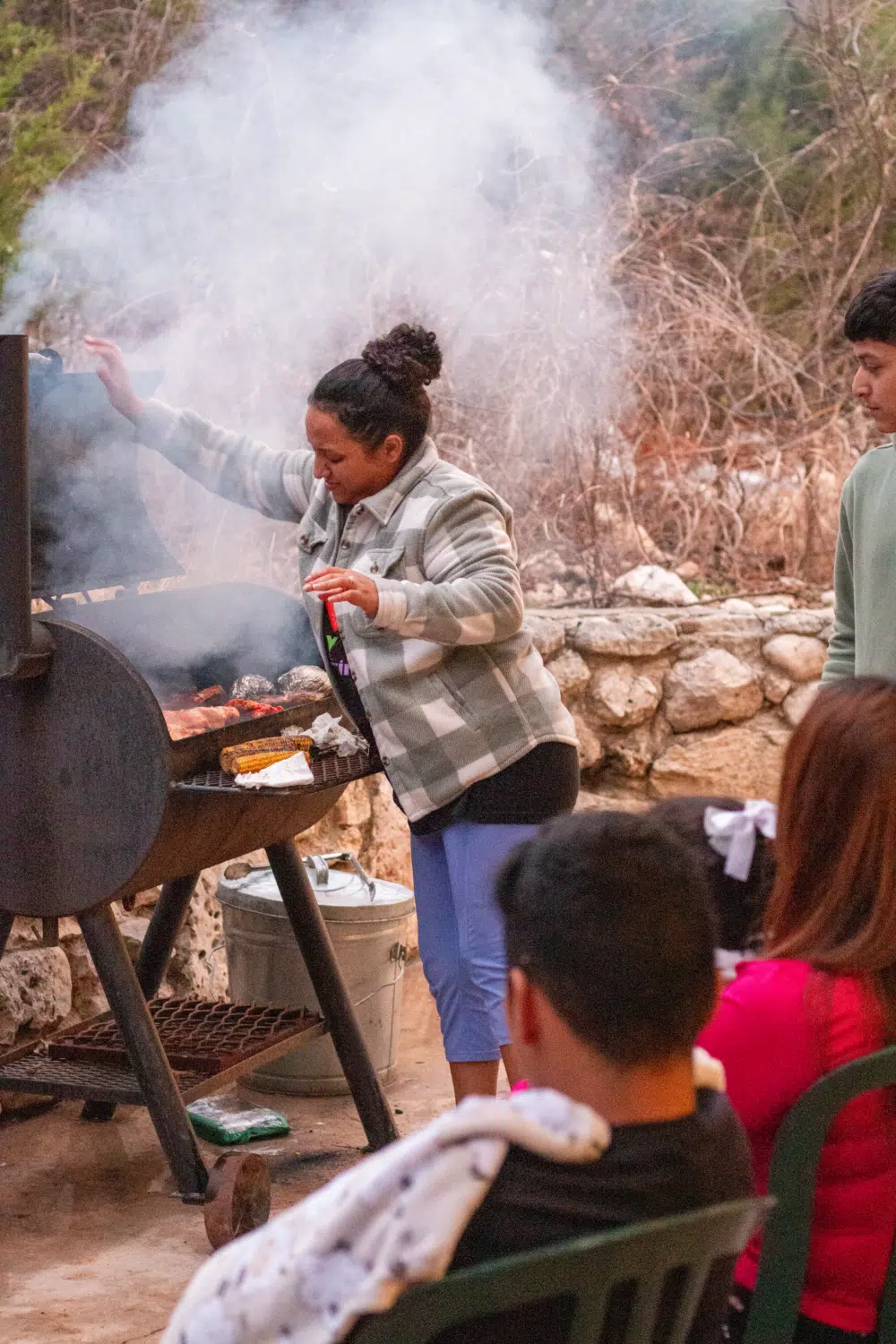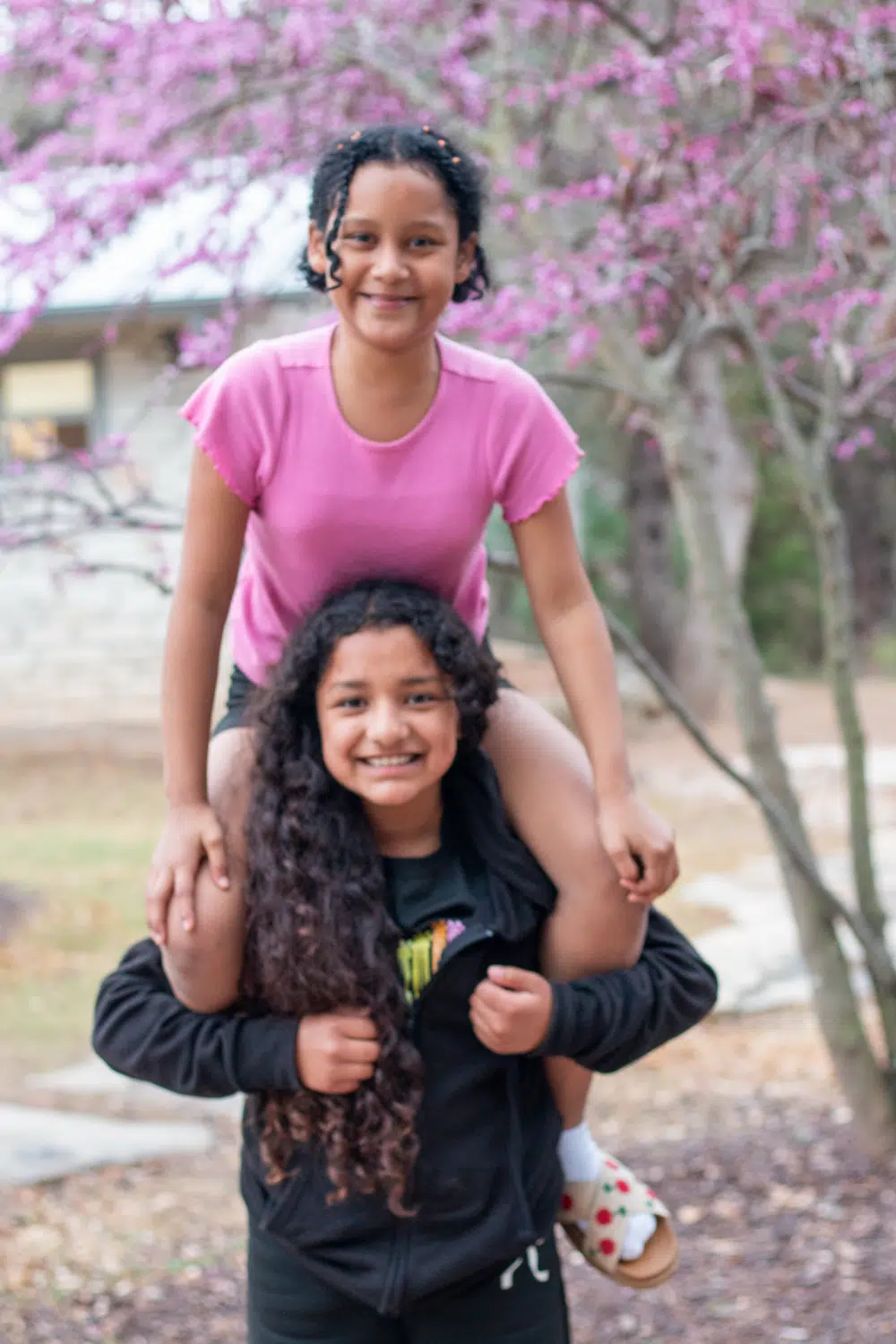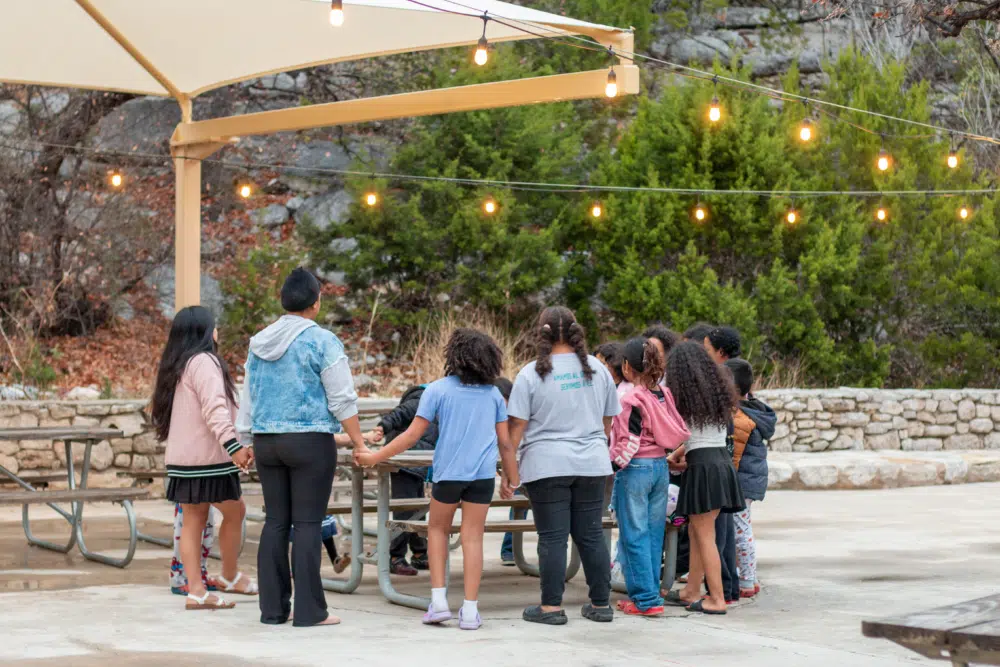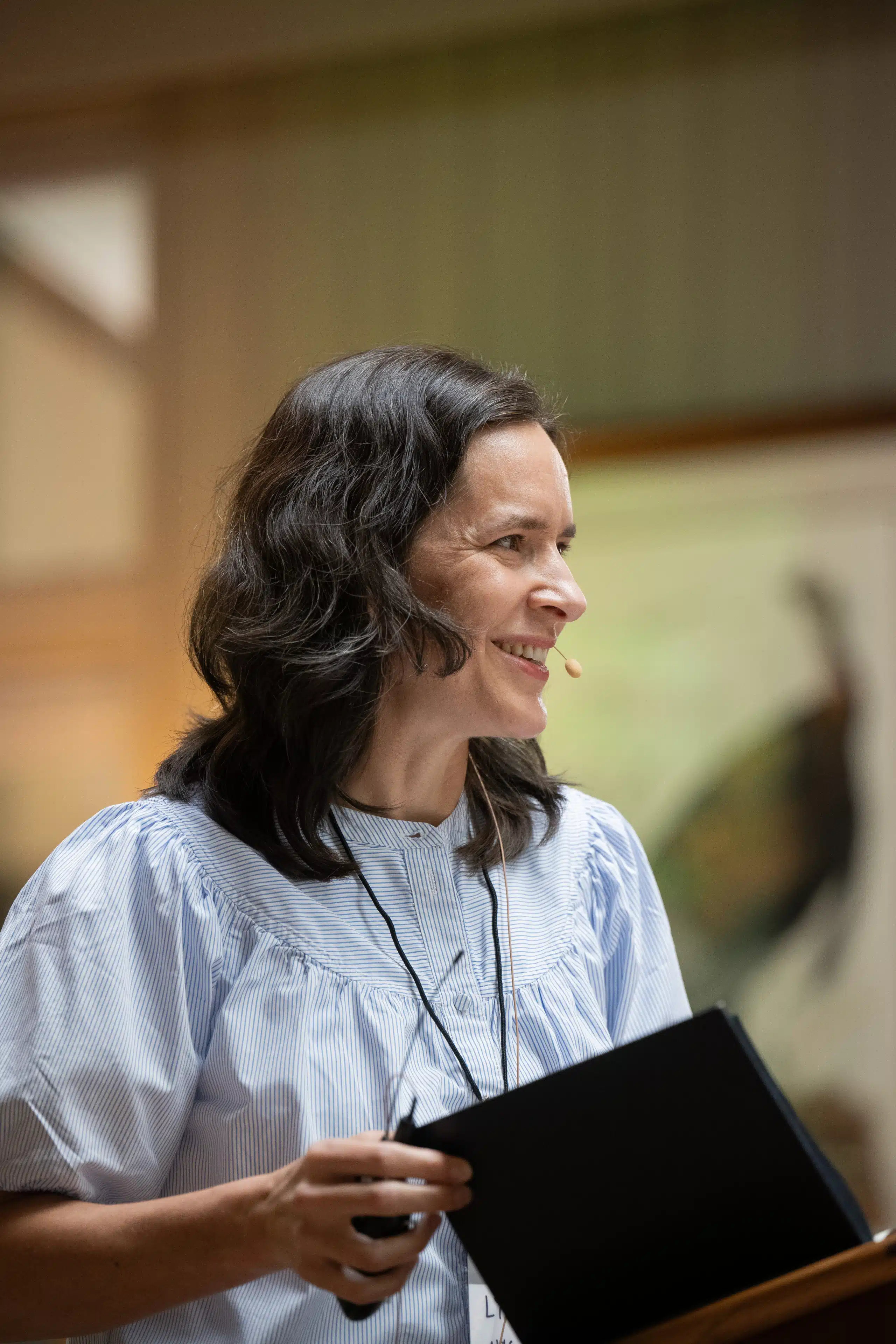



At Foundation Camp, families from one San Antonio congregation found a few sacred hours of rest.
Photography by Reid Bader
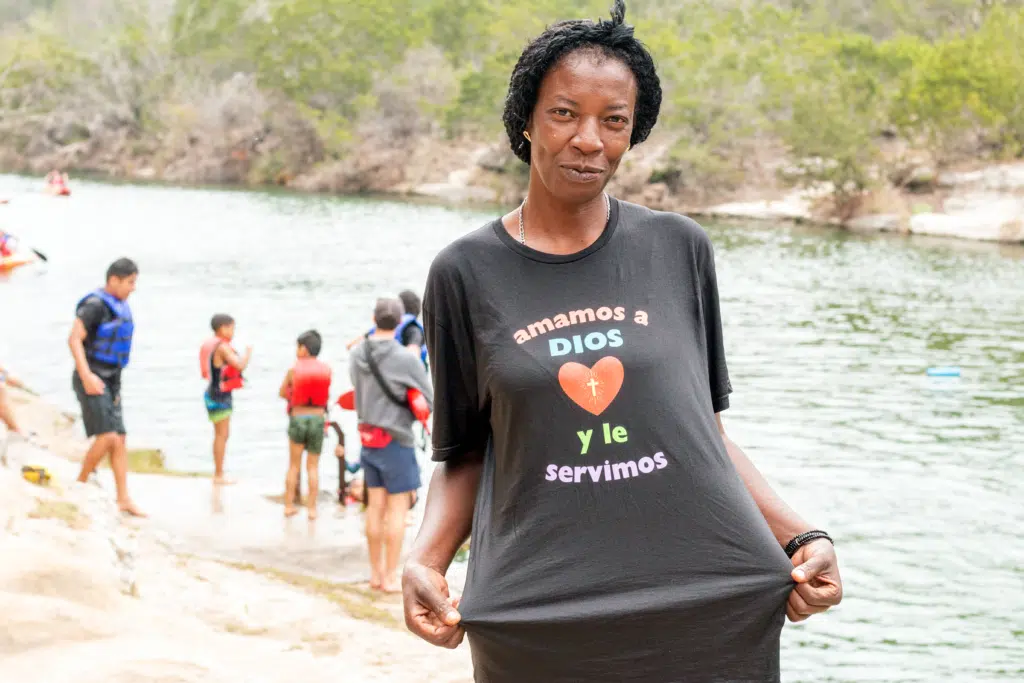
“All through my life, all I’ve known is violence.”
“All through my life, all I’ve known is violence,” said Lucy, watching the dining room at Singing Hills empty out after lunch. Her younger child climbed up onto her lap and scanned the empty table for a second round of dessert. Finding none, he settled back into his mother’s arms and stared at the hearth, where a few other children from their church huddled around a cheerful fire.
The tapping of rain on glass windows. The crackle of fire. Her toddler reclining against her chest. It was a rare moment of wholeness—peace in body and spirit. For Lucy and many of her fellow congregants at Iglesia Cristiana Roca de Refugio, afternoons like this might happen once a year.
Lucy traced her journey to the Canyon back to Nigeria, where she lived on high alert, listening for news of bandits in their area. In 2022, that news came. Lucy heard that a village nearby had been raided, homes burned, and families murdered. As a Christian, she explained, the news was particularly frightening because some of the bandits belonged to Jihadist movements like Boko Haram, an extremist group known for targeting Christians. Since 2009, international news outlets have confirmed dozens of reports of 50 or more villagers being killed at once in nighttime raids.
Rather than wait to find out if their village would be spared, Lucy, her husband, and their daughter fled for Mexico.
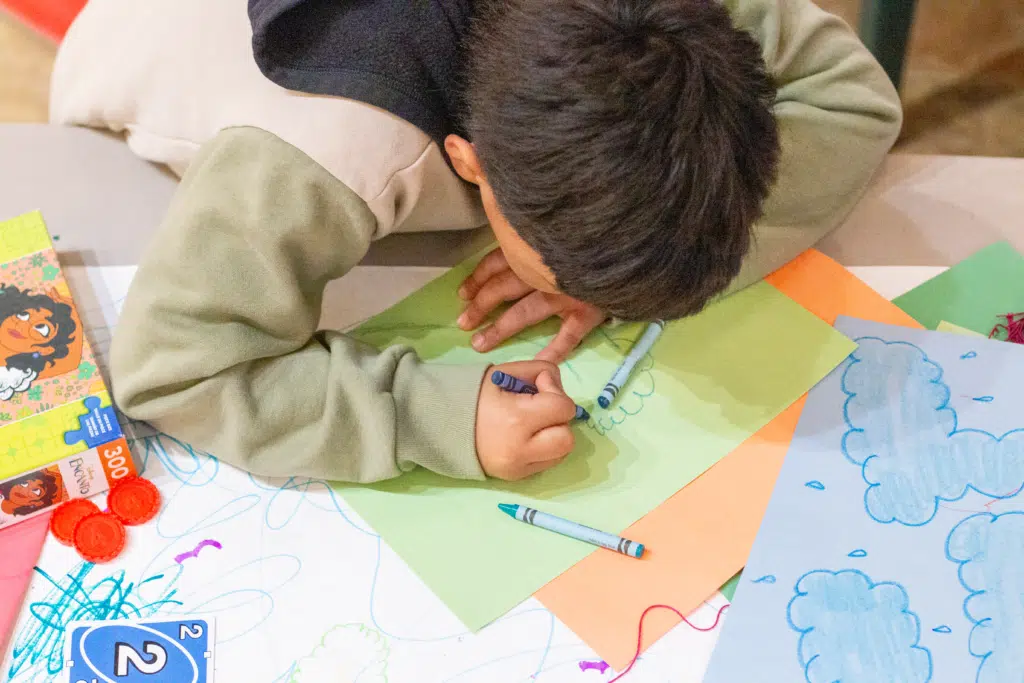
Lucy’s daughter, now in elementary school, approached as her mother told me their story in the Singing Hills dining room. She needed help with one of the crafts Pastor Dianne Garcia had set out on tables alongside the rain-spattered windows. I asked the girl if she’d enjoyed the waterfront earlier that day before the cold weather blew in. She had been too scared to get in the water, she admitted. Several kids had been nervous about the leap from the rocks into the deep water, even with their life jackets. “Si se puede! Si se puede!” their peers chanted, coaxing them to be brave.
“There’s nowhere else like this for us,”
Pastor Garcia said.
Three lifeguards, borrowed from H. E. Butt Foundation Outdoor School, joined in the encouragement—smiling, enthusiastic ambassadors of Canyon hospitality. Some took to the watercraft, paddling far into the distance. Adults on kayaks drifted around them in communal watchkeeping, everyone reveling in the space to move, to whoop and holler in the freedom of the waterfront.
Her congregation is made up of immigrants like Lucy, people seeking a place where they can care for their children, serve their communities, and steward the gifts God has given them. Many such sojourners have found themselves in San Antonio and in need of help getting on their feet, especially while work permits are being processed.
The church, as well as Garcia’s immigrant aid nonprofit Nuevos Vecinos, meets those immediate needs. Without fail, Garcia said, as soon as people are stabilized, they begin to volunteer, helping newcomers in the way Garcia helped them.
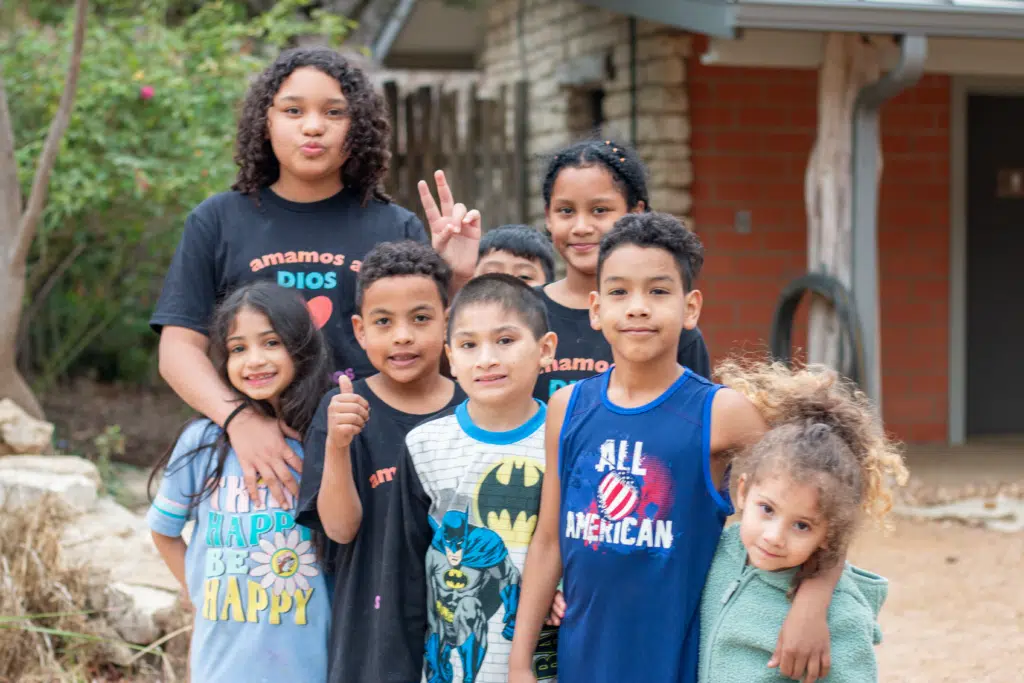
The Road to Roca de Refugio
Lucy had thought that Mexico would be the final destination for her growing family—she became pregnant soon after arrival. But the stress of the journey had changed her husband. He grew increasingly reactive and abusive. Finally, one day when she came home, he was gone. She was now a single mother in a country where she did not speak the language.
It wasn’t uncommon to hear gun shots and screeching tires in the gang-controlled neighborhood where she lived. For low-income families without many options, the best course of action was usually to keep one’s head down and pray to be left alone. Then one day in 2024, she opened her front door to see bodies strewn across the sidewalk. People were walking around them, stepping over them, she said, and no one came to investigate, at least none that she saw. She knew then that Mexico would not be the refuge she’d hoped it would be.
“Our crossing the border,” she said.
“It was in hope.”
Helicopters were circling on the day she left for the Baja peninsula, hoping to enter California after crossing the Sierra de Juarez mountains. She said she had made that journey with her baby on her back, and sometimes crawling on hands and knees, suffering from altitude sickness. Then her older child fell and broke her leg, and Lucy essentially carried both children across the border. But the broken leg soon brought a blessing.
Once in the United States, Lucy followed the established legal process for fleeing violence—she found Customs and Border Patrol officers and requested asylum. The officers rendered first aid to Lucy’s daughter, then expedited her immigration process, sending the family to San Antonio for medical care and to await their asylum hearing before an immigration judge.
That’s where Catholic Charities connected Lucy to Garcia in January 2025, shortly before the church’s scheduled Foundation Camp weekend. Not long after beginning to resettle and endure the waiting period before her hearing, Lucy and her kids were able to go the Canyon.
Prayers, hopes and laments
About 70 people attended camp with Roca de Refugio last year, roughly a third of their total congregation. The church consists almost entirely of recent arrivals to the United States, and most of them have open asylum cases, work permits, temporary visas, and other legal statuses. Yet, given the upheaval in the immigration system over the last year, the church’s families have been struggling against new uncertainties and pressures.
Some have had their legal status changed abruptly—they might show up to court for a regular hearing only to find out their case has been dropped. One member was pulled over while driving and detained on the spot, leaving her keys in the car for relatives to retrieve.
All in all, Garcia said, 16 adults and five children have been detained from the church’s body, and about half of those deported.
Every Sunday service, they practice a custom of writing prayers for health, protection, and justice on slips of paper, leaving them at the church altar. Some light candles to accompany their prayers, flickers of hope in the darkness.
After a year of immigration sweeps and asylum revocations, only 45 church members attended Foundation Camp this March, more than a third fewer than 2025. Of the families who came, some were missing members. Some families had stayed behind because the parents had been fitted with ankle monitors that prevented them from leaving San Antonio until their court date. Some are too fearful to leave their homes these days.
“Garcia’s mission is to minister to both body and soul, to connect the newcomers to each other
and to God.”
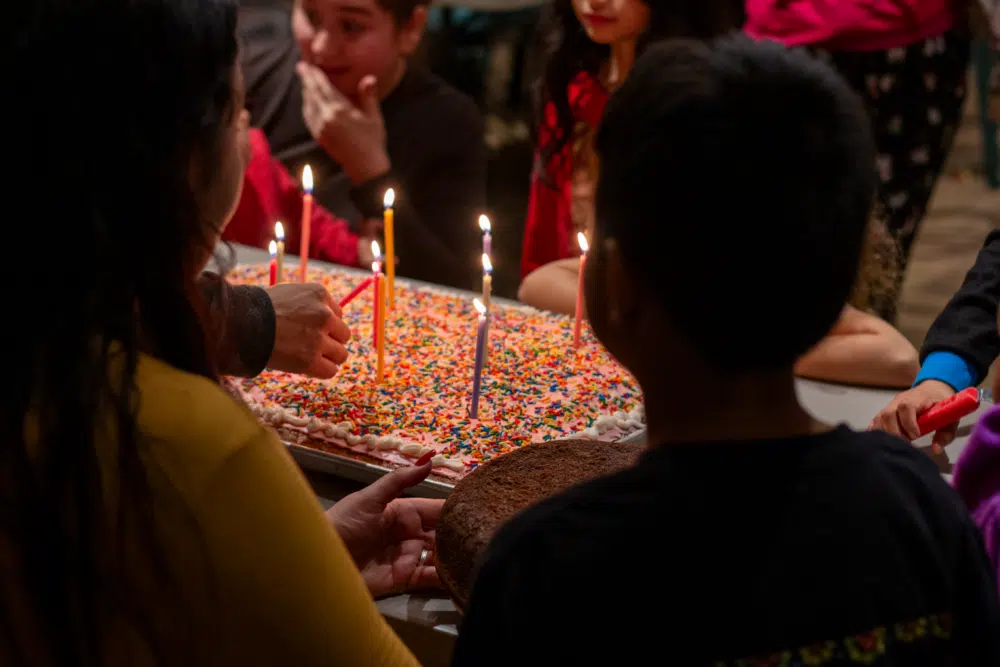
As the church lit candles on a birthday cake at Singing Hills—Garcia baked it to celebrate all the month’s birthdays—I remembered their practice of lighting candles at the altar. Prayers for health, protection, and justice in the coming year of life. Hope that the same sisters, brothers, mothers, and fathers would be there to blow the candles out next year.
Garcia’s mission is to minister to both body and soul, to connect the newcomers to each other and to God. To cultivate a unity based in care, love, and hope for the future. When the first congregants were detained last year, Garcia leaned heavily on Scripture’s messages of hope. Hope that God would protect and provide. Hope that they would be reunified with their husbands and fathers, and, increasingly as time went on, with wives and mothers.
But by the twentieth and twenty-first detainment, she said, she found herself in those Psalms of lament where David cries out to the Lord, “How long?”
Lucy knows that hope-and-lament arc by heart. Crawling through the mountains with a baby on her back and trudging the last miles with a wounded child in her arms, she lived the psalmist’s question: How long?
She kept moving.
She hoped for the freedom to worship without persecution. To walk down the street without dodging the gaze of gang members. She hoped for her children to be able to love God and love others freely, without fear.
Now, with her toddler in her arms and the rain slowing to a gentle patter, that sleepy, safe afternoon in the Canyon gave evidence, however fleeting, that her hope had not been in vain.