

Laity Lodge Family Camp’s opening meal—simple, safe, and shared—turns a long day of travel into community, new friendships, and rest.
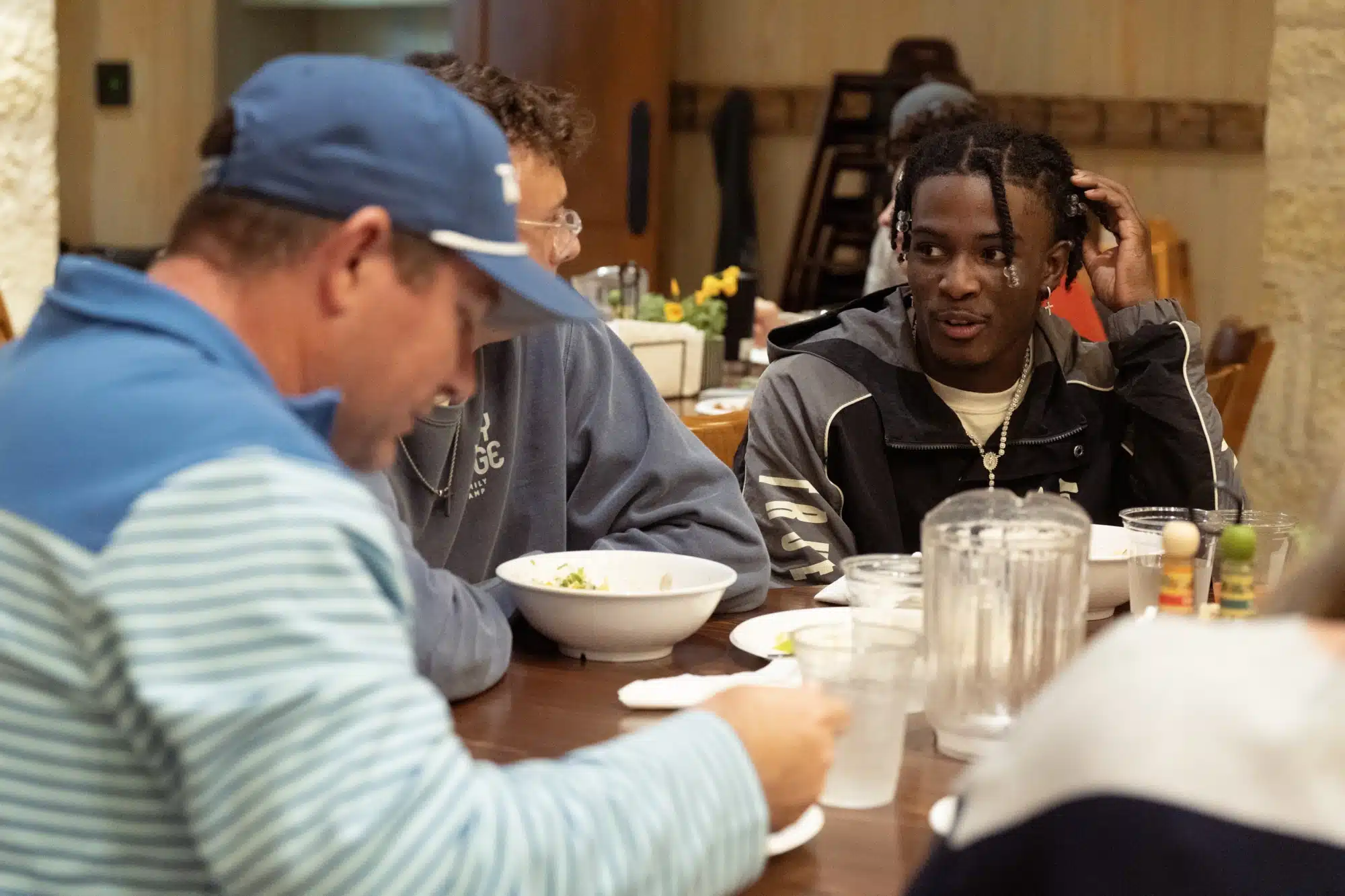
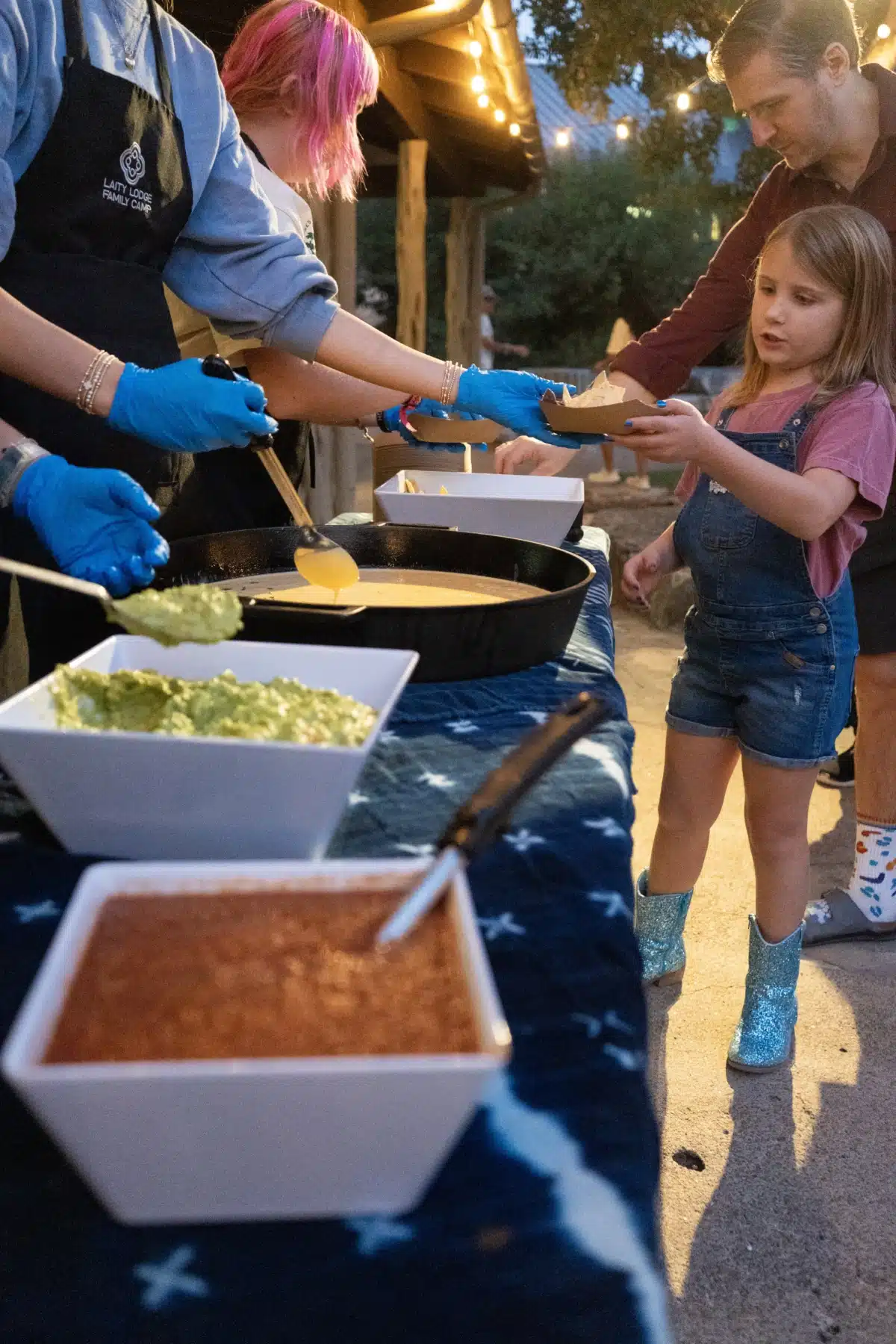
Two young moms sway in sync as they stand in the food line at Headwaters, keeping the babies that are strapped to them content. A big brother sneaks out of line to wrangle a wandering sibling. One dad hands an empty bowl to the dad waiting behind him and strikes up a conversation.
“Some of the most fruitful camp conversations happen during the long mealtimes at the Ranch House,” said LLFC Associate Shaeffer Quinn. “And that includes when you’re standing in line. That’s part of why that first dinner is my favorite camp meal.”
Shaeffer has not one, not two, but three major food allergies and many of her camp meals are prepared separately. She typically waits for her meal to be brought to her instead of chatting and laughing with others in the main serving line.
But not on opening night. Not on chipotle bowl night.
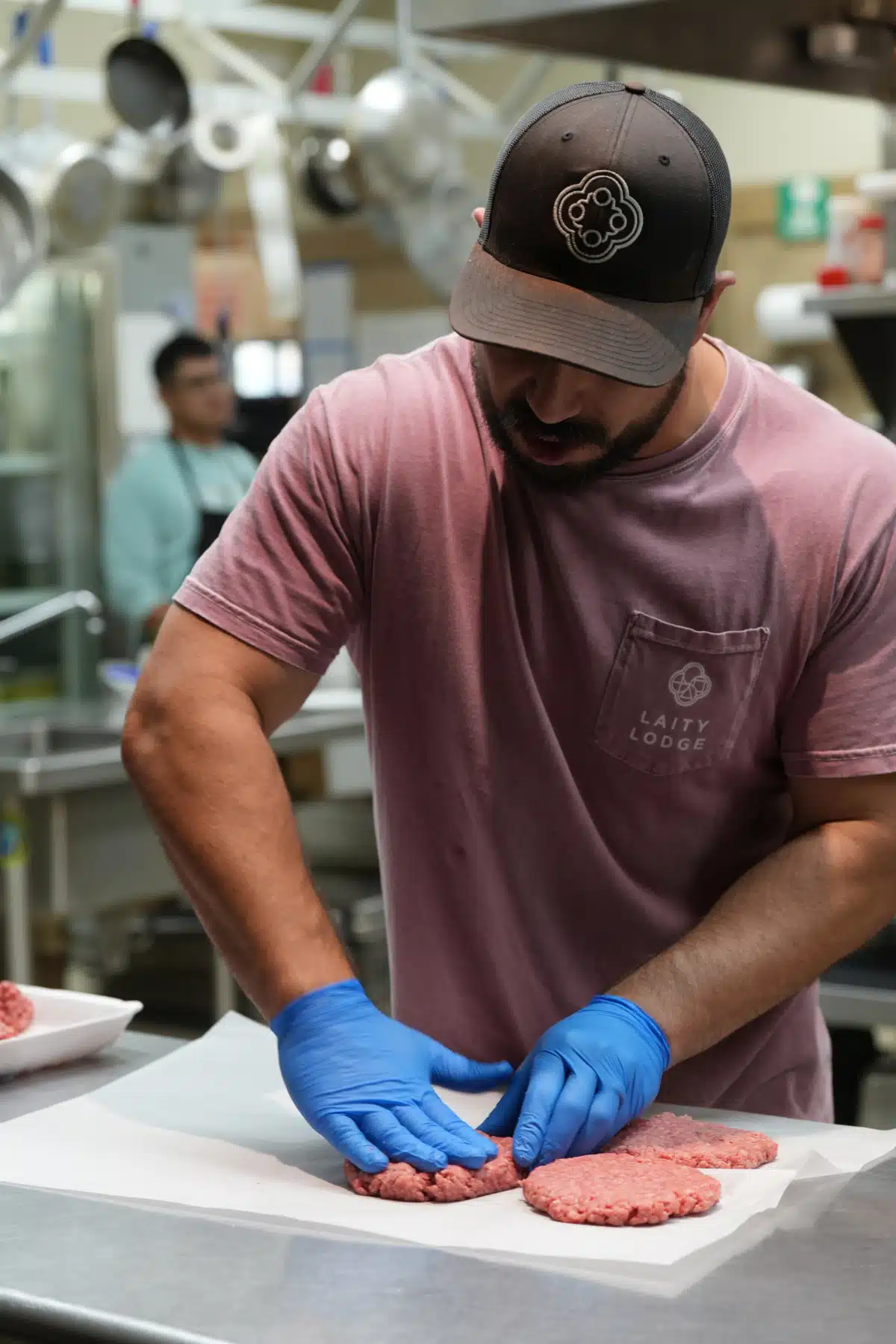
LLFC Executive Chef David Withrow specifically prepares chipotle bowls as the first meal of each retreat as a way of relieving food anxiety for people like Shaeffer, who have allergies, sensitivities, or preferences. It’s a modular meal that includes options like ground beef, chicken, pinto beans, rice, roasted corn, avocado, cilantro, and onion. No gluten, dairy, egg, or soy. The chipotle sauce at the end of the table includes mayo, which has egg and soy in it, but even then, David and his team are prepared with an alternative allergen-free sauce.
“People have been traveling, and they may not be feeling their best when they get to camp,” said David. “We want to be intentional with our first meal and put people at ease.”
“We want to be intentional with our
first meal and put people at ease.”
This ease, this dimming of food anxiety, was felt by LLFC parent Steven Evans. For Evans and his wife, Kathleen, the constant monitoring of food and ingredients for their 11-year-old daughter, Ellie, is part of their daily routine. Evans says Ellie is extremely sensitive to artificial ingredients, including artificial preservatives, flavors, and colors. If she ingests any of these, she experiences skin rashes, hyperactivity, and irritability with diminished capacity to focus—all of which can last up to 24 hours and turn a retreat into a family struggle.
According to a study published by the American Academy of Pediatrics, 1 in 13 children have a food allergy, and 40% of those with an allergy have more than one. The top allergens include peanuts, milk, and shellfish. If you or a family member suspect you have a food allergy, you may want to seek advice and support from a nutritionist or medical professional. While the current research shows that allergies to artificial ingredients are rare, the U.S. Food and Drug Administration has recognized that food dyes like Yellow No. 5 (tartrazine) can cause symptoms for some individuals.
As awareness of food allergies and sensitivities has increased, people like Evans are paying more attention to how their food makes them feel—and how their kids react to different ingredients.
“David was so good at talking us through all the ingredients. He would even pull packages out of the freezer so we could look at the ingredients ourselves,” said Evans. “Then it was easy for us to tell Ellie, ‘Yes, you can eat all this stuff except that one thing.'”
An Open Door Kitchen

As the executive chef for LLFC, David is responsible for feeding around 2,470 campers a year, which means his team doesn’t have the capacity to plan around every nuanced food allergy. But what he can do is invest in the quality of his ingredients. That means frying chicken in olive oil instead of vegetable or peanut oil, making chipotle bowls with individual spices instead of pre-made blends that often contain soy or gluten, and always having fresh fruit and a salad bar ready to go.
David also keeps an open-door policy. Parents can declare any allergies in their family when they sign up for camp, but he knows that, especially for those with complicated restrictions, peace can come from freely talking about their needs versus just being told what they have to avoid. It might look like a phone call before opening day. Or having a one-on-one conversation with a camper at the Ranch House. Or it can look like pulling packages out of the freezer for a parent to check the ingredient list.
“It’s such a willing kitchen,” said Shaeffer. “David was always ready to sit and have a conversation with me.”
David can’t promise that every single food item or meal at Family Camp is allergen-free. But staying mindful helps his team make camp a place of rest and communion for staff, parents, and their kids.
“I’ve learned that I have to have some things on standby,” said David. “When it’s day three and little Johnny or Tina has only been picking at the food, mom and dad become uneasy. That’s when I’m happy to take the extra 25 minutes to make a cheese pizza. It’s about bringing peace to the families while they’re here.”
Minimizing The Noise To Maximize Connection

A 2024 study published in Frontiers in Child and Adolescent Psychiatry showed that the quality and quantity of parent-child interactions is impaired when the parent is distracted—and not just distracted by technology. Even non-digital distractions saw a meaningful decrease in communication. Whether a parent is staring at a screen or just lost in anxious thoughts, not being present hinders them from engaging with their family.
Part of David and his team’s aim is to provide a place where distraction-free fellowship can occur by minimizing the food noise that can too often take up space in the minds of staff and campers—and the parents of campers—that deal with food allergies and sensitivities. And they set the tone by paying special attention to that first meal.
“I think new guests can be a little nervous arriving at camp. What is Roundup? What is the Ranch House?” explained Shaeffer. “To be able to alleviate some of those nerves and say, ‘We’ve thought through your allergies. You can have everything that is on this table tonight.’ It’s so hospitable.”
“When I first saw the food, I thought maybe we were having tacos and that the tortillas just hadn’t arrived yet,” laughed Evans, remembering chipotle bowl night. He then recalled another family at that retreat with a shared gluten-allergy, and how nice a worry-free, rice-based meal must have been for them.
The following morning, kitchen staff brought gluten-free donuts to that same family at their table while the other families walked through the pancake line. But for that first supper at Family Camp, they had all stood together. Next to Ellie. Next to Shaeffer. Next to other families and new friends.