

The Food Brought the Kids, The Kids Brought the Parents
Photos by Reid Bader
“It’s about leaders who care deeply and programs that invite everyone to belong, no matter their age or stage.”
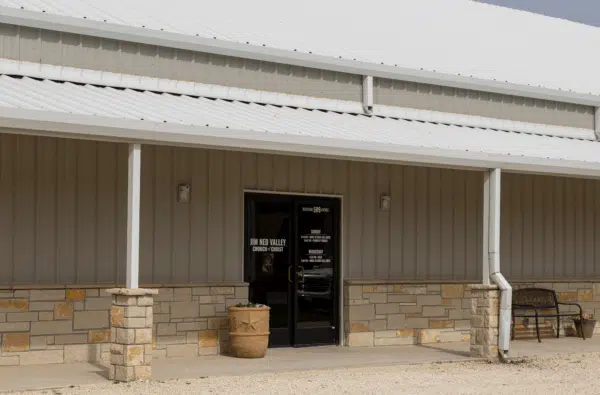
It’s Wednesday night in Tuscola, Texas, population 839. Tonight, about 15 percent of the residents of this tiny West Texas town 20 miles south of Abilene are having dinner together at the Jim Ned Valley Church of Christ.
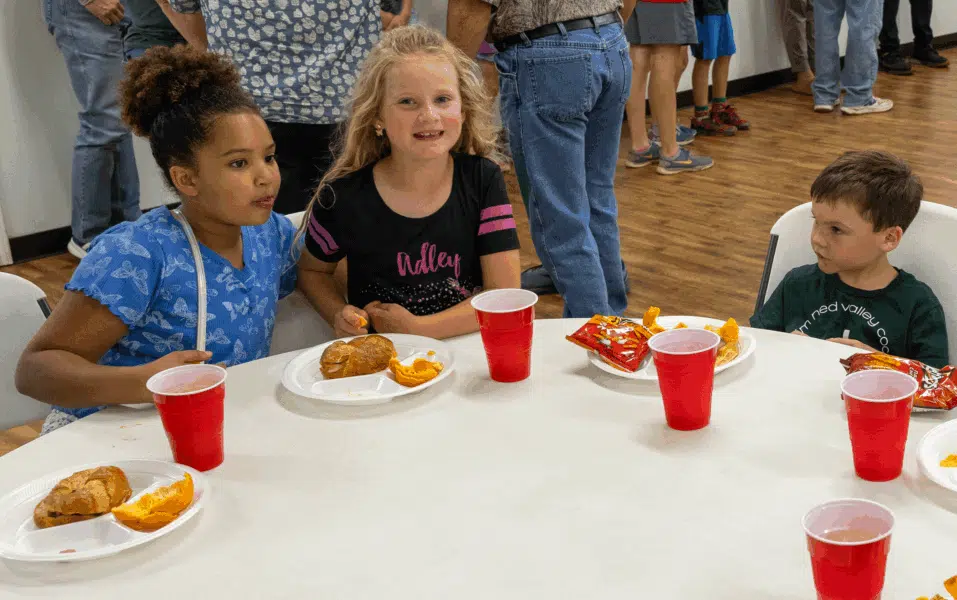
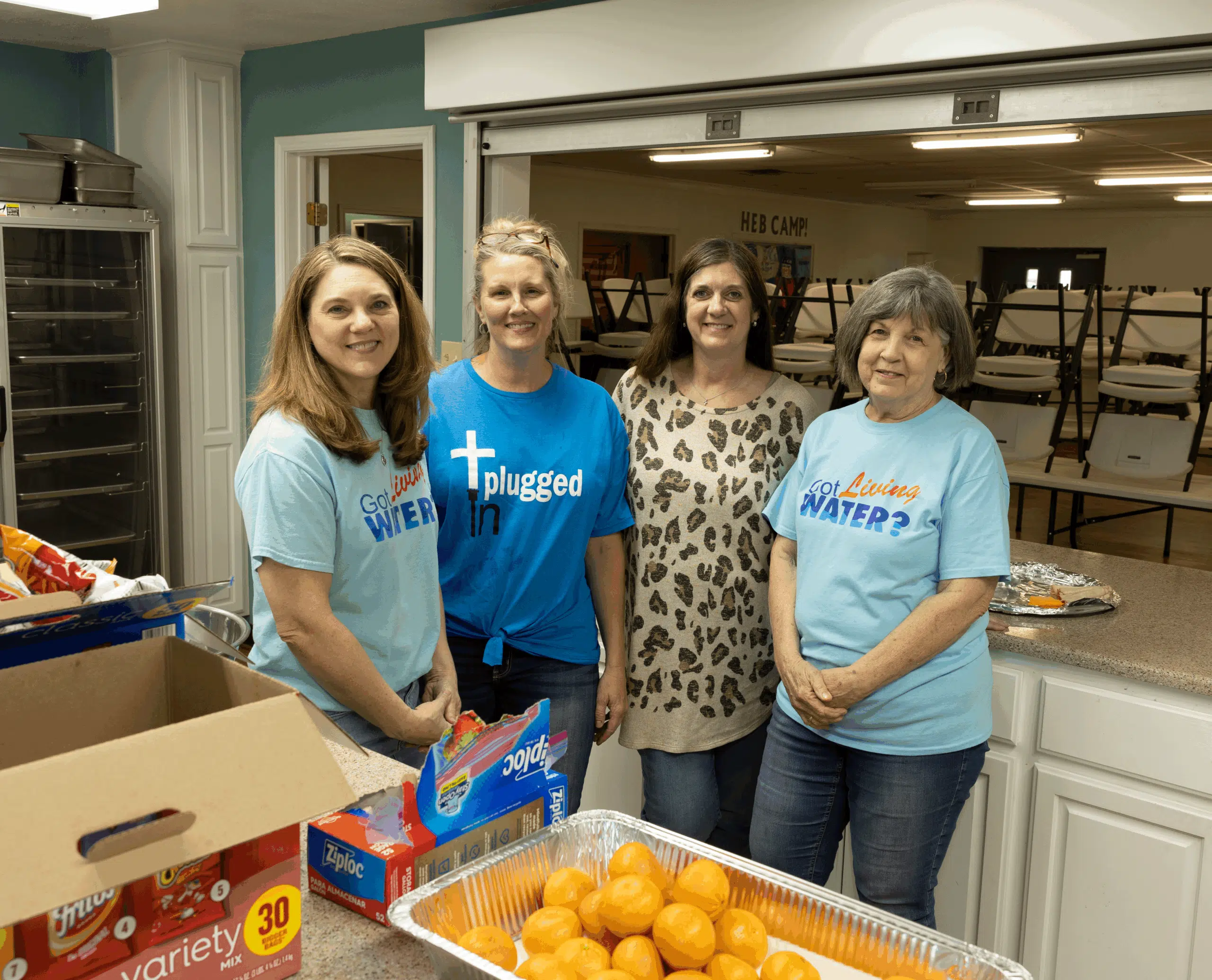
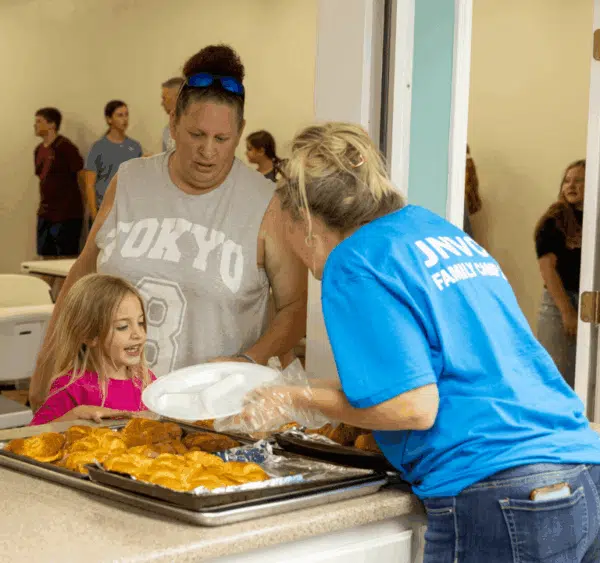
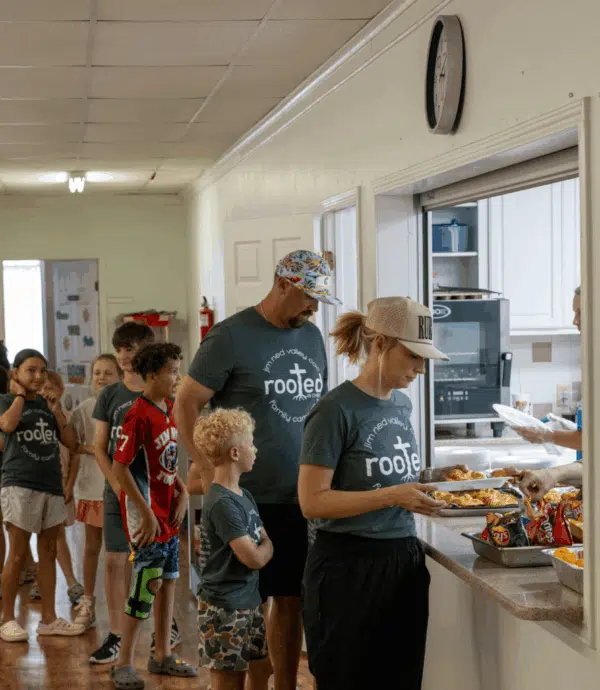
“Ham or turkey?” a volunteer asks as diners approach the kitchen counter. A team of six is serving up croissant sandwiches, chips, and fruit. It’s a simple meal, and very much to the liking of the group that makes up the majority of the dining room: kids.
I put the question to a table of 8- and 9-year-old girls covered in crumbs and ice cream smudges after dessert: “What’s your favorite Wednesday night meal?” Most of the girls said, “pizza,” which is the Wednesday night meal once a month. They order it from a local restaurant to give the cooking teams a break. But those who didn’t say pizza agreed that ham and cheese croissant night was their favorite. Jim Ned Valley Church of Christ knows what kids like, and that has been key to their success in sustaining something that many churches around the country struggle to be: an active, involved, multi-generational church. In fact, they credit their annual Foundation Camp experience with helping them bridge the generations.
The Missing Middle in Most Churches
It’s rare to find a church where kids, young adults, parents, and grandparents all show up, stick around, and really engage together. Barna’s latest research tells us only about one in five Christians feel their church actually offers space for those genuine cross-generational moments. And honestly, that makes sense—building those kinds of connections takes real planning, not just hoping everyone will get along. It’s about leaders who care deeply and programs that invite everyone to belong, no matter their age or stage. The Lewis Center for Church Leadership at Wesley Theological Seminary recommends churches offer a mix of ministries—some for “all ages” and some for specific age groups. The Center highlights the ways service teams can include all ages on cleanup crews or teams that fold bulletins—while special events might welcome teenagers or honor parents or grandparents, highlighting the value of each group.
The Jim Ned Valley Church of Christ is full of signs that there’s a place for every age group, from the entry hallway to Hank’s Place, the detached building designated for teens and named after the youth minister’s late infant son. A schedule of events shows both kids clubs and marriage retreats. A bulletin board celebrates the lives of congregants who have recently passed, most of them full of years. On the day we visited, a row of baskets lined the entry hall, one for each graduating senior in the church. The baskets had been sitting out for weeks, and church members were filling them with dorm gear, encouraging cards, and special gifts to celebrate their milestone.
A 17-year-old named Mason told me that he appreciated the way the youth ministers engage with the teens. “I get a lot of meaning from the lessons,” he said. We could have chatted more, but Mason had two full trash bags in his hands. It was the high schoolers’ week to clean up after dinner.
All year long, Wednesday night dinners play a large role in helping the church reach all ages. There are six cooking teams, including five teams of women and one team of men who fire up the grill for burgers once a month. There are cleanup crews as well. After dinner, everyone gathers for worship and then breaks out into age-specific classes for Bible Study. It sends a message: we come together in unity, but value age-appropriate learning and fellowship.
The worship service was another example of just how seriously Jim Ned Valley Church of Christ takes its commitment to kids of every age—attendance on the night we visited was spread evenly from infants to seniors in high school. The Church of Christ doesn’t use musical instruments in worship, but with all of the clapping, stomping, and snapping coming from the chorus of kids up on the stage that night, there might as well have been an entire rhythm section. During one song, the kids left the stage and ran down the aisles like athletes entering a stadium, high-fiving the adult hands reaching out to greet them. After this rousing round of songs, the teens headed off to Hank’s Place to dig into questions of life, love, and God (and play ping pong), while the younger kids skipped off to classrooms filled with engaging crafts and curriculum. The adults stayed in the sanctuary for Bible study, but the atmosphere in the sanctuary was light and joyful. Starting with kid-led worship had a lasting effect.
This is in part, church leaders said, because kids have been key to the church’s growth all along.
Tuscola, as Genny Abercrombie remembers it growing up, was an agricultural town—it was “out in the country” for the folks who lived twenty minutes away in the big city, aka Abilene. But like many tiny towns within a reasonable distance of a city, it’s grown significantly over the past two decades, as have the other small towns in the Jim Ned Valley school district—a major draw for families. She sees Jim Ned Valley Church of Christ as another contributor to the area’s growth. “Having a strong church in the area has aided in the growth of the area, we believe.”
A Quiet Migration and Uncommon Community
The church’s elder board is a tell-tale sampling of when and why Tuscola has evolved. John Bogart is a retired firefighter and self-proclaimed “jack of all trades” who has been at the church for 18 years. He moved to Tuscola because “Abilene’s gettin’ too big,” he said. Jeff Prince moved to Tuscola around the same time, in 2008, with his wife Deanna and their kids. They “wanted something more rural,” said Deanna, and Jim Ned Valley schools—which serve the county surrounding Tuscola as well—had a great reputation. Jeff is a Bobcat dealer and blacksmith. The couple raises sheep. In other words, they are living their rural dreams while staying connected to a thriving community with good schools and an easy commute into Abilene. Then came the pandemic, when small, rural towns and exurbs across the country started booming as people fled city centers. Cam Hurst, a retired elementary school principal, came to Tuscola in 2020, looking for somewhere that “wasn’t quite so affected by COVID.”
Even though Tuscola has followed a common exurban growth pattern, Jim Ned Valley Church of Christ has done something far less common: it has welcomed those newcomers into a thriving community of all ages growing within a pre-existing church. The key, Abercrombie and Bogart said, has been to embrace the noise, needs, and nurturance of a key demographic.
“We just naturally cater to the kids,” said Bogart. In his nearly two decades attending, including all of the years the church has attended camp together, he has seen the church grow from a tiny gathering of about 30 people to more than 200, primarily through their outreach to kids. In 2002, at its first location in the center of Tuscola (which isn’t all that far from the outskirts of Tuscola where the church is now), the church decided to start opening its doors to kids after school on Wednesdays. The kids could hang out with friends or get help with homework until dinner, and then choose if they wanted to stay for Bible study. As kids started showing up, they realized how many of them hadn’t been exposed to church or Christian community.
“The plan was to feed them,” said Abercrombie, a founding member of the church and one of those volunteers who wears way too many hats to list in one sentence. “We thought maybe their parents would come too.”
Parents did come, but mostly, it was just more kids, as word spread and the Jim Ned Valley Church of Christ became the place to be on Wednesday night in the mid-2000s.
Things were about to get even more kid-friendly, too, because church members Jane and Doug Taylor had just learned about H. E. Butt Foundation Camp.
A Turning Point
The Taylors were employees in the school district, and in 2007, they chaperoned the Jim Ned High School art club’s trip to Foundation Camp. They came back to Tuscola convinced that the Wednesday night kids outreach program needed to experience the Canyon. In 2007, Abercrombie, Bogart, the Taylors, and other volunteers from the church loaded up 40 kids from Tuscola—some church members, some not—and brought them to camp. The next year they brought 79.
They kept bringing the children of Tuscola summer after summer until John Kerr, Foundation Camp Director at the time, challenged them with a new opportunity in 2013. “He asked us to consider changing the way we do camp,” Abercrombie remembered. He suggested they shift their focus to strengthening families. How? By bringing the kids’ parents to camp.
In 2014, Jim Ned Valley Church of Christ hosted its first family camp in the Canyon. It was great for the church members, Abercrombie said, but also for the families of the kids who came alone on Wednesday nights. And then something sort of miraculous happened: Parents started showing up on Wednesday nights. The Wednesday night kids outreach ballooned into a community gathering almost as large as Sunday morning. And then Sunday morning started growing too. “Now kids bring their parents all the time!” said Deanna Prince, who coordinates the Wednesday night dinners. She, like Abercrombie, wears multiple hats at the church, including co-leading camp.
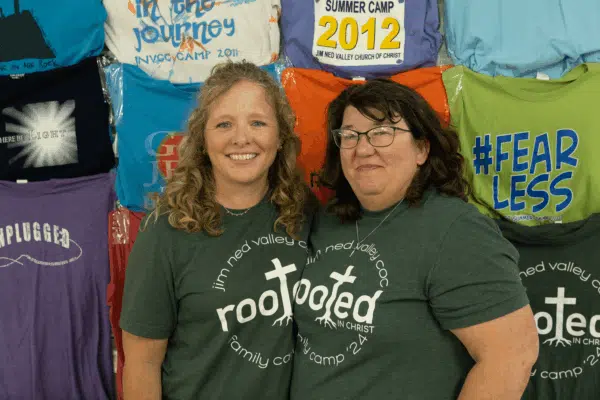
On the last regular Wednesday night dinner of the school year, most of the people were wearing last year’s Family Camp shirts. Prince showed us a wall with a grid of t-shirts from years past, each designed by different members of the church. Videos from past family camp trips played on monitors around the room. Parents dropped off registration forms outside the sanctuary. Last year they took 158 people, and this year registration topped 160. Like the Wednesday night dinners, camp is a big lift for an all-volunteer team. But for Jim Ned Valley Church of Christ, the payoff is measured in generations.