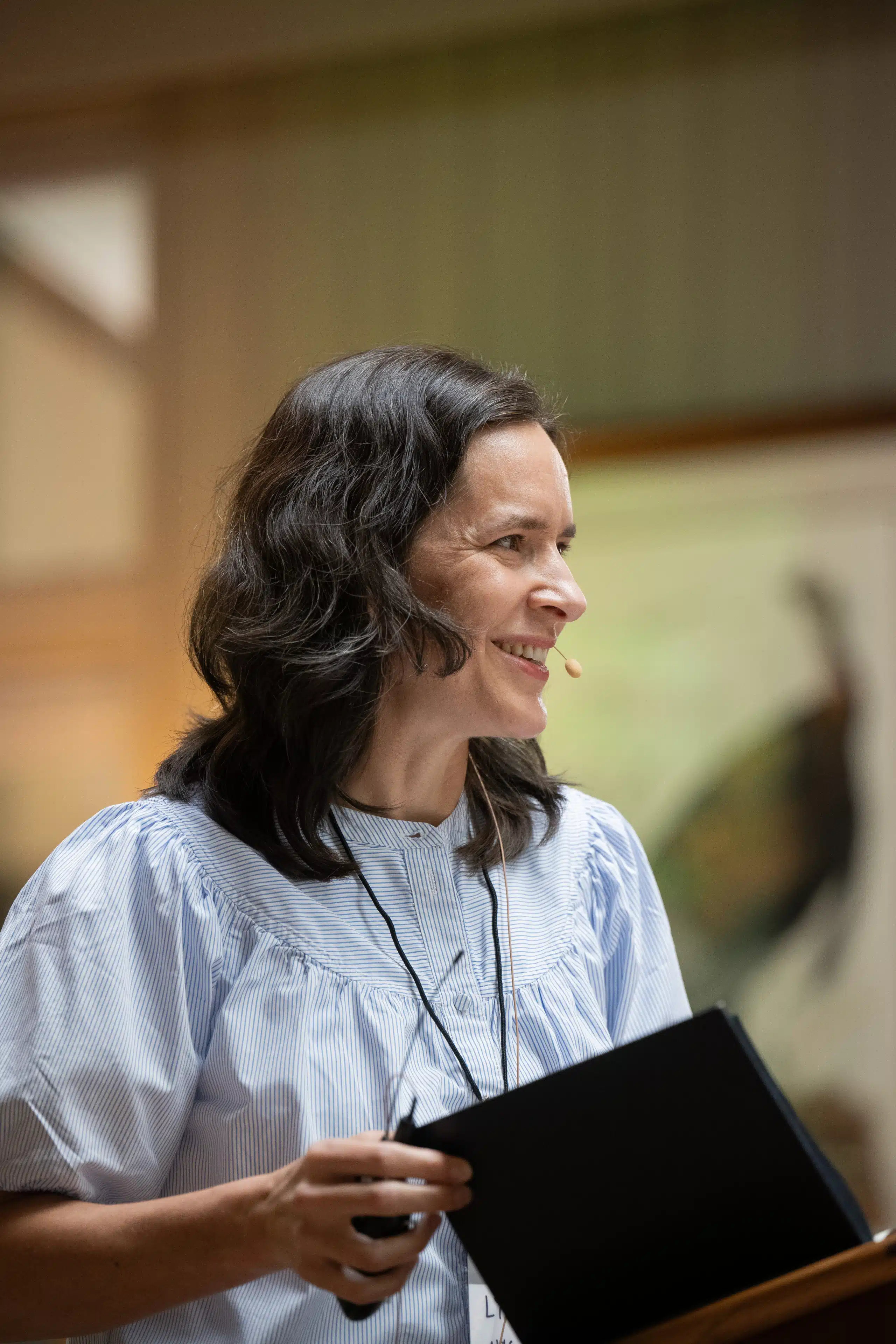


When suffering silences us, where do we turn? Drawing from his forthcoming book And the Sea Was No More, biblical scholar, professor, and author, Dave Nienhuis reflects on suffering, community, and the “victory narrative” that can keep us from telling the truth. This conversation is a powerful look at how God meets us in chaos and how faith makes room for struggle and vulnerability.
Watch The Podcast
- And the Sea Was No More by David Nienhuis (available for preorder; releases September 22, 2026)
- The Psalms (especially Psalm 69)
- Dark Night of the Soul, St. John of the Cross
- If this episode resonated with you, be sure to follow The Echoes Podcast on Spotify, Apple Podcasts, or wherever you get your podcasts, and share it with someone who might need it.
00:00:01:08 – 00:00:27:01
Dave Nienhuis
The problem with Christianity is you have this victory narrative because after all, Jesus conquered death. After all, Jesus victorious and Jesus wants us to be victorious. And so it makes it harder for us and likewise makes it harder for us to deal with the fact that we are complicit in so many terrible things in the world.
00:00:27:03 – 00:00:48:20
Camille Hall-Ortega
Years ago, I attended an intensive coaching course that took place over a long weekend. The course was intended to help women like me align our lives with our deepest values, and find purpose in who God designed us to be. The process included dreaming about what brought each of us life, but along the way, it was imperative to also identify things that held us back.
00:00:48:20 – 00:01:17:10
Camille Hall-Ortega
And with that part of the journey came some pretty tough discussion around me. I heard women talk of job loss, pregnancy loss, and times. They simply lost their way. But there was a rule the leaders tasked all of us with adhering to allow each other to walk through the tough stuff without attempting to offer words of comfort or passed down Kleenex, because, the coaches warned, those actions are often more for the comforter than for the one in need of comfort.
00:01:17:11 – 00:01:42:04
Camille Hall-Ortega
We quickly observed that those trite learned behaviors were not truly helpful in those delicate moments. But what is helpful when we’re on a journey through life’s toughest tests and traumas? How do we begin to overcome deep suffering? And where is God and faith through it all? From The H. E. Butt Foundation, I’m Camille Hall-Ortega, and this is The Echoes Podcast.
00:01:42:05 – 00:02:02:10
Camille Hall-Ortega
On today’s episode, we’re welcoming author, professor and biblical scholar Dr. David Nienhuis. Dave studies Christian formation, church history, and doctrine, and his new book “And The See Was No More” outlines how, in his times of anguish, the Bible gave Dave words when he had none of his own. We’re excited to welcome Dave to the podcast. I’m here with my co-host, Marcus Goodyear.
00:02:02:11 – 00:02:03:08
Camille Hall-Ortega
Hi, Marcus.
00:02:03:12 – 00:02:04:09
Marcus Goodyear
Hi, Camille.
00:02:04:09 – 00:02:06:06
Camille Hall-Ortega
And welcome, Dave.
00:02:06:08 – 00:02:09:08
Dave Nienhuis
Hi. Great to be here. Thanks so much for the invitation.
00:02:09:09 – 00:02:31:04
Camille Hall-Ortega
Yes, we’re thrilled to have you truly honored. We know that in just a few short months, people will be able to get your new book. And the see was no more. And you called this book. It does quite a bit of work because you call this book a memoir, but you also say it is also a confession and at times a Bible study.
00:02:31:06 – 00:02:39:00
Camille Hall-Ortega
Can you tell us what work you did to kind of identify what this book is meant to be and do for you?
00:02:39:00 – 00:03:30:07
Dave Nienhuis
I tell you what, I just started writing and I was waiting to see what was coming out. I mean, people ask me, why did you write a book about suffering? And I didn’t set out to write about suffering or to write a book. I just I was at a place of such disorientation, and I had lost my capacity to speak about what I was dealing with, that I just simply was writing, trying to sort of write my way through suffering.
And over time, I began to realize, oh, wait, something’s happening here. And then eventually I realized, oh gosh, I think this might be for other people. Which was a little alarming, but but what came out was this weird combination of of a Bible study, but also a memoir. That was very much a confession. I just simply wanted to be able to name what I had gone through.
So it’s an interesting combination. I like to call it a memoir in Scripture.
00:03:30:11 – 00:03:40:04
Camille Hall-Ortega
And so it sounds like, if we ask you what led you to write about suffering, it was almost as if it was this therapeutic thing that happened to you. Kind of.
00:03:40:05 – 00:03:44:13
Marcus Goodyear
Well, yeah. Was it literally therapy that led you to writing?
00:03:44:15 – 00:04:16:17
Dave Nienhuis
You know, therapy was very much a part of it. I don’t know if you guys know what it’s like to truly lose your words. I think there’s places of suffering where it’s just really hard struggle. But there’s a kind of suffering that just throws you into this world of not knowing, like your mechanism for understanding just stops working.
It’s one of the reasons why it’s so dangerous for somebody to come and come to you and say, oh, I understand when you’re going through something horrible, because of course you don’t understand, right? And so it just sort of intensifies a sense that there’s something wrong with me.
00:04:16:18 – 00:04:20:13
Camille Hall-Ortega
You’re like, you understand? Tell me about it. Can you explain it to me? Okay. Yeah.
00:04:20:14 – 00:04:58:10
Dave Nienhuis
I would love to understand. Yeah, exactly. I know, and so theology. This is part of the part of my strength, but also a weakness. I’ll just confess. You know, theology is really focused on articulate. Being able to speak about faith is essential to the task of theology. And yet when I went through this, like that part of your brain that controls speech just got shut off, I couldn’t articulate what I was going through.
And then all of my tools in my toolbox, which included both my own coping mechanisms, but also my my standard sort of theological discourse to talk about these sort of things. It all just fell short.
00:04:58:10 – 00:05:34:08
Camille Hall-Ortega
And so you talk a lot about how the Bible gave you many of those words, and that for some that might feel strange because obviously we can agree that the Bible can be a source of comfort, but there are plenty of folks who would think that talking about our deep suffering or mental health issues or depression, anxiety, panic attacks, which we’ll get into, there can be a sort of it can be taboo in the church community.
00:05:34:10 – 00:05:41:13
Camille Hall-Ortega
Yeah. And so instead, you’re really leaning into this and talking about how the Bible gave you language. Can you tell us more about that?
00:05:41:14 – 00:07:32:00
Dave Nienhuis
Yeah, I went through therapy and that got me to a place of at least a little more stability. I wasn’t constantly panicking anymore, but I was always on the verge and it was really like white knuckling it, you know? But around that time, I started taking up speaking invitations again. I went through about 2 or 3 years where I just wasn’t.
I was barely functioning and I wasn’t doing any speaking engagements. And it was in March of 2013, my buddy Stephen Purcell invited me to come give her a retreat talk at Lady Lodge. And I said, yes, and I don’t know whether it was the first or second or third retreat, but at one point along the way, I was just in this calmer place, back in my room.
And as I opened my Bible, I always tell students, don’t just flip your Bible open like have an intention. But in this case, I just flipped it open and I ended up in the Psalms and I read Psalm 69. Right? That famous psalm saved me, oh Lord, for the water has come up to my neck. I sink in deep mire where there is no foothold.
I’m drowning in the waves of the sea. The flood sweeps over me. All this. And I’d known about that psalm for years. I’d known about that song, but I had this weird epiphany like experience and even epiphanies to grandiose because it wasn’t like that. I just suddenly had this feeling that that Psalm was speaking for me, that it wasn’t just speaking to me, it wasn’t just giving me a model.
It was. It was as though Scripture was speaking for me. I didn’t have words. Yeah, but does that make sense? Like when I, when I experienced it, I just felt like that was me saying that. Yeah. Not even that. Oh, I can relate to that. It wasn’t even that. It was. That was me.
00:07:32:00 – 00:08:11:03
Camille Hall-Ortega
It’s making me think of a conversation that I had with Ashley Cleveland, who I’m sure you’re familiar with. Of course, we’ve had her on the podcast, but we spoke with her for an Echoes magazine article, and she described a time in her life as, you know, she speaks very openly about overcoming addiction. She’s an addict and to overcoming that time of active addiction.
And she spoke of the hymns in this way, and she said that in her darkest hour, when she could not see up from down and she was, you know, begging for something to hold on to, the words of hymns spoke to her and for her in this way. And so it’s reminiscent of that for me.
00:08:11:03 – 00:08:57:16
Marcus Goodyear
I love that scripture can do that, and that we can have these moments where we’re praying through the Psalms as a community, and we are able to own what the Psalms are saying. And like you said, Dave, feel as if those words are speaking for us. And I think there’s also this really important thing where we pray through the Psalms and we don’t align with them.
Where I may be having a great day and I’m praying Psalm 69 and what, what needs to come from my heart is actually not in that Psalm, but it’s a way to experience atonement with people who are in that place. And you talk a lot about atonement in your book, and at one meant, I wonder if you could just revisit some of what you’ve learned about unity and joining others?
00:08:57:18 – 00:10:23:21
Dave Nienhuis
Yeah, I mean, that really is there are a couple of things that hold this whole book together, and that’s that’s one of them is just sort of dealing with the reality that that we are not individuals and that that our culture and even our churches too often just sort of throw us back onto ourselves. You know, like I was told all my life, read your Bible every day, and I just couldn’t really do it.
I struggled, I, you know, I didn’t have the discipline. But then one day I was at an Episcopal church and the priest was like, oh, you’re a seminarian. You’re going to lead morning prayer every day. And I was like, oh, okay. And then what do you know, I will sudden I was like, reading the Bible every day. And I realized later, oh, that’s I needed a community to basically enable this, this practice.
Yeah. And that totally changed my whole life. That was years ago. But that changed me big time. Yeah. And I think likewise, when it comes to suffering, our tendency is just to kind of think we’re on our own here. And so many models of discipleship are kind of heroic models of discipleship where stand firm, be strong. The Lord wants you to be able to walk on water and all that kind of stuff.
And I just as I read the scripture, I just don’t see it. I don’t I don’t see that what I see is a community of people struggling to live in relationship with God and with each other, and that the task of faith is about somehow linking arms and trying to make it through.
00:10:23:22 – 00:11:05:11
Marcus Goodyear
It’s like there’s a dark side to the what I think of as the holiness movement. That’s kind of what I heard underneath what you were saying, that that my role as a Christian is to this sounds terrible, but to make myself holy through discipline in a way, and to to then be a holy offering to God, and so that it puts a lot of pressure on the individual and it puts a lot of heroism on the individual.
And it also takes us away from the beautiful community that that faith can offer. And it separates us from the community in a way that that takes us off the hook. We don’t have to then work on behalf of the community and intercede on the behalf of the committee. We’re only responsible for ourselves.
00:11:05:12 – 00:11:06:04
Dave Nienhuis
Yeah, yeah.
00:11:06:05 – 00:11:36:23
Camille Hall-Ortega
And what’s great that that you’re talking about their Dave, is that God didn’t intend it that way, that that’s us making it that way. God never intended it to be that way. Right. Yeah. Dave, of course, throughout this book, there is a lot of water. Can you talk to us about the water references, the through line that you that, of course is a through line in your book, but that you point to is a through line in the Bible.
And can you just talk more about how you begin to write in that way?
00:11:37:00 – 00:13:51:16
Dave Nienhuis
You know, before I ever came across Psalm 69 at the Lodge and all that, I, I was having nightmares about waves, about water sort of inundating me and sinking me and overwhelming me. And I narrate in the book that my first real major panic attack was in response to seeing the videos of the Indian Ocean tsunami, and it just sent me into a tailspin.
I had no idea why that turned into nightmares over time. And but then eventually, when I got to the point of getting calm again and reading that song, it all just sort of opened up all of a sudden. Because as a Bible scholar, I know that this theme of water runs all the way through scripture, that when God creates all things, when God begins to create, what emerges at the very beginning is this chaos, this formless normalcy, void mess that is characterized by darkness and water.
Right? And it’s not good. And then God begins creating good things. But God doesn’t destroy the darkness or the water, right? God doesn’t seem to, will it? But God allows it to exist. The world God wills is the world God speaks into existence, right? But there are other things that God allows to be the darkness and the deep.
And then you get all the way to the end of the Bible, revelation 21. And when the New Jerusalem comes down, it says, and the sea was no more. And it goes on to say, and therefore death was no more. And morning and crying in pain was no more. For the first things have passed away. And so the whole Bible is framed by this problem of the chaos water that is just simply a part of our world.
It is out there all the time, right? And even though in the mystery of who God is and what God has done, the way the story narrates it is God restrains these things, but God does not destroy them. God chooses to sustain them, and as a result, God can sometimes use them. But. But they’re also free.
They can come busting in when we least expect it. They can overwhelm us and destroy us. And God doesn’t look at that and say, oh, that’s good, right? Right. That that is a world in rebellion.
00:13:51:17 – 00:14:17:18
Camille Hall-Ortega
Which I’d love to hear more about that, because of course, when I first kind of read back of the book info and that kind of thing, I thought, is this going to be a telling of Dave’s dark night of the soul? And so then I thought, oh, what’s the difference between the dark night of the soul and the deep?
And then of course, you extrapolate really well, and that because you are distinguishing the darkness from the deep, deep, deep. Can you talk more on that as well?
00:14:17:19 – 00:16:04:02
Dave Nienhuis
I can. Yeah. They, they go hand in hand. Right. They’re often right next to each other right there in that first sentence of the Bible, darkness was over the face of the deep right. But they are distinguished darkness and the deep, not the same thing. And when I was first going through, like the rough time, like when I was in my really bad space and just sort of reaching out to try to tell people Christians wanted if they didn’t want to, like, automatically comfort me in ways that weren’t helpful.
The other thing that they would do is they would default to this darkness of God motif and like, oh yeah, you’re going through the darkness. And I really I’m really impressed by your willingness to face this. And I was like, dude, I don’t want this is bad. This is there’s nothing good about this. I don’t want to go through this.
I want to be rescued from this. You know? Don’t. God isn’t disciplining me or sharpening me. I got to rescue me. Right? Yes. And so that really did send me on a little journey to think about the distinction between these and again, just sort of paying the hitch and how it plays out in Scripture, as you say, like that darkness of God motif is ancient.
It goes way, way back. And, you know, the key figurehead would be like a John of the cross in the dark night of the soul. And that is a purposeful experience that God leads believers to go through in that, like John would say, that, you know, when when somebody first becomes a Christian, God just floods that person with signs of God’s presence.
But then eventually it’s this powerful and everybody should read The Dark Night of the soul. At one point, he says, but, but a time will come when God will bid the soul to grow up. And at that moment God pulls back all those pleasures and all the things you get out of it, because God wants you. Yeah, because God wants you to learn to love and obey and follow God for God’s sake, not just for what you’re going to get out of it.
And so that’s a maturing process.
00:16:04:06 – 00:16:43:07
Marcus Goodyear
You know that. I mean, everything you’ve shared is very intense for people who have experienced what you’re describing. There was a time in my life where I went through a deep, deep depression, and getting out of it was it took years, actually, to get out of it. And it still is kind of on the edge sometimes, and I have to pay attention to it and manage it.
But I’m, I’m thinking about this point in your book where you say God is the creator, and then you have a little parenthetical statement that I’m comfortable saying that now. Yeah. And I wonder.
00:16:43:10 – 00:16:44:02
Dave Nienhuis
Yeah.
00:16:44:06 – 00:16:52:08
Marcus Goodyear
I wonder about the time when apparently you were not comfortable saying that. And was that part of the darkness for you? Was that part of the deep? Yeah.
00:16:52:10 – 00:18:10:11
Dave Nienhuis
In that section, I remember correctly, I’m saying I, I recognize that God has created all things and that that includes the darkness and the deep right. And I went through a long stretch where I really was saying I don’t is that like, not God? Is that the absence of God? Is that all the you know. And I was like, no, it is.
It is simply part of God’s world and it is part of the world God made. And it’s not, you know, it’s not a perfect world. The Scripture never says the world is perfect. It says it’s good, which means it’s full of potential, which means it can go either way. Things can go well. Things can go really poorly. I was going to kick out of this.
If I can just point out along the way, people want to throw all the problems of the world on the fact that humans sinned. I mean, if you go to Genesis chapters one, two and three, it’s like, you know, everything was great until humans sinned and then sent into the world and everything got screwed up. But that’s not I mean, when you read it, why is there this lying snake in the garden all the way before humans ever said, right?
Like, why is the darkness and the deep allowed to persist? Yeah, right. It’s not because God wants bad things to happen, but it’s because God creates a world of freedom and potential, and that’s what’s good. And it could have gone either way. And humans, humans rebelled. You know.
00:18:10:13 – 00:19:14:22
Camille Hall-Ortega
It’s near and dear to our heart as an organization. And for many, they’ll know about Howard. But junior, describing his bouts of depression and and how Lady Lodge largely was as as he spoke about a tool in his hand for his healing. And you give some very vivid descriptions of your panic attacks and of what you were plagued with.
I, I was sharing that. It reminded me of how some of my dearest friends who have experienced postpartum depression and postpartum anxiety have described some of their own symptoms, where they’re they’re walking with the baby, and they have an overwhelming intrusive thought that will not shake of, oh no, I’m going to hit the baby’s head on the wall, or I’m going to fall down these stairs and the baby’s going to go flying.
And these things feel very dark. But I think it’s so important how your descriptions really come alive. Can you talk about those experiences a bit and also about writing about those experiences?
00:19:14:22 – 00:20:54:02
Dave Nienhuis
Yeah. Yeah, that’s that was the big shocker for me through this whole experience was I just realized how rational I assume, like, I assume, that my brain is going to be faithful and it’s going to work properly on my behalf. And I used to use the phrase, you know, oh, I totally lost my mind, right? You know, you can use that colloquially.
And I saw somebody and I totally lost my mind. Right. But when that happened, I actually I actually lost my mind like it was doing its own thing. It was operating in ways beyond my control. I was having intrusive images. I was experiencing things that weren’t there. I never went fully into psychosis, but I was right on the edge, and I felt like I was holding it the whole time.
I describe it as flinching in the book because I still do it to this day. I’ll never shake it. And I think it’s kind of a fairly common PTSD kind of a response. But but like an image will come to my mind and I’ll just jump. I just it happened like my body reacts before my mind is able to know what’s happening.
So your mind isn’t always your friend, right? Yeah. And I that was hard for me to learn, but I had to learn it, and I needed help. I mean, that’s the thing I. That’s what I really realized so much. Back to the community thing. I simply did not have the resources within me to solve my own problem.
Yeah. And God was not going to give me the tools individually in my body and brain to solve my problem. I needed to be with other people.
00:20:54:03 – 00:21:14:07
Camille Hall-Ortega
And I know we spoke a little bit about this earlier. And Marcus, you spoke a little bit about it too, that there’s this sort of warped understanding of, of a Christian that you should you should have it all together because you’ve got gods and that if you don’t have it all together, you should pretend you do, because you’re because you’re meant to be a witness for God, right?
00:21:14:08 – 00:22:10:09
Marcus Goodyear
Yeah. How would you say that? He grew up in a faith tradition, Howard Junior, where you were allowed to talk about your vulnerabilities until you joined the church, until you joined Jesus. And then it was all victory, all victory. You were not allowed to have any struggles after that. And his his big innovation at the lodge, which he would say emerged out of his depression, lady Lodge is this adult retreat center that is operated by the Foundation, the same organization that sponsors this podcast.
And at the very first retreat at the Lodge in 1961, he confessed his depression in a way that people had never heard. You just did not do that in 1961 if you were Baptist, much less if you were, you know, just a wealthy business tycoon like he was.
00:22:10:10 – 00:24:16:21
Dave Nienhuis
I really do think, Marcus, I think you just used the word victory that it should be about victory. That is a really important thing to interrogate a little bit. I read some making my way through all this. I read some Jewish Holocaust theologians. And one of the things I noticed, and this has been long known by others. But Jewish folks have no problem saying there’s evil in the world.
Bad things happen. God might not let you know why it’s going to be tough, right? Yeah. And and some of them will, in great dialog with Christians, will say, the problem with Christianity is you have this victory narrative. And the victory narrative then makes it very difficult for you to talk about why bad things continue to happen. Because after all, Jesus conquered death.
After all, Jesus victorious. And Jesus wants us to be victorious and so right. And so it makes it harder for us, and likewise makes it harder for us to deal with the fact that we are complicit in so many terrible things in the world. Right? Because this victory narrative tends to dominate. One of the things that I was really blown away by again, in revisiting Paul, especially on this one, is Paul is quite convinced that the power of the resurrection, the power of God’s victory over death, is the power to drive you into weakness.
It is the power to drive you into being a vulnerable, open person so that other people can find their way in his opponents, in almost all of his letters, are all pastors. I like to talk about it the way he talks about it in Philippians. They’re like friends of Jesus, but their enemies of the cross, they don’t want to account for the fact that when Jesus comes into our life, Jesus enables us to become broken, weary people in front of others.
Because when we confess our vulnerabilities to others, that enables them to confess their vulnerabilities. And pretty soon we’re not in the Liar’s Club anymore. Right now, we’re actually now we’re actually sharing our truth together, that life is hard and that we need each other, right?
00:24:16:22 – 00:24:54:15
Camille Hall-Ortega
That’s right. I love we see that in your book that you talk about overwhelm is not spiritual failure. And I think that’s beautiful because it’s something that we should know, but that we absolutely need to talk more about that. Overwhelm is not spiritual failure. And in fact, you talk about it in the imagery of the deep. You talk about that.
It’s not a place where we should be ashamed to be vulnerable. Instead, God meets us there. What a wonderful God we serve that he meets us there, that he doesn’t call down to us saying, get up! Don’t you know you’re blessed? No, wait. Yeah, right. Yeah. That’s not what’s happening.
00:24:54:20 – 00:26:33:13
Dave Nienhuis
So honestly, this is again, I haven’t I’m getting used to talking about this. I’m still getting used to it. And I don’t know how long ago somebody asked me, so what is the deep anyway? And I just, like, I don’t have any idea. Like, even after I’d written the book, I was like, I don’t know how to answer that, but I’ve since thought a lot about it.
And back to this victory thing. You know, Paul says that that death no longer has dominion. And that’s a powerful way to think about it, because it’s not saying you’re not going to die. It’s just saying death isn’t the most powerful thing in the world. Yeah, right. And it doesn’t mean you’re not going to suffer. It just means suffering isn’t the most powerful thing in the world.
Yeah. And so when he says, don’t let death have dominion over you. He’s not saying you’re not going to go through terrible times. He’s just saying you, you know, you have to always practice and parade this truth that there’s a force more powerful in the world than the powers of evil and death that are trying to sink us all the time.
Right. And we need communities that enable us to do that. And it’s tricky, right? Because, again, one of the things that I worry about so much is especially lots of popular forms of Christianity, it’s happened for generations this way where you sort of, you know, you get a depiction of Christianity. It’s like, well, that’s a good life. I really want to I want to have that.
And so you want to join and you think that, as I describe it in the book, you think Jesus is going to teach you how to walk on water, and Jesus did not come to teach us how to walk on water. Jesus came to teach us how to sink, how to how to go under the waves, how to face death and say, you don’t get the last word.
00:26:33:14 – 00:27:39:03
Marcus Goodyear
So I’m thinking about this audio clip that Camille found from the Laity Lodge archives. And the context of this clip. It’s G. Packer who spoke at the Lodge for decades and decades. He would just come out every summer and stay there and just teach and write books. And he was a great counselor to Howard. In this particular clip, he has just explained this, this analogy to World War II.
And he says the soldiers invade the continent on D-Day and they get onto the continent. But Victory Day, to use that word again, doesn’t happen for quite some time. So in some sense it’s kind of assured, like, like the turning point has happened and they know where this is going, but there is a lot of death and struggle before they can get to that, that final resolution.
And so we’ll play this. And this is G. Packer at Laity Lodge many years ago. We’d love to get your take on it.
00:27:39:05 – 00:28:49:15
G. Packer Audio Clip
Jesus Christ on the cross defeated Satan. What was the form of the defeat? Well, Satan went all out against Jesus mind to convince him that this should not be, to convince him that his father had let him down, he pulled out all the stops and Jesus stood firm. The battle in principle had been won, and Satan in principle had lost.
Yes, remember, Satan’s a defeated foe. As the troops after D-Day had a tremendously fierce flow of fighting to go through. So in the Christian life we have a series of very fierce engagements with Satan still to undergo ourselves. But he’s a defeated foe. If we stand firm, he will fall back. And the Lord who defeated him on Calvary will keep us standing firm.
So do remember that, and don’t panic.
00:28:49:17 – 00:28:52:12
Camille Hall-Ortega
We’d love to hear what you think about that clip.
00:28:52:14 – 00:31:57:11
Dave Nienhuis
Yeah, well, I mean, God bless G. Packer. I have no complaints. And how dare I criticize the venerable G. Packer? Honestly, if I was in my worst spot and I was in the lodge hearing him say that, I would have been offended. Don’t panic, because it wasn’t something I had any control over and I had I mean, when you’re panicking and somebody’s looking at, you’re saying don’t panic.
It’s just not helpful, right? Like when you’re, when you’re massively depressed and someone’s like well just don’t be depressed. That’s really dumb. Oh how would that ever work? Right? It doesn’t work that way. I do wonder. So there’s so many things to point out here. He is correct, I would I would agree with him. Satan is a defeated foe.
Satan isn’t our only enemy in Scripture. Death is also an enemy. And death is the last thing to me yet to be destroyed. And in revelation, when the lake of fire, both the devil and death are thrown into the lake of fire, these are not the same thing. Yeah, the devil is a tempter who works on our minds.
But the devil is not death itself. Death is this other thing operative in the world? They are related, of course. I don’t want to, I don’t think, I don’t think we can sort of tease it all out and like we’re looking at it under a microscope, but these are not the same thing. So I worry about a little bit about that.
And I worry that, well, I make a lot in the book about how we have four different gospels, right? When I read John’s version of Jesus Death on the cross, that sounds a lot closer to what G. Packer’s describing. Even Luke’s version is a little closer. You get a little more heroic. Jesus there. He’s not panicking. He’s in control.
Not so in Matthew or in Mark, and especially not so in Mark. And we have these gospels for different reasons, because they do different work for us at different times in our lives. And when I see Mark’s gospel, really, you know, when Satan was conquered, it was in the temptation in the wilderness, which is much more like the darkness desert experience.
Right? That’s where Satan is defeated and Jesus can move on. Right? And Jesus is strong and stands firm, and all that heroic language works there. But by the time you get to the end of the gospel and the cross is looming, Jesus is on his knees in the garden, begging for it to be taken away. He goes to the cross, but he’s dragged there.
He’s taken there against his will.
And from the cross he screams out, Why God? And then it just says. He screams until he runs out of breath. He now he breathes out. He expired there. I don’t see a heroic, you know, standing firm. I see someone who is me at my very, very worst moments. Right. And so I don’t want I mean, when I hear about Jesus being God with us.
00:31:57:13 – 00:31:58:03
Camille Hall-Ortega
Yeah.
00:31:58:04 – 00:32:38:22
Dave Nienhuis
That’s what I really hear when Jesus is screaming to death on the cross, I’m like, yeah, I’ve been there. People are there all the time and God knows what it’s like to go there. Yeah. The real victory isn’t that Jesus was able to sort of tell Satan off. The real victory was Jesus went straight into the panic of death itself and came out the other side to prove to us all that there’s a powerful a power that’s just more powerful than then death.
But it wasn’t a heroic thing. It was a it was a in an expression of powerful, profound weakness and vulnerability.
00:32:39:01 – 00:33:10:11
Camille Hall-Ortega
I like what Packer says here about Satan going all out. He went all out against Jesus’s mind. I think that’s the beauty, is, is that what we can hear from this? It’s not just that we cannot we should not expect suffering, but that we can see that even Jesus suffered. God himself on earth suffered. And we see that he wasn’t unfazed by that suffering.
00:33:10:11 – 00:33:11:07
Dave Nienhuis
No.
00:33:11:09 – 00:33:15:10
Camille Hall-Ortega
But he made it through. Yeah. And I think there’s the beauty in that.
00:33:15:11 – 00:34:07:00
Dave Nienhuis
Yeah. Because that was I mean, the larger worldview was that death was the end and that if anything, you went to shale, you went to Hades. And and this was a God forsaken place. God was not there. And even though the psalmist can say, even if I descend to the to the depths of shale, you are there. That wasn’t the generally held belief, right?
And yet God is even there, that Jesus death and going to the dead is the fulfillment of that. Psalm 139 to show that God is even there. There really, actually is no God. For second place in the world. We experience God forsaken us all the time. And that’s that’s where I would say that’s where Satan enters in. That’s where the mind starts talking like, yeah, see, you are all alone.
See, there really is nobody to help you.
00:34:07:00 – 00:34:46:16
Camille Hall-Ortega
I want also to talk a little bit about we talk about avoiding platitudes when someone is going through suffering, because we know very well from our own experiences that it’s not real helpful, and yet it’s so in us because we don’t want to see others suffering. It hurts us to see other suffering, and it also makes us personally uncomfortable.
It’s not really just about their suffering. It’s also about our discomfort that we want to do something or say something. Can you talk about what you do find helpful from community in times of suffering?
00:34:46:21 – 00:36:25:11
Dave Nienhuis
I know for myself, when I was at my worst, words could not help me. Words of comfort and platitudes, even well-meaning ones, didn’t help and often hurt. They made me feel more alienated, ironically. But what did help weren’t so much words unless the words were I’m with you. I’m here. You know, that’s good. Those are good words. But then.
But it had to be a company with actual concrete, right? Like I needed people to say you should take a nap. I needed people to say, have you eaten today? Right. Which really gets to a core of a lot of this is we’re so dualistic in the West, and we have this sort of spirit body dualism. We go through things, we think, well, is it spiritual or is it medical like these are opposites somehow, you know, and what I learned more than anything else through all this is I have I was made to be an embodied soul.
I am an embodied being. I will never be anything other than embodied being. And when I am restored in the new creation, I will once again be an embodied being. That’s the story of being a human. Think about Paul when he’s talking about the community as a body, right? When when my hand is injured, like my whole body compensates to deal with the fact that I’ve lost the use of my hand for a period of time, my hand just needs to recover.
I don’t expect much of my hand. In fact, if anything, I hold it in close and I protect it, and I do things to care for it. And eventually if I if I wait long enough and I’m patient, my hand will will be able to work again.
00:36:25:12 – 00:38:03:14
Marcus Goodyear
Yeah, yeah. Love the Lord with your mind, soul, spirit, strength that these things work together. When I was in my deep, deep depression, the first thing a therapist told me was, you know, it’s a couple of options. One option is go for a walk every day. And I think I’ve shared this in a previous podcast, but she said, go for a walk and spend 30 minutes walking away from everything, and then turn around and walk back to everything that you want to return to and leave that other stuff out there.
And that’s so simple. But it was it was powerful. And six, 12 months of doing that, really, it really set me on the road to healing, along with all the things you’re talking about, the community. And one of the things we haven’t talked about in this book, we’re sort of dancing around this explanation impulse that you described and how this explanation impulse is a way that we use to avoid facing the truth.
Camille mentions something like that, too. But you also say that knowing your neighbor means knowing that sometimes your neighbor wants to hurt you. And this idea that we are all a one body and Paul says, you know, the eye doesn’t say to the hand that you’re not part of the body. And yet there is a time when there are parts of the body that that do, for whatever broken reason, want to cause pain.
Yeah. How do you how do you make peace with that? Dave?
00:38:03:16 – 00:38:08:02
Dave Nienhuis
Oh I don’t.
00:38:08:04 – 00:38:09:04
Camille Hall-Ortega
Yeah.
00:38:09:06 – 00:38:10:06
Marcus Goodyear
Fair.
00:38:10:08 – 00:40:52:03
Dave Nienhuis
That’s fair. Yeah. I know when my students are working through scripture with me and they just keep reading and all all this stuff about suffering, and they finally will say, well, you know, do we have to suffer to be a Christian? And that’s a, that’s a telling question because it assumes a level of privilege, really, that that we could somehow like sufferings, an option, that we could avoid it, that people harming us is an option that we can avoid somehow.
Right. We live in a world that just asserts so much control over the uncontrollable, trying to keep all the bad things from happening, and we just can’t keep it from happening. It is going to happen. It is coming for us all in one way or another. If it hasn’t already. It will eventually. And sometimes, you know, that comes through other people.
I wanted to work to make sure we talk about justice while we’re talking about the personal stuff. Right. Yeah. The deep gets its job done, not just through phantasms of the mind, but also through people. Yeah. And that’s a real thing. It’s a very real thing. And on the one hand, we can’t avoid it. But on the other hand, we need one another for help and for protection.
And especially when we’ve been wounded, we need protection. We need people to gather around us and protect us in that way. You know, this is the oh, my gosh, it’s so hard when I just want to apologize in advance. People who read the book, because there are so many things that make it harder. Like, I’m not trying to make it easier.
I want to I want us to face it. Right. And one of the hard things about Scripture is the primary, the real risky people around you in Scripture aren’t the enemies. They aren’t the people out there in the world who are not God’s people persistently. It’s God’s people who hurt God’s people. Yeah, it’s you know, the enemy is the person next to you, potentially in the pew.
Not, you know, those enemies outside that are various groups demonized to tell us they’re the ones you got to watch out for. It’s in us and it’s around us and it’s in the person next to us. And so again, all I can say is the call to weakness is this call to acknowledge not just my vulnerability, but also my susceptibility to these powerful entities in the world that promise it can be better if I just sign on to this or that project that will require me to tolerate other people being hurt.
00:40:52:05 – 00:41:48:09
Camille Hall-Ortega
Dave, we’ve talked about the work that you did to overcome so much of what you have experienced, but of course, you have alluded several times to the fact that it’s it’s always still there on the cusp, that the dark is there, that the deep is there, that those things don’t go away. I think we would be remiss not to just make sure we’re we’re noting that we have talked in during our conversation about therapy and, and that also there is sometimes a need for medication in the coupling with therapy and all of that, and that we know that that is very real and that it’s not helpful for us to hide and think that there’s
only one way to healing, and it’s just read your Bible or that kind of thing that we know that that’s just like those kind of stale, trite platitudes. That too is not helpful.
00:41:48:10 – 00:43:04:19
Dave Nienhuis
And I was really blessed, honestly, with family members who also had struggled my, you know, people older than me, I’ll put it that way, who also struggled and also got help with therapy and with medication. And so it was never something in my family that was considered weirder, inappropriate, and so that that was a good thing. It was kind of a no brainer for me to see a therapist.
My wife is a therapist, but it is a sad thing. I mean, you still hear it. Not too long ago, a fairly famous pastor and teacher said, there’s no such thing as ADHD. There’s no such thing as PTSD. It’s all a spiritual problem. And that is that is so profoundly not just dangerous. It’s Gnostic. It assumes that we aren’t bodies.
It assumes that we are spirits temporarily trapped in bodies. And our the call is to somehow overcome our bodies. That’s a giant misunderstanding of Scripture. We are we are. Bodies in our bodies break very easily. And of course, we would go to a doctor if we broke a leg or if we, you know, and we would take medicine for our heart.
If we have heart troubles, there is nothing, no reason at all why we wouldn’t take chemicals to address a chemical imbalance in our brain. Yeah.
00:43:04:21 – 00:43:06:02
Camille Hall-Ortega
Thank you. Thank you for that.
00:43:06:03 – 00:43:16:05
Marcus Goodyear
In the book, when you say if somebody has cancer, you don’t tell them to just stop having cancer. If somebody is depressed or anxious, you don’t tell them to just stop being depressed or anxious. It’s absurd.
00:43:16:07 – 00:43:18:07
Dave Nienhuis
It’s absurd. And yet we do it all the time. Yeah.
00:43:18:08 – 00:43:28:08
Camille Hall-Ortega
Of course. Yeah. Dave, we are nearing time, and I. I really just wish we could talk for days. But tell us, when is the book out? How can folks get it?
00:43:28:09 – 00:43:53:14
Dave Nienhuis
Yeah, it’s available for preorder now on any place you would buy a book online. It’ll come out in September. I think the release date is September 22nd, 2026. So we’re just beginning all the work of rolling it out now and doing some marketing. And this is my first sort of public media event. So I’m really grateful for the we’re so honored.
We’re honored. I know this has been great. Appreciate it.
00:43:53:16 – 00:44:31:21
Marcus Goodyear
Yeah. And I want to say the book is really good. It isn’t good. It is an incredible read. There are there are some stories in it that are so vivid and haunting really, and just readable. But the other thing that surprised me about this, Dave, I read a lot. I read a lot of Bible devotions. I’ll just put it that way.
And there’s there is a freshness to your voice. There is a freshness to the way you unpack scripture that feels really new, like something I haven’t read before. And that’s really rare. So thank you.
00:44:31:22 – 00:44:33:00
Camille Hall-Ortega
Kudos.
00:44:33:02 – 00:44:35:05
Dave Nienhuis
It came through pain.
00:44:35:07 – 00:44:36:00
Camille Hall-Ortega
Yeah.
00:44:36:05 – 00:45:21:16
Dave Nienhuis
I don’t know what else to say about that. Yeah. Honestly, if I just have a second. I had so much shame around this book and and like the idea of publishing this sent me into new panic attacks again. Like when I first started to realize, oh my gosh, I think this is for other people. I even just as of a year ago, I was still feeling deep anxiety about it.
Now that I have read the final version, I’ve had other people read it and say some of the things you’ve said. It’s just been such a blessing to me because I realized, okay, it’s going to be okay. This actually is for other people, and I can share this. But I literally for a time I thought about publishing it under a, under a different name.
Wow. Just because I was so embarrassed about being that vulnerable. But actually, I had a.
00:45:21:16 – 00:45:23:10
Camille Hall-Ortega
Friend grateful you overcame that because.
00:45:23:11 – 00:45:41:23
Dave Nienhuis
It’s a friend said if you publish it under another name, you know, and it’s successful, are you going to want people to know it was you who wrote it? And I’ll say, yeah. And it was like, then you’re just being a coward. Like, then you have to publish it under your name. Yeah. Like, okay, you’re right, I guess.
So. Anyway, thank you so much for those kind words. Really means a lot to me. Yeah.
00:45:42:00 – 00:45:45:13
Camille Hall-Ortega
Well, we’re grateful for the time. Thank you so much. We appreciate you.
00:45:45:15 – 00:45:47:13
Dave Nienhuis
You bet. Thank you.
00:45:47:15 – 00:46:20:13
Camille Hall-Ortega
The Echoes Podcast is written and produced by Marcus Goodyear, Rob Stennett and me, Camille Hall- Ortega. It’s edited by Rob Stennett and Kim Stone. Our executive producers are Patton Dodd and David Rogers. Our original music is by Johnny Rogers. Special thanks to our guest today, Dave Nienhuis. In addition to The Echoes podcast, we welcome you to subscribe to Echoes magazine.
You’ll receive a beautiful print magazine each quarter, and it’s free. You can find a link in our show notes. The Echoes Podcast and Echoes magazine are both productions brought to you by The H. E. Butt Foundation. You can learn more about our vision and mission at hebfdn.org.