
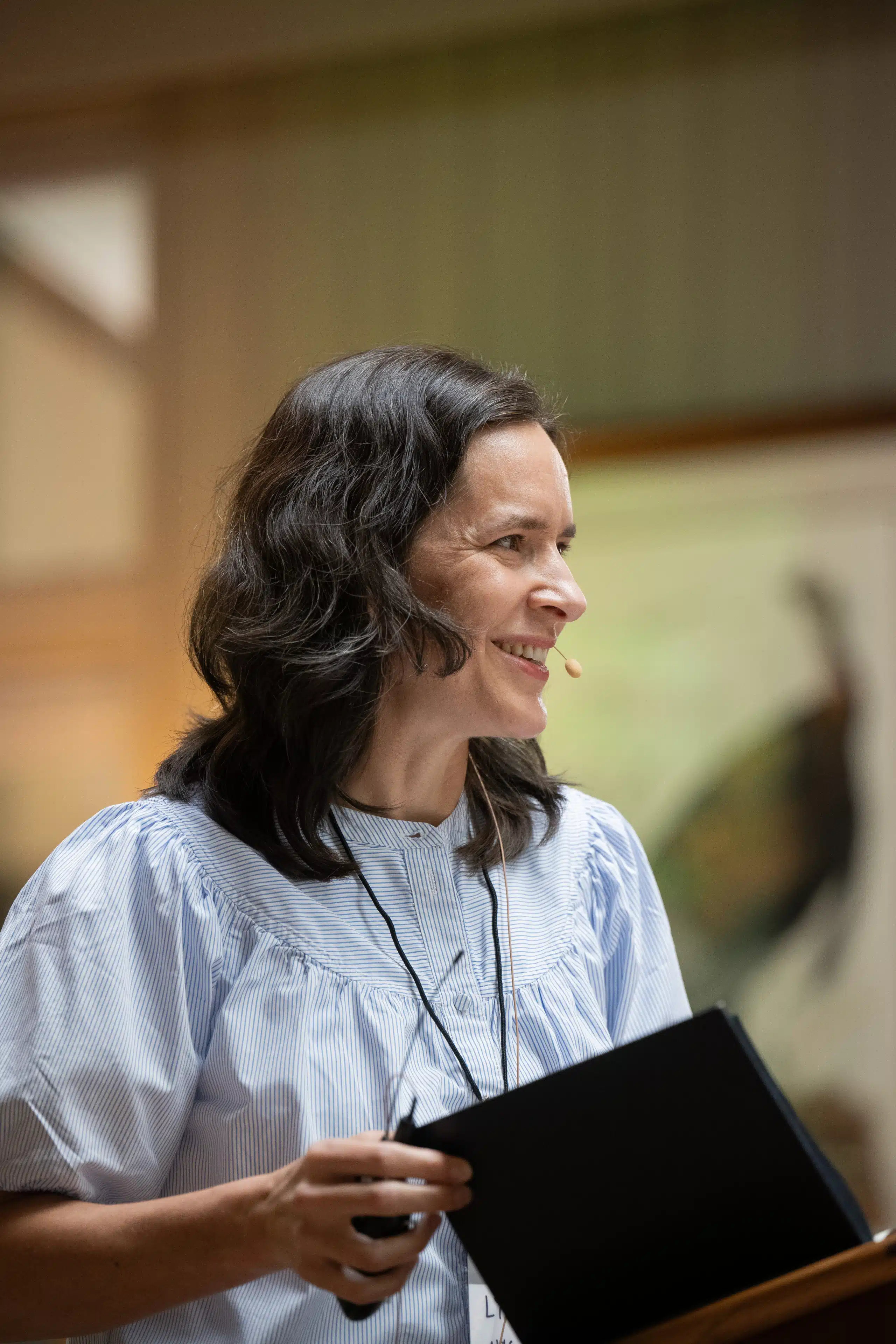


Movies don’t just entertain us—they train our imaginations. In this episode of The Echoes Podcast, New York Times film critic Alissa Wilkinson discusses how movies and media shape the stories individuals and cultures tell about themselves. We explore Hollywood as a “dream machine” that reflects and influences societal values, fears, and aspirations and highlights the risks of media fragmentation and emerging technologies like AI that blur the line between truth and fiction. The conversation highlights the importance of critically engaging with stories—through art, criticism, and community—to better understand reality and choose healthier narratives.
Watch The Podcast
-
Hollywood is an American “dream machine”
-
Movies shape both personal identity and national self-understanding
-
What happens when shared cultural stories fragment
-
The bright side of film: friendship, representation, and moral imagination
-
Joan Didion on truth, spin, nostalgia, and storytelling
-
Why criticism matters and how it can model civil disagreement
-
How advertising, lifestyle branding, and media shape our picture of the good life
-
Why AI-generated video poses a serious challenge to truth
-
Practical habits for becoming a more discerning viewer
-
Alyssa’s thoughts on the 2026 Oscar nominees and a few films worth seeking out
-
We Tell Ourselves Stories by Alyssa Wilkinson
-
Salty by Alyssa Wilkinson
-
How to Survive the Apocalypse by Alyssa Wilkinson and Doug Joustra
-
An Experiment in Criticism by C. S. Lewis
-
- The Truman Show (1998)
-
The General (1926)
-
Ratatouille (2007)
-
E.T. the Extra-Terrestrial (1982)
-
Sinners (2025)
-
The Testament of Ann Lee (2025)
-
Train Dreams (2025)
-
Hidden Figures (2016)
-
The Lord of the Rings (2001 – 2003)
-
My Girl (1991)
-
Tron (1982)
00:00:08:11 – 00:00:30:05
Marcus Goodyear
What story are you living right now? I’ve been thinking about the Truman Show. Truman is born into a reality TV show, and he slowly realizes that the world around him has been engineered. His wife is chosen for him. His fears are planned to keep him in line. Someone else is controlling his story. Now I’m not saying that our lives are literally staged.
00:00:30:05 – 00:00:53:14
Marcus Goodyear
America is not The Truman Show, but so much of what we call normal is shaped by the movies we watched and the shows we stream. Our feeds even the stories we tell in our faith communities. Lately, it feels like different parts of our country are living inside. Very different stories. Maybe incompatible ones. We consume different media bubbles and we’re formed into different people.
00:00:53:16 – 00:01:17:17
Marcus Goodyear
So what do we do? How do we learn to notice the stories that form us? And can we really choose better stories for ourselves? From the H. E. Butt Foundation, this is The Echoes Podcast today. Our guest is Alissa Wilkinson, writer, cultural critic, and a film critic at The New York Times. Her new book, We Tell Ourselves Stories, looks at Hollywood as an American dream machine and asks what happens when that dream starts to splinter?
00:01:17:19 – 00:01:32:14
Marcus Goodyear
We talk about movies, reality TV, and the stories that form us and faith communities, and we’ll get practical about how to stay tethered to the truth while still letting story do its deep work. I’m here with my co-host, Camille Hall-Ortega. Alissa, welcome.
00:01:32:18 – 00:01:35:23
Alissa Wilkinson
Thanks is so good to be here. I’m so glad we can do this.
00:01:36:01 – 00:01:38:20
Camille Hall-Ortega
Yes. So, yes, I needed to have you.
00:01:38:22 – 00:01:45:03
Marcus Goodyear
So you talk about the Hollywood dream machine in your book. Can you explain what that phrase means to you?
00:01:45:04 – 00:02:08:02
Alissa Wilkinson
Yeah. So first of all, you know, when you think about Hollywood often, it is the place where people see movies that tell them what they should want or kind of what aspirations they have. And America has always been a very optimistic country. You know, you leave your home and you strike out across the country and you’re going to build a home for yourself and a new future.
00:02:08:03 – 00:02:31:16
Alissa Wilkinson
So that’s part of the dream machine. It’s where those dreams are literally created for people. And they they get those ideas in their head. But there’s also this other weird thing that happens when you watch a movie, which is that the actual physical experience of watching a movie, especially in a theater, is very like a dream. You kind of go in this dark space, maybe you struggle to stay awake.
00:02:31:18 – 00:02:53:00
Alissa Wilkinson
You’re watching this thing happen before you on a big screen for a couple hours, and it’s, you know, and then you kind of wake up out of it, right? And so you almost have this, this thing happen in your subconscious, and it sort of lodges somewhere. And it’s not just you who had that experience, it’s everyone who was in the room with you.
00:02:53:06 – 00:03:18:09
Alissa Wilkinson
And in any room where that movie was playing. So it’s like a collective dream. It’s a collective subconscious. And we all have that experience together. So Hollywood is a place where all of us are having our dreams manufactured. And in fact, the American movie industry has been a place where America has told itself stories about what it is.
00:03:18:11 – 00:03:43:15
Alissa Wilkinson
You know, who are we as a nation? What is our history together? What kind of a people are we? And as the American film industry has exported its movies over time, that has, you know, been globalized. And, you know, a third piece of this, as I talk about a lot in the book, is that over time, the American movie industry has kind of become the way that we process our real lives.
00:03:43:18 – 00:04:09:14
Alissa Wilkinson
So now if I’m thinking about maybe, you know, going out and dating, I’m probably going to process a lot of my experiences through romantic comedies that I watch. Or if a war starts in part of the world, often we look at the footage and think of it in terms of movies we’ve seen. So we’re actually like thinking about real events in terms of, you know, fictional depictions of those events.
00:04:09:16 – 00:04:41:13
Alissa Wilkinson
So it’s, you know, it’s all kind of like acting back on itself, and it’s like a little factory where those dreams are created. So all of that, you know, I think is, a way to think about what happens in Hollywood. And I don’t think of that as necessarily a good or a bad thing, but it is something that is very important for us to be aware of when we’re thinking about what the effect over the last century of, you know, of the entertainment industry has been on, you know, on the American century, but also on the world’s.
00:04:41:18 – 00:04:56:22
Camille Hall-Ortega
You’re explaining that, you know, this is about 100 years old, that this, industry here in America. What substantive changes have you seen, spoken about, talked about, realized over that time?
00:04:57:00 – 00:05:15:05
Alissa Wilkinson
Yeah. So many. I mean, you just think back to 100 years ago. I mean, I, you know, I was talking about this at work recently, 100 years ago, Buster Keaton’s movie The General came out so that’s, you know, that’s 100 years. And that’s silent film. So it’s.
00:05:15:05 – 00:05:17:01
Marcus Goodyear
Aged well, though Buster Keaton is still.
00:05:17:01 – 00:05:37:18
Alissa Wilkinson
Good, aged incredibly well, and it’s still a very influential film. But if you think about everything that’s happened in the meantime in the world and in the movies, we’ve got sound, we’ve got color, we’ve got longer films, we’ve got digital. You know, we’ve had many different changes in what the, audience wants to see, you know, do they want epics?
00:05:37:18 – 00:06:04:01
Alissa Wilkinson
Do they want sort of gritty realism? Do they want, you know, the action films of the 80s? Do they want kind of the, the 90s comedy or that kind of thing? We’ve had superhero films which really crop up right after 911 when we’re yearning for a hero. And then we have this whole other parallel thing that happens, which is the rise of television and then, of course, of the internet later and all of the things that that brought.
00:06:04:06 – 00:06:25:11
Alissa Wilkinson
So we actually have a fracturing, of the, entertainment landscape where, you know, movies were kind of it for a while. Then TV came along and kind of ate a big part of that. And so movies had to come up with a way to compete and then, you know, and then, and they did, and they figured it out.
00:06:25:11 – 00:06:49:12
Alissa Wilkinson
But then, you know, there’s, new things that are always coming along. And one of the most interesting things about the movie industry is always that it’s an art form that is equally married to commercial and technological, changes basically. So it’s it’s never just one thing. And so every time a new technology comes along, it changes and they’re always trying to they have to work with commercial interests.
00:06:49:12 – 00:07:13:06
Alissa Wilkinson
So all of those things are true. And on the flip side, it really has seeped into our sort of political and public culture as well. You know, we in the 80s, we had an actual movie star who became president. But before that, you know, Kennedy, they talked about in terms of of movie stardom and before that, actually, Barry Goldwater, they talked about in terms of he looked like a movie star.
00:07:13:06 – 00:07:29:13
Alissa Wilkinson
So certainly just the feeling that we were watching our public life as entertainment was already happening long before the rise of anything current, but certainly anything, you know, decades ago. Right. So, so many changes.
00:07:29:15 – 00:07:46:07
Marcus Goodyear
Well, yeah, even after Reagan, we had Clinton, who was sort of a performer. That’s right. We had George W, who’s like a cowboy. Yeah. All of these different people adopting, not adopting, but having personas imposed on them that we recognize from from film.
00:07:46:13 – 00:07:47:02
Alissa Wilkinson
Yes.
00:07:47:04 – 00:08:06:19
Marcus Goodyear
That’s exactly I want to I want to go back to the idea of the dream Machine. You’ve talked about it being fragmented. Do you think I have a two part question? Do you think it is broken in that it’s no longer producing dreams for us? And do you think it’s broken in the sense that it’s no longer producing good dreams for us?
00:08:06:21 – 00:08:33:00
Alissa Wilkinson
I mean, I don’t think it’s broken in the sense that one way to think about it, I had a colleague who used to say that a way to think about what it’s doing is telling us what we’re anxious about. And I’ll give you this example. It’s actually become kind of a joke among, film critics right now that every movie I as the villain like even movies where you wouldn’t think I could be the villain.
00:08:33:02 – 00:08:45:00
Alissa Wilkinson
And this has become very, very, very true. I have seen two movies this week where you would never think I could be the villain, and it was, and I won’t even say what they are.
00:08:45:02 – 00:08:48:02
Camille Hall-Ortega
I’m excited to ask you. Yeah. Yes.
00:08:48:07 – 00:09:04:06
Alissa Wilkinson
But I thought, you know, I walked into the movie and thought, well, there’s no way this one. But yes, it actually. But. So that tells you something, right? And it’s not just that some studio executive is saying, well, you got to figure out a way to get AI in there, right? Because of course, the studio executives don’t want AI to be the villain.
00:09:04:06 – 00:09:22:09
Alissa Wilkinson
You want to use AI. It’s just clear that we’re all feeling the anxiety and we’re trying to work it out together. And that, I think, is that’s what we do in our dreams, right? If you’re anxious about something, you go to bed and it pops up in some weird way in your dream. So there is that kind of subconscious thing that’s happening.
00:09:22:14 – 00:09:42:23
Camille Hall-Ortega
You’re referencing in a bit there, but I’m very curious because I imagine that in this conversation we’ll talk a lot about sort of this dark side of that dream machine. But I’m also curious about the light side or the bright side there. Yeah. What are the good things that come from, aspirational views of movies?
00:09:42:23 – 00:10:03:18
Alissa Wilkinson
Yeah. I mean, I think that there’s so much. Right? There’s been so many movies where people watch them and they see, for instance, a healthy friendship. I think friendship is one of those places. That’s especially true because there are movies that are full of examples of friends who support one another and are one another’s, you know, most vital relationships.
00:10:03:18 – 00:10:11:19
Alissa Wilkinson
And that is something that often is very countercultural, to the way that we talk about friendship in other places. And I.
00:10:11:19 – 00:10:13:19
Marcus Goodyear
Give an example of a favorite friendship.
00:10:13:22 – 00:10:24:15
Alissa Wilkinson
Oh my goodness. Well, now you’re asking me to question. I’m just thinking of like, there are there are plenty of movies that are sort of in, I.
00:10:24:15 – 00:10:27:23
Camille Hall-Ortega
Think, you know, my girl. And then I’m like, oh, now I feel a little bit sad.
00:10:28:01 – 00:10:38:04
Alissa Wilkinson
No I know. Well they’re there. Yeah. There are a lot of those. I’m you can’t ask me for examples. They had. My brain is so cramped like movies all the time.
00:10:38:05 – 00:10:39:11
Camille Hall-Ortega
Okay, I know. All right.
00:10:39:13 – 00:10:41:21
Marcus Goodyear
You’re just going to throw out Frodo and Samwise? Oh, yeah.
00:10:42:02 – 00:10:43:14
Alissa Wilkinson
Sure. Yeah.
00:10:43:16 – 00:10:44:22
Speaker 4
00:10:45:00 – 00:11:08:10
Alissa Wilkinson
The Lord of the rings. Great. But. Yes. No. But, I mean, I shouldn’t. I think that often. You know, we’re told that a friend can’t be your your, you know, your person or whatever. And and we see, you know, that, or, you know, I was talking to, sometimes I’ll talk to people and they’ll say, oh, there are no movies where you see clergy who are good.
00:11:08:14 – 00:11:13:04
Alissa Wilkinson
And I’ll say, that’s not true. There’s actually quite a lot of them. You know, and that’s.
00:11:13:07 – 00:11:14:02
Marcus Goodyear
Required by law.
00:11:14:04 – 00:11:22:02
Alissa Wilkinson
That’s there’s quite a lot of them. And, and there are current ones too. And so that, you know, there’s a lot of these are communities that pull together.
00:11:22:04 – 00:12:06:06
Camille Hall-Ortega
I’m thinking also just about representation. And yes, I think that’s a huge thing because we know even just from, from data that when you see yourself, yeah, something you believe more that that could also be you. And so this aspirational view where we go that wasn’t always the case that we saw representation in film. But how wonderful that I can think about my kids watching a film like Hidden Figures and knowing that even though it’s telling a story that’s from many, many years ago, it is being brought to light in a time where it yes, so important that kids and adults alike can see themselves and go,
00:12:06:07 – 00:12:13:05
Camille Hall-Ortega
I’m represented here in a way that allows me to aspire, sometimes uniquely where that might not have happened.
00:12:13:09 – 00:12:36:08
Alissa Wilkinson
Yeah. That’s interesting movie. Yeah, it really is. Yeah. You know, and there you didn’t used to be space in the industry for those kinds of movies. It really took a lot of pushing, to just have people greenlight those kinds of projects because there was, received wisdom that, oh, they won’t do well at the box office, but, you know, as soon as people are proven wrong.
00:12:36:10 – 00:12:39:07
Alissa Wilkinson
Yeah. And they start getting made and and that’s really wonderful.
00:12:39:10 – 00:12:52:13
Marcus Goodyear
I love this book a lot. I’ve read it. Thank you. Which is really, that’s very unusual for me to do that. And so when, when somebody here is that there’s a book about Joan Didion, they might be like, but that’s I.
00:12:52:13 – 00:12:53:14
Camille Hall-Ortega
Mean, I didn’t know what she was.
00:12:53:18 – 00:12:54:23
Speaker 4
Yeah. I mean.
00:12:55:04 – 00:12:56:02
Camille Hall-Ortega
But now I do hers.
00:12:56:03 – 00:13:18:22
Marcus Goodyear
To say I didn’t really either. I had heard the name and I knew I recognized her face, but she is really the main character walking us through this, this way of thinking about storytelling, in this way of thinking about American storytelling specifically. One of the things she says, she talks about that telling the truth about what something is, is what movies do.
00:13:18:23 – 00:13:40:11
Marcus Goodyear
And so she there’s one point where she talks about a Western that is not particularly a good movie, but it’s a true western. So she’s like I like it. And that’s a terrible paraphrase of your, your section. But I’m curious what helps a person tell the difference in today’s media between this, this idea of the truth of what something is and just the constant spin from every side that we’re getting.
00:13:40:17 – 00:14:06:15
Alissa Wilkinson
Yeah. I mean it’s hard, right? Because it’s, it’s so many layers of, of built up at this point of spin. It can be hard. I always think that there is, there is a kind of intuition that you have when someone is not not giving it to you straight. And I think one reason I really admire Didion as a writer.
00:14:06:15 – 00:14:30:00
Alissa Wilkinson
And if you, if you read her directly, she has no tolerance for spin at all. She just sees right through it. And later in her life, she became a political writer and is just some of the most incredible political writing I’ve ever read. She, you know, she considered herself a conservative basically through to the end of her life, but people almost don’t realize it because she treated everyone exactly the same.
00:14:30:00 – 00:14:52:12
Alissa Wilkinson
And if she detected spin, she had no mercy. So it’s really great to read her and kind of get that feeling. We don’t have a lot of writers like her anymore. And I think for her, it was very much about the language that people used. So she would she, she would think about whether someone was using language to obfuscate the truth.
00:14:52:12 – 00:15:17:09
Alissa Wilkinson
Were they using jargon? Were they using what she thought of as pernicious nostalgia? That was a phrase that she would use a lot. Were they was she being, was she hearing sentimental ization in the language where people trying to tell the story of a golden age that never existed? All of these things to her were an indication, that something was not true.
00:15:17:11 – 00:15:19:18
Alissa Wilkinson
And I think that that for her, was really important.
00:15:19:20 – 00:15:41:06
Marcus Goodyear
Alissa, when people talk about spin, they normally are thinking about, like, media spin, journalism, spin. And what I hear you saying is that through nostalgia, through all of these other things, we actually get spin within our narrative storytelling, our fictional storytelling. Can you talk a little bit more about that? And, and the role of what we’re spinning to each other?
00:15:41:08 – 00:16:03:23
Alissa Wilkinson
Yeah, I mean, I think that, you know, the the question is, are we starting from the right premise? Right. Are we starting from the truthful premise of what what was in the past and what is happening now, like, you know, the cause and effect, really. That’s what a story is. This happens. And so this is happening. Didion, when she wrote we tell ourselves stories in order to live.
00:16:03:23 – 00:16:28:14
Alissa Wilkinson
That’s what she’s writing about, is we she goes on to say, we look at a headline in a newspaper, and we construct a story around the headline in order to comfort ourselves. So we see something scary happening, and we try to come up with a reason for why it’s happening, in order to make sense of it. Because the world is full of scary headlines, basically, and it’s completely chaotic to live in a world with disconnected headlines.
00:16:28:14 – 00:17:00:18
Alissa Wilkinson
And so we have to come up with a reason for it. But there’s a danger to that, because we can invent stories about why things happen in order to comfort ourselves that have no root or basis in the truth at all. They just are, you know, rooted and based in perhaps a dream that Hollywood told us, or perhaps a dream that we’ve inherited from a story we’ve been telling ourselves or our family or our community tells about itself that actually isn’t based in fact, or it’s based on a half truth or something like that.
00:17:00:20 – 00:17:21:08
Alissa Wilkinson
And I love what Camille was saying about Hidden Figures, because that’s a great example of going back to history and sort of taking the true story and telling it. You know, that story is really wild in some ways that I didn’t know it. I, I actually studied computer science as an undergraduate, and I had no idea these women even existed.
00:17:21:10 – 00:17:23:15
Alissa Wilkinson
And in a way that history was hidden from me.
00:17:23:15 – 00:17:29:20
Camille Hall-Ortega
And why didn’t I know it to begin with? Why wasn’t it a part of the canon of, you know, whatever the field or whatever exactly.
00:17:29:20 – 00:17:30:02
Alissa Wilkinson
That kind.
00:17:30:02 – 00:18:02:22
Camille Hall-Ortega
Of thing? Yeah. That’s so important. Yeah. I’m wondering, you have, have spoken about how there can be sort of a war on creativity. I’ve seen it that that this idea that we are almost drawn to divisiveness is one of the reasons you have said that, right? Being a film critic is important to you. Can you speak more about the importance of the work that you’re doing and what you think it helps us with?
00:18:03:00 – 00:18:14:10
Alissa Wilkinson
Yeah, I mean, this this can be counterintuitive to people, I think, because a lot of people think that being a film critic is about like hating movies and tearing them down.
00:18:14:10 – 00:18:15:03
Speaker 4
00:18:16:15 – 00:18:34:12
Alissa Wilkinson
So I think about this exactly opposite. And I would say that most good film critics or critics of any kind do, too. So the job of a critic is to, create a new work of art. First of all, that’s what I think I’m doing when I write a piece of criticism. I’m not saying it’s always great art, you know?
00:18:34:12 – 00:18:53:14
Alissa Wilkinson
That’s what I’m aiming to do. And what I’m doing is recording my encounter with a work of art so that my reader can have their own encounter with that work of art in a more rich and full way. Our world is full of this idea that you can either have this opinion or this opinion, and one of them is correct.
00:18:53:16 – 00:19:33:06
Alissa Wilkinson
And one of the beautiful things about art is there isn’t a correct opinion to have about a work of art. Ever, you know, like your you might hate a movie and I might love it. And neither of us is correct. And also, you may also feel medium about it, and we’re all right. Yeah. So if we can, then talk about it, if we can have a conversation about it, then we’re actually demonstrating something really interesting about human experience, which is that everybody brings themselves to the world with kind of the richness and fullness of who they are, their life, their experience, their perspectives.
00:19:33:08 – 00:19:41:01
Alissa Wilkinson
And we can civilly sit down and have a conversation about that and in so doing, learn about one another. Right.
00:19:41:03 – 00:19:41:11
Marcus Goodyear
That’s.
00:19:41:11 – 00:19:42:04
Camille Hall-Ortega
The beautiful.
00:19:42:04 – 00:19:59:22
Alissa Wilkinson
Thing that art gives us. And criticism, I think, is the first place that we can do that. Like I write a review, this is something that very often happens to me, especially since I got to The New York Times just because a lot of people read The New York Times. I write a review, I publish it, you know, that happens every week.
00:19:59:22 – 00:20:16:16
Alissa Wilkinson
And then I’ll get emails from people, and usually they’re really nice emails, and they’re just from people who are like, I read your review. I went and saw the movie. Here’s what I thought. And then they just want to tell me. And it’s like, literally we’re having a conversation. We’ve connected. Yeah.
00:20:16:19 – 00:20:18:10
Marcus Goodyear
That’s adorable.
00:20:18:12 – 00:20:23:14
Alissa Wilkinson
I love it. You know, some of them, if I don’t hear from them, I’ll email them because I’m like, are.
00:20:23:14 – 00:20:26:01
Speaker 4
You how have you been? Okay. Yeah.
00:20:26:03 – 00:20:26:05
Alissa Wilkinson
A.
00:20:26:05 – 00:20:37:12
Marcus Goodyear
Chance to practice civil discourse. Civil disagreement with lower stakes. Theoretically. I know that. Yeah, I know that. It’s only only a theory.
00:20:37:14 – 00:20:49:01
Alissa Wilkinson
Yes. Hopefully you’re not going to, you know, ruin a friendship over, you know, I liked that movie, and you liked it less. Yes. Unless, you know, although the Lord of the rings.
00:20:49:03 – 00:20:50:17
Camille Hall-Ortega
Unless it’s the Lord of the rings.
00:20:50:17 – 00:21:11:09
Marcus Goodyear
Yeah. I’m pretty sure my friends are tired of me talking about Tron as well. I want to come back to this idea of criticism and how you understand the role of the critic. Before this conversation, I was thinking, I mean, when I think of the the ultimate critic, I think of ego from. From Ratatouille.
00:21:11:11 – 00:21:11:19
Alissa Wilkinson
He’s a.
00:21:11:21 – 00:21:35:08
Marcus Goodyear
He’s a restaurant critic. Right. Yeah. But I mean he’s just such a perfect jerk and he’s so full of himself. I mean his name is ego of course. Yeah. So on the one hand I love what you’re saying, that we are learning to consume media and come to it confident in our own perspective and sharing that perspective with others and hearing theirs.
00:21:35:10 – 00:21:44:22
Marcus Goodyear
On the other hand, when we share our own perspective, how do we not so fully own that perspective that we shut each other down?
00:21:45:00 – 00:22:14:06
Alissa Wilkinson
Well, if you remember the film gratitude, I do. Glad you brought it up. It’s actually the perfect example here because, what happens at the end? I mean, that is a actually a film about criticism, right? If you think about it and you can tell because it ends with the critic, he, he tastes the ratatouille, and he’s brought back to this memory of having read it to me that his mother made when he was a child.
00:22:14:08 – 00:22:36:12
Alissa Wilkinson
And it totally transforms him. And he just he thinks, oh, you know, everything is changed. Good food can come from anywhere. It doesn’t have to be this highly trained chef. And he says something like the new needs champions, right? And so the, the kind of moral of Ratatouille is that a critic is not someone who tears things apart.
00:22:36:12 – 00:22:55:20
Alissa Wilkinson
A critic is someone who looks for the good and champions it. And I think one way that I think about this is when I am right, a pan, which is like a negative review. It is usually because I have gone in looking for the good and have been been disappointed. C.S. Lewis wrote a little book called An Experiment in Criticism.
00:22:55:22 – 00:23:11:15
Alissa Wilkinson
I think he actually wrote it because he was getting bad reviews for the Space trilogy. Although I cannot prove this. But it’s a wonderful book. And he said something in it like, we can only know if a book is bad if we start it expecting it to be very good, which I think is kind of a great line.
00:23:11:18 – 00:23:35:14
Alissa Wilkinson
That’s good. Yeah. And I think that changing our to use like Andy Crouch’s line, I think changing our posture towards art and changing our posture when we are kind of writing about it or talking to our friends or however we’re kind of practicing our criticism is the key. I’m not here to prove to you that I’m smart or that like I have the best opinion or like the best taste.
00:23:35:16 – 00:24:00:21
Alissa Wilkinson
As a movie critic, I watch around 300 movies a year, like, hopefully there are things that I can detect in a movie that maybe someone who isn’t professionally obligated to watch that many movies might not. And so that is my job. And I go to a visual art critic, you know, my friend who sits down the ends of the row for me when I want him to tell me what shows should I be looking for?
00:24:00:23 – 00:24:09:19
Alissa Wilkinson
Like I’m thinking of going to this. What should I be thinking about? Because. Not because he has better taste than me, but because he has a finely developed palate.
00:24:09:21 – 00:24:30:18
Marcus Goodyear
Yeah. You know, I think the suspicion of the media comes from the sense that the media has an agenda right for us as we consume it. And at Laity Lodge, which is the adult retreat center that is affiliated with the Hubert Foundation, we often say we have an agenda, but we don’t have an agenda for you. And that that means two things.
00:24:30:18 – 00:24:48:14
Marcus Goodyear
First of all, we don’t hand out a physical agenda so people don’t necessarily know what’s happening from hour to hour. But also it’s a sense that we are who we are. We are bringing our beliefs to this work, and we invite you into that, but we don’t need you to share it necessarily. We just need you to be with us and be open.
00:24:48:14 – 00:25:11:21
Marcus Goodyear
Yeah. And last week at Laity Lodge, there was somebody talking about the media and its agenda for the good life, the way the media tells us what we’re supposed to believe. You referenced the good life earlier in this podcast already. And so I want to just take a moment. This is, Amy, Julia Becker speaking last Thursday.
00:25:11:23 – 00:25:19:07
Marcus Goodyear
Last Friday, so deep from the Lady Lodge archives, talking about media.
00:25:19:09 – 00:25:43:23
Speaker 5
Our culture is like a moving walkway, right? Like in the airport. And so if you’re like, oh, I don’t necessarily want to be formed and shaped by it. So I’m going to turn around and what happens, like, you keep moving in the direction you don’t want to be going unless you are like actively walking against it. And that’s what’s happening when our imagination is being shaped by the advertisements and images and assumptions that are coming at us all day long.
00:25:44:01 – 00:26:07:06
Speaker 5
And so our imagination for the good life, I’d say, is primarily shaped by two different kind of realms of imagination. One is materialism. So that’s kind of money, beauty, celebrity. So we might say in this version of the good life, the good life belongs to the Instagram influencers, the good life belongs to the pop stars or to the investment bankers.
00:26:07:08 – 00:26:30:15
Speaker 5
But we also have a kind of moralism, good life. And that can come by way of like getting good grades or having good behavior or having good habits, right? I eat a keto diet or I go to CrossFit, or I give money away, or I go to church or these are the ways that I am going to improve myself.
00:26:30:17 – 00:26:33:13
Speaker 5
And know the good life.
00:26:33:15 – 00:26:41:03
Marcus Goodyear
What do you think, Alissa? Yeah, I mean, she talks about two different versions of the good life there, but just the whole idea. I would love to get your take.
00:26:41:05 – 00:27:03:23
Alissa Wilkinson
There’s an essay I write about in the book that Didion published in The New Yorker, I believe, in 2000, about Martha Stewart. And this is before Martha, before kind of the insider trading stuff happened. So it was when it was just when Martha Stewart, was becoming a lifestyle brand and and she was the original influencer, really.
00:27:03:23 – 00:27:28:08
Alissa Wilkinson
She was the kind of the first person of her type to turn herself into a lifestyle influencer brands. And she was brilliant at it. And Didion looked at her and saw a woman who had created a website. There’s this error in the article of what is this web site that you speak of? But, but she looks at it and she says, why do people why why are they here?
00:27:28:09 – 00:27:53:11
Alissa Wilkinson
Like, what are they interested in? Why are they commenting on these, like, boards devoted to this woman who like, sits in her house in Connecticut and makes topiaries and she realizes that what she represents to people is actually a culmination of what Amy Julia was saying there, which is like, both an aspirational businesswoman who’s kind of got it all together.
00:27:53:11 – 00:28:16:04
Alissa Wilkinson
And also she has this beautiful life, you know, that you you just want to be part of. And it’s this esthetic. And she kind of combine the two. And in that way she says she well, Didion, this is very Didion, but she kind of sees her as the apex of the pioneer woman, of, you know, of kind of American law that she, like, has the can do spirit.
00:28:16:04 – 00:28:36:08
Alissa Wilkinson
But she also is like the domestic goddess. And she says, that’s a story we are taught to want to tell ourselves as, like American women of a certain she’s talking about specifically her middle class white American women. But that’s what we’re supposed to want to be. But we see it replicated over and over and over again.
00:28:36:08 – 00:29:02:22
Alissa Wilkinson
And I think advertising is the most powerful place that we see it. Because, you know, that’s the job of the advertiser. I’m in the middle of a rewatch of Mad Men, which I haven’t watched since it first aired, and it’s really striking to me on this rewatch that so much of the show is about men trying to figure out what women want, so they can sell stuff to them.
00:29:03:00 – 00:29:30:06
Alissa Wilkinson
And slowly coming to realize that maybe women should be the ones trying to sell stuff to women. But you know that that’s tapping into the same thing that entertainment does. And it’s no surprise to me that the entertainment business and the advertising business have been slowly merging on one another for decades at this point, to the point where you don’t know when you’re being sold something a lot of the time, because they’re packaged so tightly together.
00:29:30:08 – 00:29:34:14
Marcus Goodyear
Yeah, like little Reese’s Pieces set out for you to follow. Yeah.
00:29:34:14 – 00:29:55:04
Alissa Wilkinson
Yeah, exactly. I mean, Etsy is such a funny one because there’s actually Star Trek figurines in the background. And Star Trek was like five years old at the time. So it was, I think, the first moment in movie history where that where merch from a recent movie showed up in a movie. Oh, yeah, kind of wild.
00:29:55:06 – 00:30:18:20
Camille Hall-Ortega
That’s really cool. Yeah. You’re you’re mentioning something that’s making me think of a very hot topic, which topic you’re talking about, kind of when we are affected by something without even realizing it. And it’s of course making me think of AI. And we just spoke a little bit about AI, but I think it’s so important to dive in here because it’s so top of mind for many of us.
00:30:18:21 – 00:30:49:13
Camille Hall-Ortega
Yeah. And just very timely. I read your piece in the New York Times about, can we trust the documentaries that that we see? Yeah. And it was, troubling and, enlightening and so many things. Can you just talk a little bit about how AI is affecting the world of film and of documentary specifically? And, you just speak a little bit to to it in general?
00:30:49:17 – 00:31:20:12
Alissa Wilkinson
Yeah. I mean, it’s so vast that it’s hard to wrap our heads around because even the term AI covers so many different kinds of things. And it’s also been kind of like retcons in a sense, to cover things that weren’t called AI in the past, but now they are so that people invest in them. But in the article I was talking specifically about, AI video generators, which I think at this point a lot of people are aware that a lot of the video they see on Facebook, for instance, is not real.
00:31:20:13 – 00:31:24:19
Alissa Wilkinson
Like if you see a cat playing a flute, like that’s not real.
00:31:24:20 – 00:31:25:13
Camille Hall-Ortega
Didn’t happen that.
00:31:25:13 – 00:31:56:18
Alissa Wilkinson
Once. No. But also there’s less obvious ones, and it’s becoming easier and easier to, you know, mistakenly think that, you know, this video of maybe a priest yelling at law enforcement is real, but it’s not real. And it can make it harder and harder to discern this. And these videos are being created often to gin up, you know, rage basically for clicks because somebody is going to benefit from it.
00:31:56:20 – 00:32:30:20
Alissa Wilkinson
It’s also just very easy to generate real looking video of normal things, of historical footage or of just like somebody’s living room or something like that of a house on a corner of a street. And, you know, there’s no like, harm done if you generate a picture of a house, who cares, right? But in the documentary world, this is a real problem because your expectation there’s a there’s a level of trust that’s expected by the viewer of a documentary that everything I see is real, unless I’m told otherwise or unless it’s like a recreation.
00:32:30:20 – 00:33:04:07
Alissa Wilkinson
And it’s sort of visually indicated to me that these are actors, they’re recreating something that happened. So it’s very troubling when, you know, the possibility emerges that things you see in a documentary might not actually be real. They might be generated video. And I was chatting with some folks at a documentary film festival who said, oh, yeah, I mean, we can’t really talk about it, but the big streamers have asked because they’re trying to push out content super fast.
00:33:04:09 – 00:33:09:03
Alissa Wilkinson
Because the appetite for it, well, can’t you just create that scene?
00:33:09:05 – 00:33:11:01
Camille Hall-Ortega
Oh, gosh.
00:33:11:03 – 00:33:30:06
Alissa Wilkinson
Which is troubling on many levels. But also, you know, no video just exists as a film anymore. It also is internet video, right? So you could clip out that clip and post it to the internet. And 20 years from now, somebody might just think that’s real.
00:33:30:07 – 00:33:32:12
Camille Hall-Ortega
Somebody or I or. Yeah, it’s real.
00:33:32:12 – 00:34:00:15
Alissa Wilkinson
Right, exactly. And so we’re muddying the historical record on top of everything else, and we’re already in a time where it’s hard to know what’s real. But the fact that I really could in ten years, not be able to trust a single video I see, or next year or next month is very troubling. And if you think about all the ways that video is used to, you know, as evidence of human rights abuses around the world or things like that, this becomes very troubling.
00:34:00:15 – 00:34:20:08
Alissa Wilkinson
And there are governments around the world that will try to, you know, use that and sort of say, oh, this is this is fake. This isn’t actually happening. So that’s what I was writing about. It was if you found that troubling, I was steeped in it for about six months, and I was calling people who were like, yeah, we don’t we don’t know what we’re what we’re going to do.
00:34:20:10 – 00:34:38:05
Alissa Wilkinson
And there’s a huge need for people to really be thinking about this and thinking about, you know, what kind of guardrails can we put out there? Because we should be caring about truth, right? That should be. Yeah. Front of front and top of minds and, video evidence in court, you know, it will not be a thing anymore.
00:34:38:07 – 00:34:56:13
Alissa Wilkinson
That that should matter to us if we care about things like truth and justice. So all of that is part of my job here, because obviously we care about it, too. A lot. And I think that, AI is one part of it, but it is a really big part of it. There are lots and lots and lots of other ways AI is affecting the movie business.
00:34:56:13 – 00:35:02:14
Alissa Wilkinson
It’s in some ways it’s kind of a test case. For the ways it’s going to affect everybody’s lives.
00:35:02:16 – 00:35:35:08
Marcus Goodyear
But so yeah, if we have somebody listening to this and they say you’re right, I, I don’t actually know what to trust anymore in my feed, I thought that you know, I thought possums dropped dead in a split second because it’s so cute. This is one that I was taken in by. What? What are some practices? What are some practices you can give us or do you that you do yourself to, to help us focus on what is true, what is real, and, what is unfiltered or less filtered by these technologies.
00:35:35:08 – 00:35:36:20
Marcus Goodyear
That can just be so confusing.
00:35:37:00 – 00:35:57:02
Alissa Wilkinson
Yeah. I mean, unfortunately, some of it is, you know, skepticism. And we I think we as a culture have learned that in the sense that we we learned it around photographs. Right? We all became aware of photoshopping at some point and became aware that it three hands. Yeah.
00:35:57:04 – 00:35:57:18
Speaker 4
Happening.
00:35:57:23 – 00:36:21:01
Alissa Wilkinson
You know we we realized at some point that the covers of magazines probably had been photoshopped. Right. We need to start doing the same thing with videos. And I’m hoping that we’ll get there. But we also need to be there are people who are out there who, are doing the work to educate us on. Here are the telltale signs.
00:36:21:01 – 00:36:40:00
Alissa Wilkinson
Right. So we need to seek those out, you know, and we need to look at them and we need to send them to our friends and our family and say, you should watch this. If our friends and our family are sending us videos and saying, isn’t this cute? You know, sometimes you have to say, yeah, but you know, this isn’t real, right?
00:36:40:00 – 00:36:58:09
Alissa Wilkinson
And, you know, it’s sometimes it’s it’s a bummer to do that, but you have to do it. I also see this thing happen, unfortunately, where people will post something and people underneath will say, that’s not real. And they’ll say, yeah, but I like it. And they’ll keep it up. Like, we can’t do that. We should we should draw a hard line and say, this isn’t true.
00:36:58:09 – 00:37:16:02
Alissa Wilkinson
I’m taking it down and I’m going to make another post that says, I posted something. I realized it wasn’t true. Yeah. Like, here’s how I know. Because the more we’re doing this, the more we’re injecting truth back into the ecosystem instead of letting the lie be out there.
00:37:16:08 – 00:37:38:03
Camille Hall-Ortega
I was just going to say, I know that we’re over time, and I feel like we would be remiss if we don’t note that at the time of this recording, the Oscars are just around the corner, and sitting with us is a New York Times film critic. Can you just tell us what you’re most excited about? Any, things that you’re really happy that the noms list came out the way it did?
00:37:38:05 – 00:37:43:23
Camille Hall-Ortega
Any of your favorites that you want to mention? Any just sad snubs that you’ve seen? Tell us anything you’d like?
00:37:44:01 – 00:38:07:21
Alissa Wilkinson
Yeah, a couple things. You know, overall, I thought they were pretty good nominations this year, which, I can’t say every year, but I have thought the quality of nominations have been going up over the past few years. I hope that people think of the Oscars as kind of handing you a watch list and telling you, like, these are really good movies, and if you haven’t seen them, here’s some good movies that you might want to see.
00:38:08:03 – 00:38:22:20
Alissa Wilkinson
Yeah. You know, instead of being like, oh, they’re out of touch with America or whatever, which is the story people like to spend. I think, you know, these are movies picked by people who work in the industry. So they will have seen them. And they’re telling you, we think these are the ones that were best this year.
00:38:22:22 – 00:38:41:18
Alissa Wilkinson
I really like, you know, centers. I really like one battle. So another I think these are great movies, you know, and they’re they’re thinkers too. You kind of watch them and you keep thinking about them. And that’s exciting to me. And it was exciting to see centers in particular be a movie that was one of the most critically acclaimed movies of the year, and one of the highest box office earners.
00:38:41:20 – 00:39:03:22
Alissa Wilkinson
That doesn’t ever happen, or rarely happens. So, that was really cool. I was thrilled to see Delroy Lindo get nominated for his role in that film, too. I have been rooting for that man for ages, and I screamed on my couch at 6:00 in the morning when that nomination came out, so that was really exciting.
00:39:04:00 – 00:39:24:08
Alissa Wilkinson
I’ll tell you one movie that did not make it onto the nominations list, but for some people might be something they might want to seek out. Is the movie The Testament of Anne Lee? Which is about the founder of, the Shaker religious group, which is the splinter group off the Quakers. It’s a strange movie. I will warn you.
00:39:24:08 – 00:39:31:23
Alissa Wilkinson
It’s a very odd movie. But if you’re into kind of odd movies about splinter religious groups, you really couldn’t do that.
00:39:32:01 – 00:39:34:14
Speaker 4
It’s my favorite. Yeah.
00:39:34:14 – 00:39:55:20
Alissa Wilkinson
So I grew up near where the shakers, sort of landed when they came to America. And, you know, they have beautiful music and furniture and all of that. But it’s really about the woman who founded the sect. She had very strange ideas. But if you’re kind of into, like, strange 17th century, religious groups, this is it’s a great, great movie.
00:39:55:22 – 00:39:57:21
Alissa Wilkinson
Totally worth seeking out.
00:39:57:23 – 00:40:00:04
Marcus Goodyear
Well, thank you so much for that recommendation.
00:40:00:04 – 00:40:22:02
Camille Hall-Ortega
I told, Marcus and our producer, Rob. Before you were on the call, that I have not seen a lot of the movies that are up this year. And I am inspired to go to. I love your, your, idea of this being kind of a list of things that you can, can go and choose from. So it’s.
00:40:22:02 – 00:40:42:20
Marcus Goodyear
Really. Yeah, it’s a menu, right. It’s a menu. Yeah. Got a good restaurant and you know, everything you order is going to be good and interesting. Yeah. You might like the chicken more than the fish. I was so excited to see centers on this list. I love centers because it’s somehow both very thinky, like you said, but also a popcorn movie and oh.
00:40:42:20 – 00:40:43:13
Alissa Wilkinson
Completely.
00:40:43:13 – 00:40:51:18
Marcus Goodyear
So fascinating to see those things work together. I mean, mostly, but it’s just really, really good. It.
00:40:51:18 – 00:41:12:08
Alissa Wilkinson
Is. And, you know, and you take that one and you contrast it with the movie that is also on the list, like Train Dreams, which is like a very small, meditative movie about a guy living his life, you know, in the northwest. And I just, you know, that’s such a wide range of movies to all land on the same list.
00:41:12:08 – 00:41:19:01
Alissa Wilkinson
And that one is equally amazing. So I just think they did a pretty good job picking them this year.
00:41:19:04 – 00:41:21:04
Marcus Goodyear
All right, go, Hollywood. We can do.
00:41:21:04 – 00:41:32:03
Camille Hall-Ortega
This. Yes, Alissa, we have talked a lot about your book. We tell ourselves stories and, it is out now. Correct. And coming out on paperback soon, is that right?
00:41:32:04 – 00:41:38:00
Alissa Wilkinson
It’ll be out in paperback in June, but it’s out in hardcover wherever you get your books.
00:41:38:04 – 00:41:40:10
Marcus Goodyear
Yeah, it’s also on audible, if you like. Yes.
00:41:40:11 – 00:41:41:10
Alissa Wilkinson
Yeah. And I read it.
00:41:41:10 – 00:41:43:16
Marcus Goodyear
We have Alissa herself reading it. It’s quite good.
00:41:43:22 – 00:41:57:19
Camille Hall-Ortega
Yes. Yeah, it was really good. Awesome. Well, we hope everyone will pick up the book. And you also have, other books I was reading about. I haven’t gotten to read salty. Is that right? But, just just tell us a little bit about that one, too, as we wrap up.
00:41:57:22 – 00:42:18:11
Alissa Wilkinson
Yeah. Salty is a collection of short essays, I guess, about women from history who I admire artists, activists, you know, writers. But all through the lens of food and there are recipes and illustrations, it is a very good gift book, but it, I think is also a real fun read.
00:42:18:12 – 00:42:21:01
Marcus Goodyear
And I think that’s. What about zombies two right there?
00:42:21:01 – 00:42:43:10
Alissa Wilkinson
Is there is, there is. I co-wrote a book, called How to Survive the Apocalypse, in which we write about, well, actually about the philosopher Charles Taylor, but that’s the quiet part we write about, the apocalypse in pop culture. And, yeah, How to Survive the Apocalypse, which we’re attempting to do.
00:42:43:12 – 00:43:06:05
Camille Hall-Ortega
So good. Well, I, I’m just grateful for our conversation today because it really brought so many things, top of mind that are timely. This these ideas of the stories that we tell ourselves and how we’re framing things, spinning things, how they affect us. That’s important. It’s really important to just thank you for your work and thank you for being with us.
00:43:06:05 – 00:43:06:21
Camille Hall-Ortega
We appreciate it.
00:43:07:02 – 00:43:09:04
Alissa Wilkinson
Thank you. This has been really great.
00:43:09:06 – 00:43:29:04
Marcus Goodyear
The Echoes Podcast is written and produced by Camille Hall-Ortega. Rob Stinnett and me, Marcus Goodyear. It’s edited by Rob Stinnett and Kim Stone, our executive producers are Patton Dodd and David Rogers. Our original music is by Johnny Rogers. Special thanks to our guest today, New York Times film critic Alissa Wilkinson. Alissa, do you subscribe to Echoes magazine?
00:43:29:07 – 00:43:30:05
Alissa Wilkinson
Oh, of course.
00:43:30:05 – 00:43:55:14
Marcus Goodyear
And you two can subscribe to echos magazine.org. You’ll receive a beautiful print magazine each quarter. It’s free. You can find a link in our show notes. The Echoes Podcast and Echoes magazine are both productions brought to you by the H. E. Butt Foundation. You can learn more about our vision and mission at hebfdn.org. If you’ve enjoyed this episode, follow us wherever you listen to podcasts and be sure to leave a review because it matters.


