

The Work of Wholeness: Navigating Faith and Mental Health
Open conversations are helping churches imagine better mental wellness.
Photography by Joshua Nolden
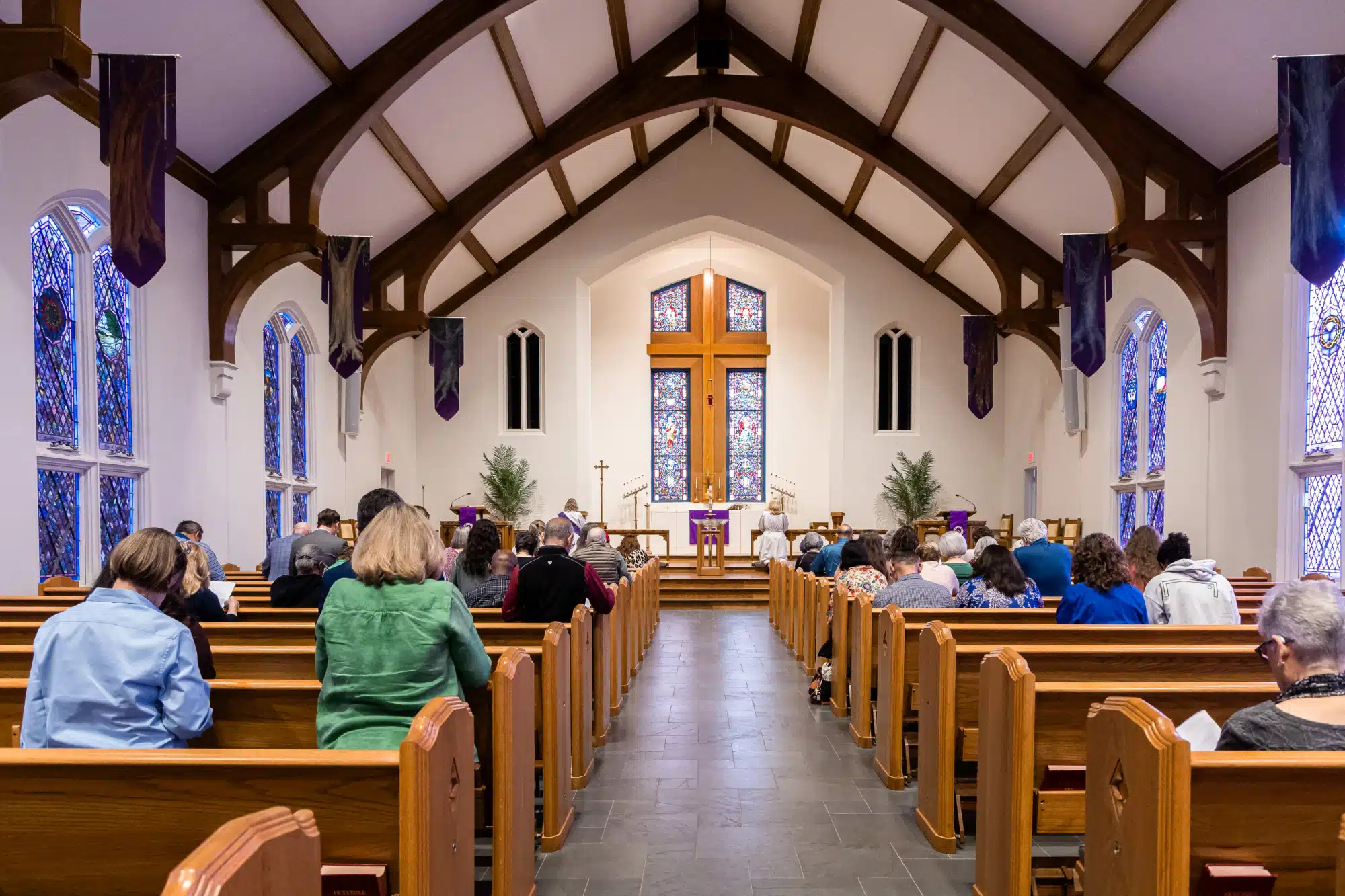
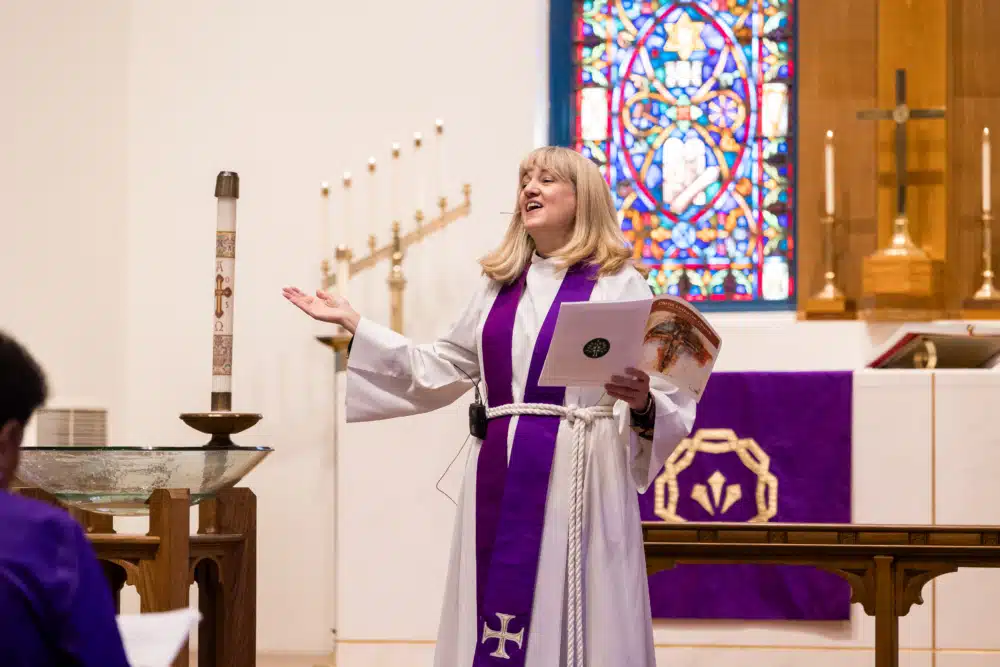
Linda Cornwell sat quietly in the back of the sanctuary at Christ Lutheran Church of Alamo Heights. The morning light cast soft, warm colors across wooden pews and gray tile as it filtered through the surrounding stain-glass windows. Linda’s pastor broke the calm silence from the pulpit:
“Oh Lord, increase our awareness, compassion, and sensitivity so that we can embrace those who wrestle with mental illness. Lord, in your mercy—”
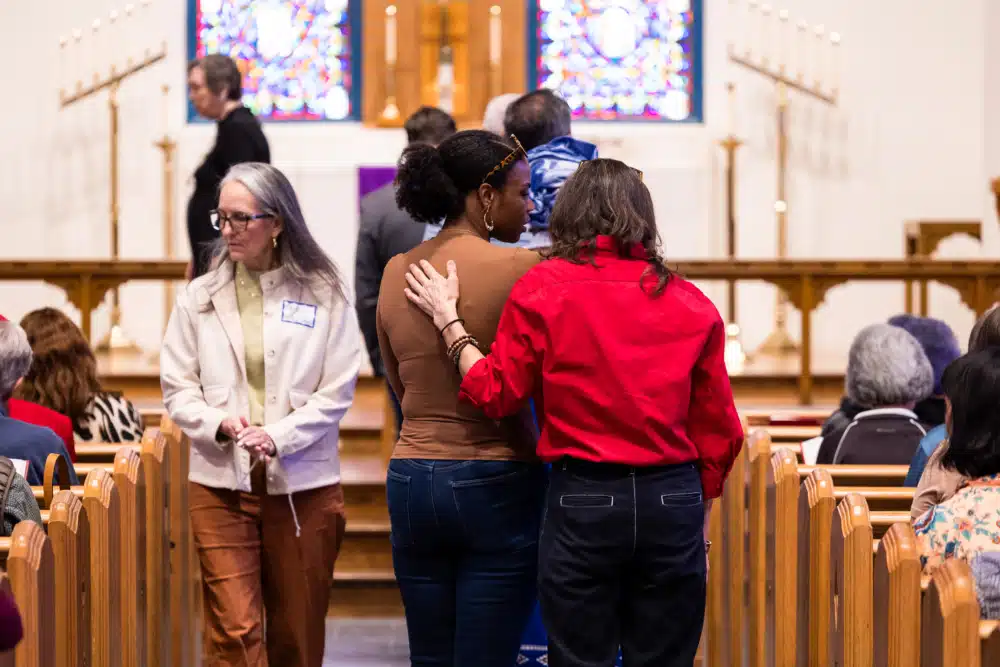
From the twelfth row, Cornwell’s voice joined with many others, “Hear our prayer.”
Early on this Saturday morning, this church, Cornwell’s church, was filled with people from faith communities across San Antonio. They were all eager to engage with The Congregational Collective—a nonprofit launched by the H. E. Butt Foundation in 2023—around a common question: How do we better care for the mental health of our congregations?
Among them was Linda Cornwell, a San Antonio transplant and member of Christ Lutheran for three years. Her church was one of the newest participants to join the work of The Congregational Collective, a nonprofit launched by the H. E. Butt Foundation in 2023 with the goal of making San Antonio’s congregations the safest places in the world for people seeking mental wellness.
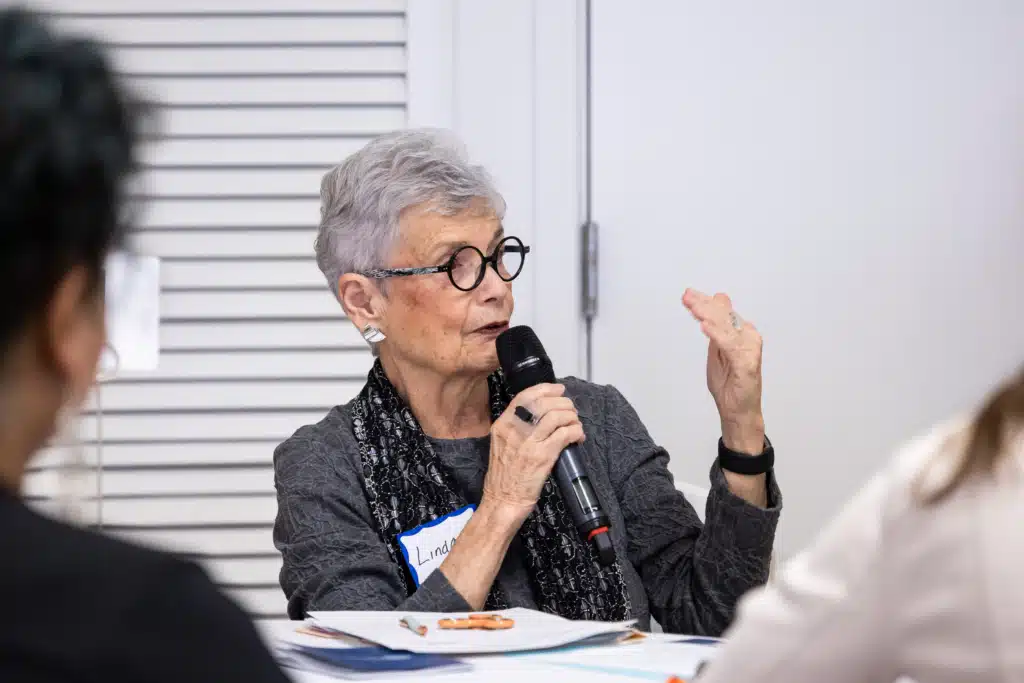
But first, worship and prayer. “It set the tone for the entire day,” said Cornwell.
But first, worship and prayer.
“It set the tone for the entire day,” said Cornwell.
The morning liturgy centered around mental health. The prayers acknowledged anxiety and sleepless nights and addiction and self-harm.
Looking around the sanctuary, Linda knew that liturgy was not equally familiar to everyone in the room. The people praying in unison represented an intentionally diverse faith community—Catholic, Methodist, Baptist, non-denominational churches, and more. This month, they were at Linda’s church, experiencing a liturgical tradition before the training began. In other months, they experience different worship traditions together. Always they shift to training and workshops, acknowledging that people walk through their church doors not just with spiritual needs, but often carrying mental burdens as well.
Mental Health Isn’t One Size Fits All
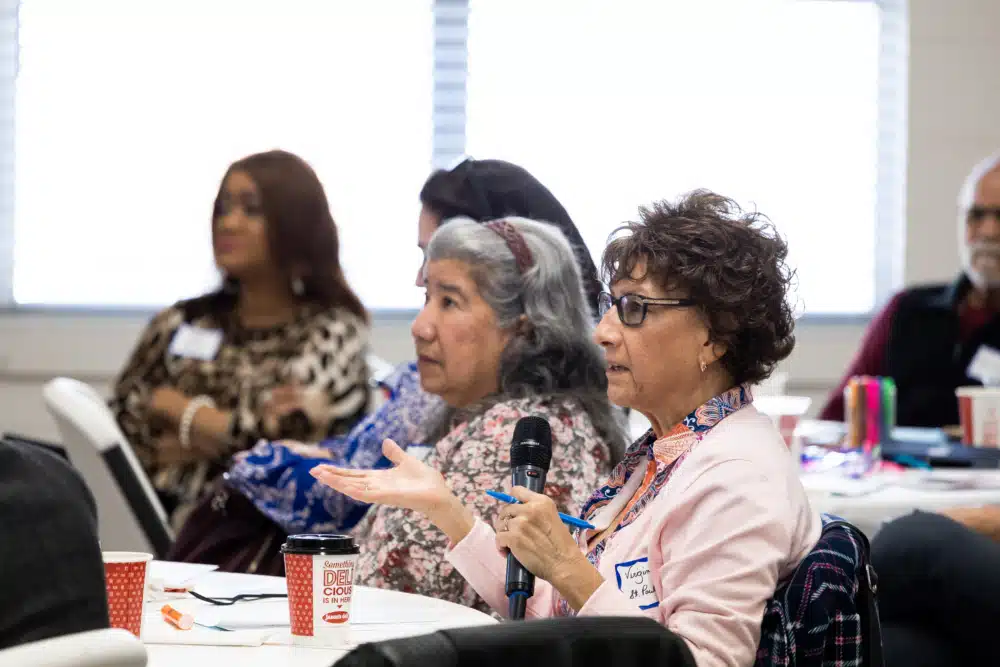
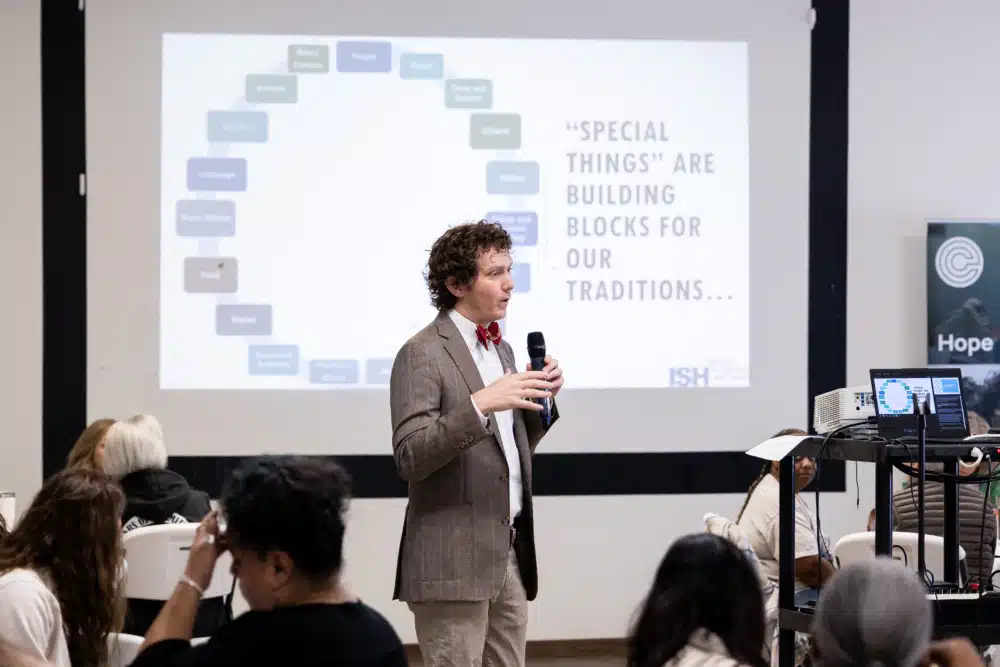
“Faith and spirituality intersect with health and healing,” Stuart Nelson explained in a workshop that day from the Institute for Spirituality and Health. “Each deeply impacts the other.” If we avoid conversations about faith, we miss an essential part of caring for the whole person. But faith conversations thrive naturally in our churches.
“So,” Nelson asked, “how can your church pair the physical practices and traditions that already exist within your congregation with caring for peoples’ mental wellbeing?”
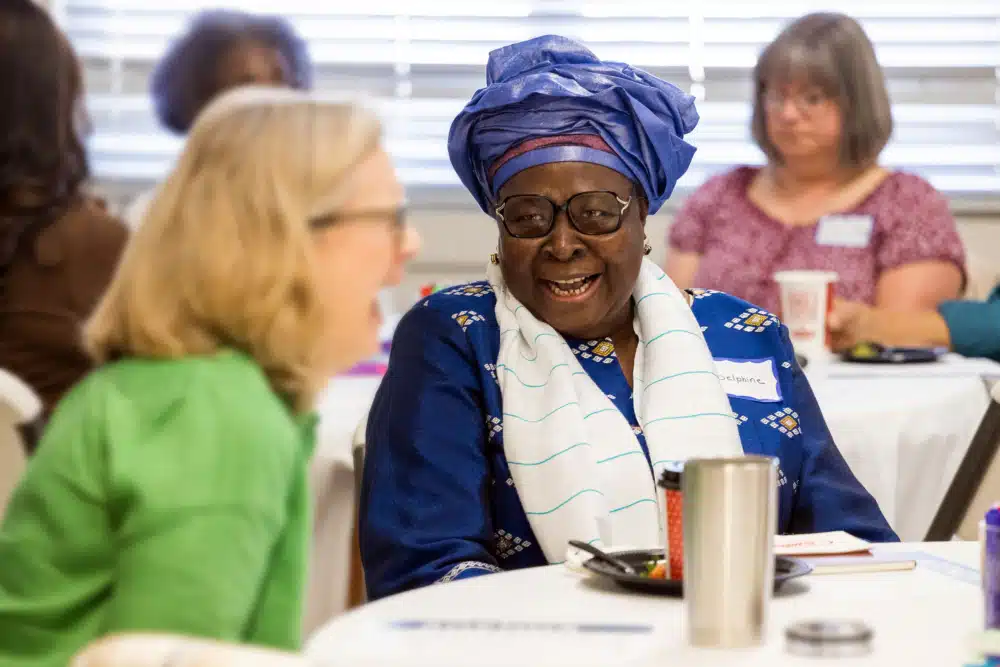
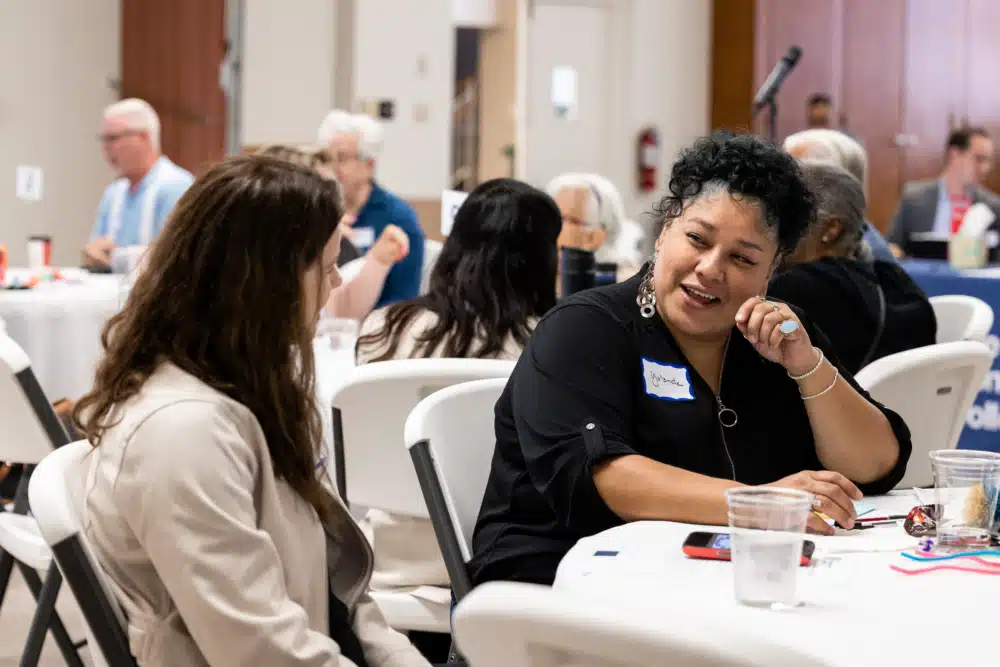
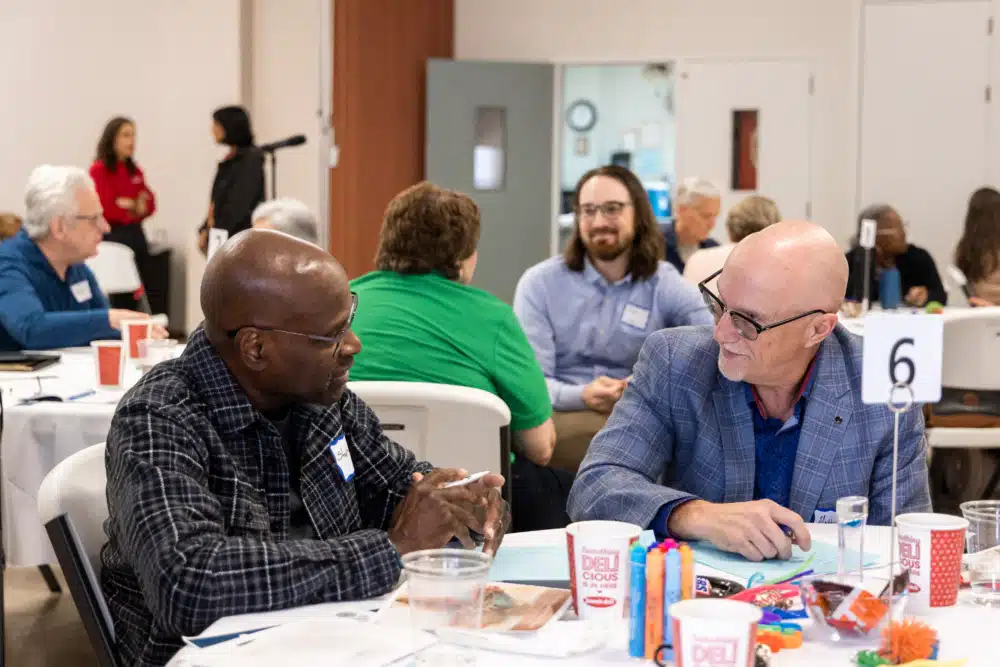
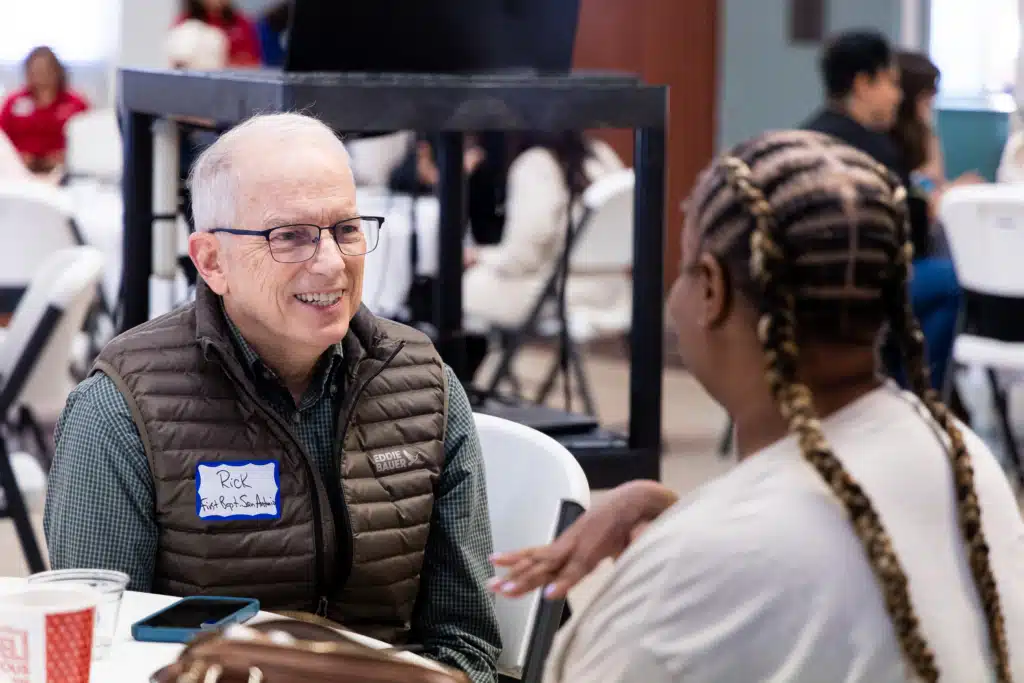
Everyone turned to the people around their small table to discuss.
“Every person is made up of mind,
body, and spirit.”
In Cornwell’s group, the question lingered for a moment. Then one woman said, “Nearly everyone in our church is part of a Bible study.” Conversations about Scripture could open the door to conversations about grief, burnout, and lament.
“We have a book club at my church,” said Cornwell. “I could suggest books with mental health themes—or [I could] even introduce mental health topics into the conversation when we meet.”
Heads nodded around the table.
“We don’t have to reinvent everything,” another participant said. “We just have to be more intentional in what we are already doing.”
Since the beginning of Cornwell’s time supporting mental wellness at Christ Lutheran (roughly a year), her church’s role has become more tangible. Her church had selected a Navigator who worked closely with pastoral staff to build a culture of mental wellbeing. The navigator also recruited others, like Cornwell, to help.
“With each meeting and gathering, the direction for our specific church feels clearer. Every church has its own rhythm and needs,” said Cornwell. “Mental health isn’t one size fits all.”
According to Cornwell, this non-prescriptive and flexible approach is The Collective’s greatest strength. Instead of step-by-step instructions on how to create a safe space for those carrying mental health challenges, churches looked to make the spaces that already exist safer.
Mental Health Isn’t Just What’s Happening Internally
Mental wellbeing is often shaped by outside pressures—heavy work demands, chronic illnesses, or relationship conflict. In one of the workshops that day, The Collective focused on a real-life stressor that affects 46% of San Antonians: Financial strain.
In the afternoon, Cornwell’s table went through a simulated “30-day journey” in the shoes of working parents who can’t afford basic necessities like housing, childcare, food, or transportation.
Stephanie Smith, the impact council director at United Way of San Antonio and Bexar County, facilitated the simulation. Each day of the month prompted a new financial fork in the road. Should Cornwell and her family own a car and pay for insurance on their meager budget or risk relying on the VIA Metropolitan Transit with long wait times and limited coverage? Which type of childcare should they choose? The lowest cost option of $500 still took a good chunk of their monthly income.
We don’t have to reinvent everything,” another participant said. “We just have to be more intentional in what we are already doing.”
Some decisions carried even heavier emotional weight.
“We had to decide whether to use what little money we had left for the month to take our child to [a birthday] party or decline the invite and our child would be left out of the fun,” explained Cornwell. The simulation opened her eyes to what people are living with every day. “I had been somewhat naïve to the fact that mental health isn’t just about what’s happening internally,” said Cornwell. “It’s connected to everything else going on in someone’s life.”
So many burdens that people carry never show up in a prayer request. Cornwell’s role on the care team at Christ Lutheran is helping the church develop ways to gentle discover the unseen burdens its members carry. A lot of this happens through clubs and small groups that already exist within the congregation—the book club, the quilting club, the men’s breakfast meeting at Bill Miller BBQ, or the mom’s group that gathers once a month at Olmos Perk Coffee.
Through small efforts like these, Linda is helping make her church a safe place for people seeking mental wellness. It is long-term work, but The Collective is making sure that Cornwell and Christ Lutheran are not doing the work alone.