

The city is looking to define what is a vulnerable community in San Antonio.
How do you define “vulnerable community”?
As a lifelong resident of San Antonio, I immediately think of the West Side. While there have been flashes of prosperity and success, the West Side has remained largely stagnant for decades. Mostly all of the West Side — from Frio Street west to Callaghan Road; from Culebra Road down to U.S. 90 — hasn’t changed since I was a kid in the early 1980s.
So, one definition of a vulnerable community is a neglected community.
But what happens when a poorer neighborhood becomes the focus of new investment—in the form of affluent outsiders rehabbing crumbling homes or building modern ones on vacant lots? Or developers coming in and erecting luxury apartments? What happens to those neighborhoods’ longtime residents?
Now, San Antonio is exploring these issues using a local nonprofit to identify both types of vulnerable communities—those that have remained stagnant for generations, and those that are experiencing an influx of investment.
This study, by the National Association of Latino Community Asset Builders (NALCAB), is happening relatively quickly—the initial findings are expected to be released in July, and a final draft in September.
NALCAB’s strategy is twofold: identify San Antonio’s vulnerable communities using a set of metrics (see below), then craft a kind of “toolkit” for how to protect those communities.
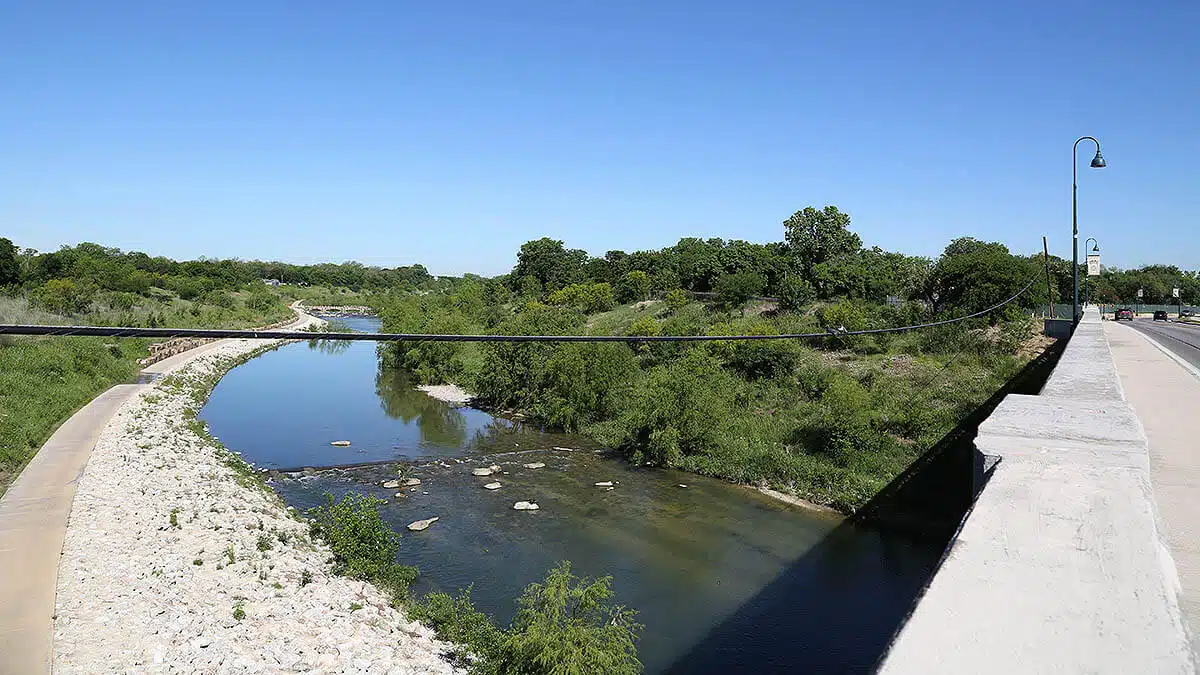
The idea stems from the the displacement of dozens of residents of the old Mission Trails mobile home park on the South Side near Mission Concepcion. In May 2014, the City Council voted to rezone the riverfront property, which became even more valuable after millions of dollars of new trails and landscaping was added to that stretch of the San Antonio River and dubbed the Mission Reach.
The rezoning allowed the property owner to clear the 21-acre tract and all who lived there for the construction luxury apartments. The event triggered crying of injustice from the community. Shortly after, Mayor Julian Castro created a housing task force to study displacement. In 2015, Mayor Ivy Taylor created the more permanent Housing Commission, which now wants to identify the city’s most vulnerable communities.
The idea for a vulnerability study “came up as we were continuing to help brief the commission . . . when it came to manufactured housing,” said Chris Lazaro, housing policy manager at the City of San Antonio. “This is not just a problem with manufactured housing (mobile homes); this is a problem we’re going to keep coming back to as we look as other types of housing.”
To determine which of San Antonio’s many neighborhoods are considered vulnerable, NALCAB will look at the following metrics (using their terminology):
» Property values and rents
» Current zoning and future land use
» Demographics
» Building permits/plats
» Student mobility
» Percentage of ESL students
» Percentage of students with free or reduced lunch
» Distance to high-capacity transit stations (existing and planned)
» Distance to river, parks, major employment and lifestyle centers
» Infrastructure conditions
» Fair housing data
We’ll be standing by for the July findings and remain in conversation with local stakeholders about the implications of the report.
Editor’s Note: NALCAB is headquartered in San Antonio and has a satellite office in Washington, D.C.
This article was originally published by the H.E. Butt Foundation’s Folo Media initiative in 2017.