

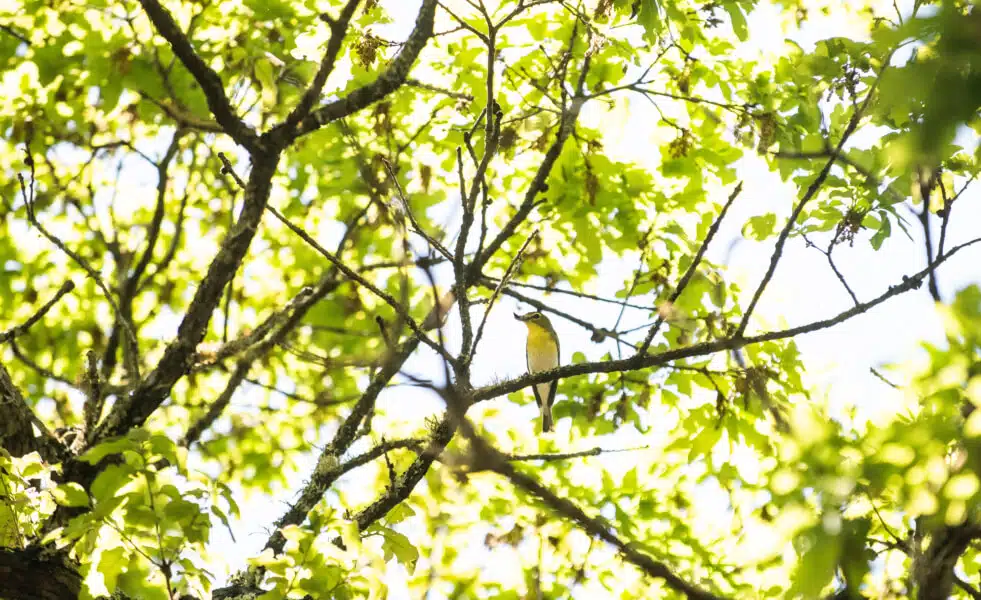
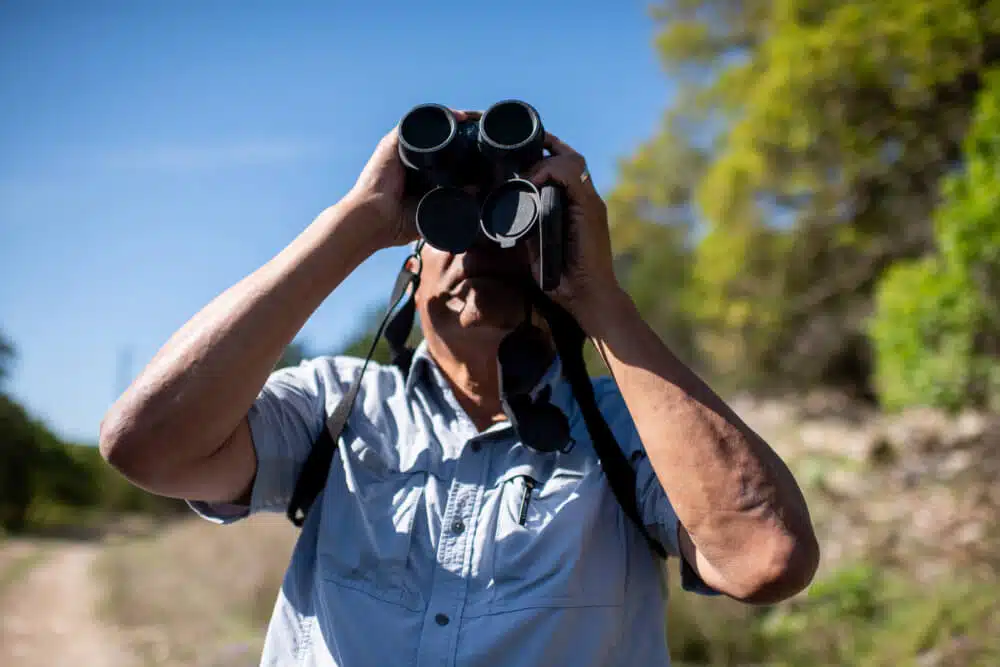
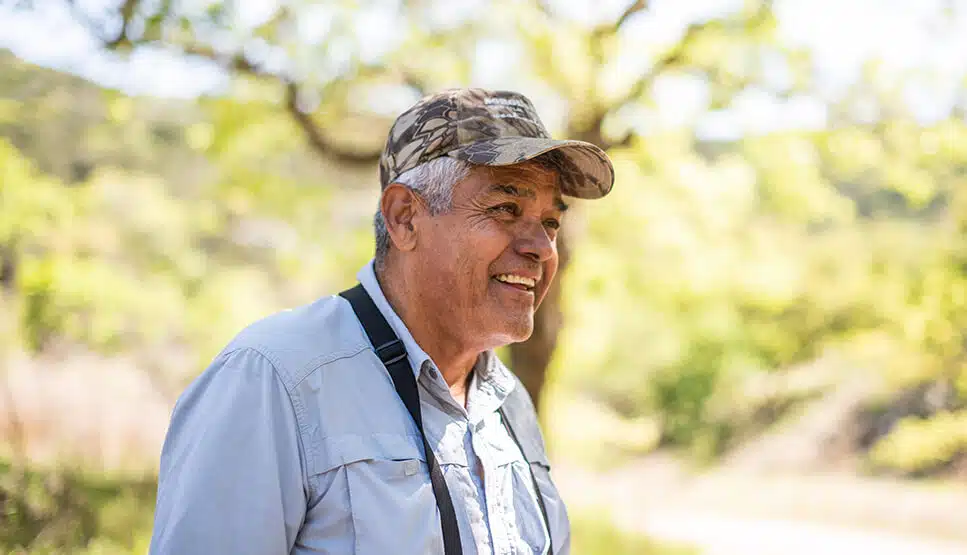
On a pleasant morning this past April—too warm to be brisk, but cool enough to enjoy the sun—Sylvestre “Junie” Sorola stood below a limestone bluff on an undeveloped portion of the H. E. Butt Foundation property. His binoculars at the ready, he tilted his head to listen for a distinctive song.
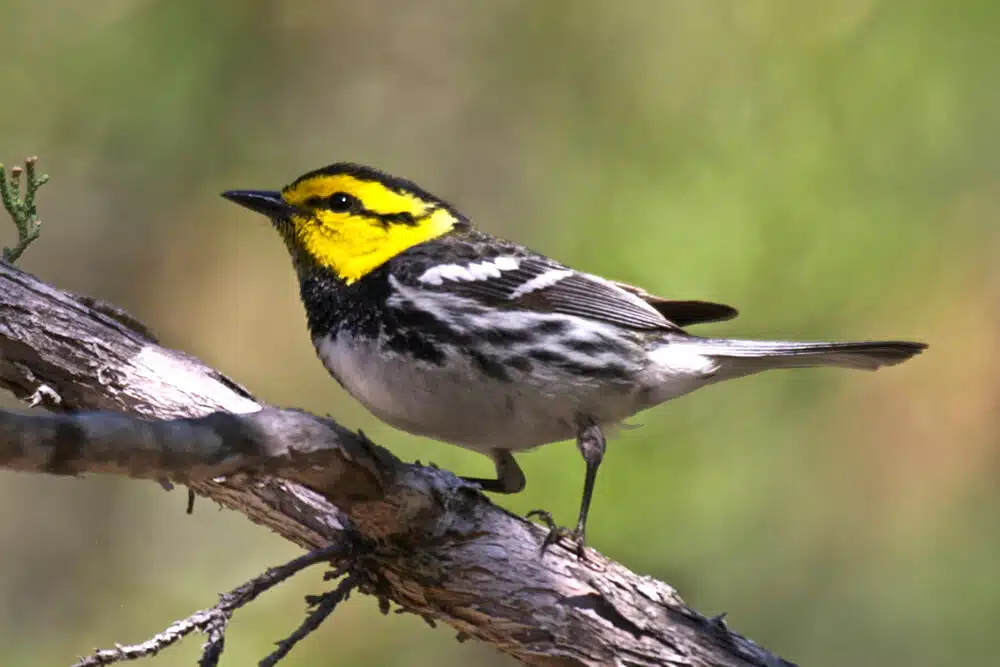
“There it is,” he said, as if out of nowhere, his eyes staring at nothing in particular. The small troupe of birders—ranging from first-timers to veterans—stood still around him, listening for a second song. In the silence, another call of the golden-cheeked warbler rang clear.
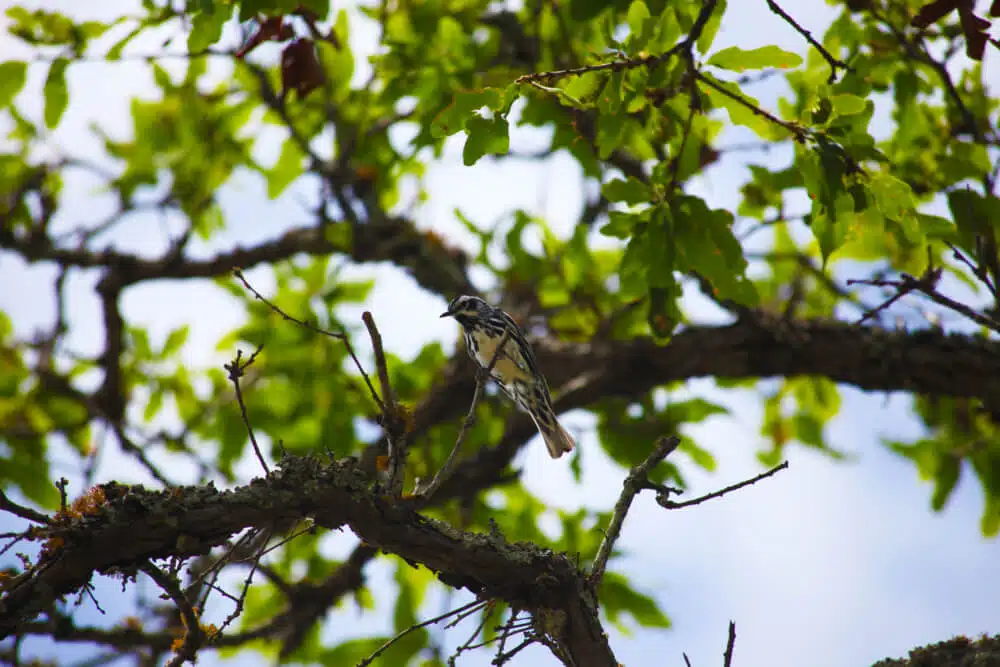
These birds have become endangered as their available habitat has reduced greatly. The particular mix of trees and moisture that they prefer is only found in Central Texas, where much has been lost to development.
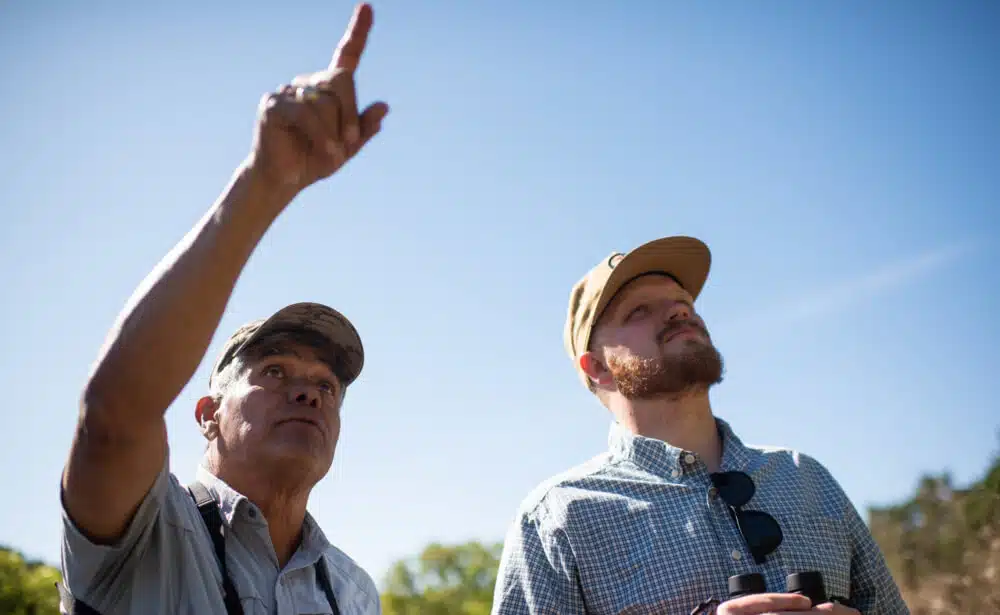
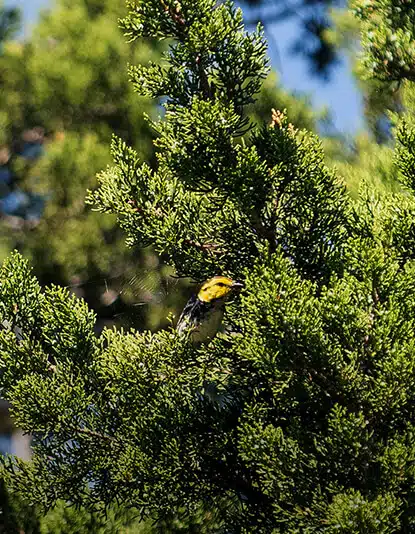
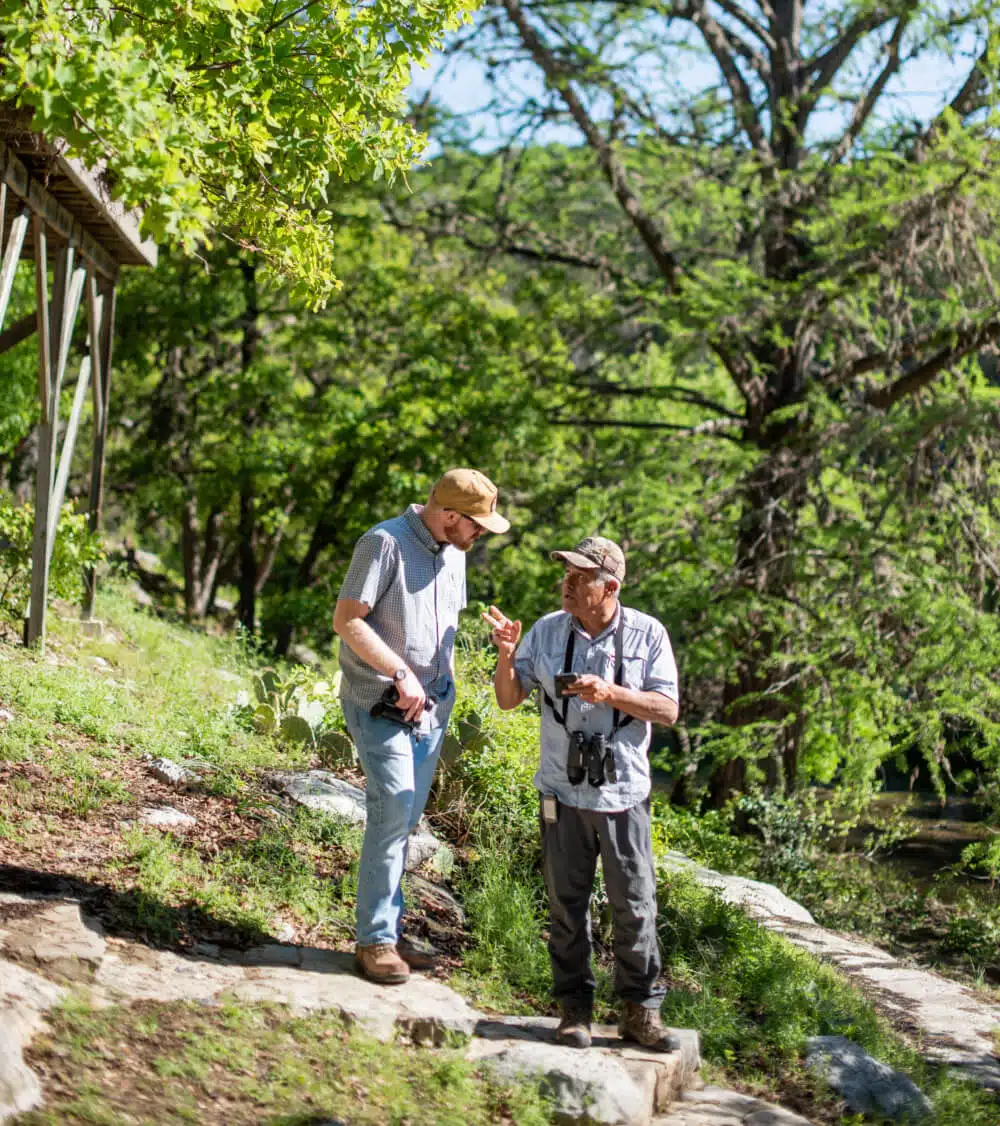
Each year, Sorola surveys the Foundation’s property to monitor the golden-cheeked warbler population. He moves between a handful of known habitats on the property listening for the bird’s song, which to some sounds like the Mexican folk tune “La Cucaracha.”
Preservation of endangered species is a noble goal in its own right, but the golden-cheeked warbler and 120 other bird species living on the property serve an additional purpose at the Foundation.
“They are the canaries in the coal mine, if you will,” said Sorola, chuckling at the apropos metaphor.
When Texas Parks and Wildlife honored the Foundation with the Lone Star Land Steward Award—a prestigious designation given to a handful of private landowners every year—the department praised the Foundation’s fourfold commitment to the health of the land.
“We’re defining health as robust, native, diverse, and balanced,” Kevin Wessels said. Birds tell the land management team a lot about each of those criteria.
Robust
A robust landscape is one that can maintain its health in the face of disturbance. Ideally, a robust landscape reduces the amount of human intervention needed to maintain it. Plants and animals get what they need from the environment.
“However,” Kevin said, “it’s unlikely that the Foundation will ever be able to take a totally hands-off approach.“ Larger forces outside the Foundation’s control continue to affect the property. “The birds tell that story,” Sorola said.
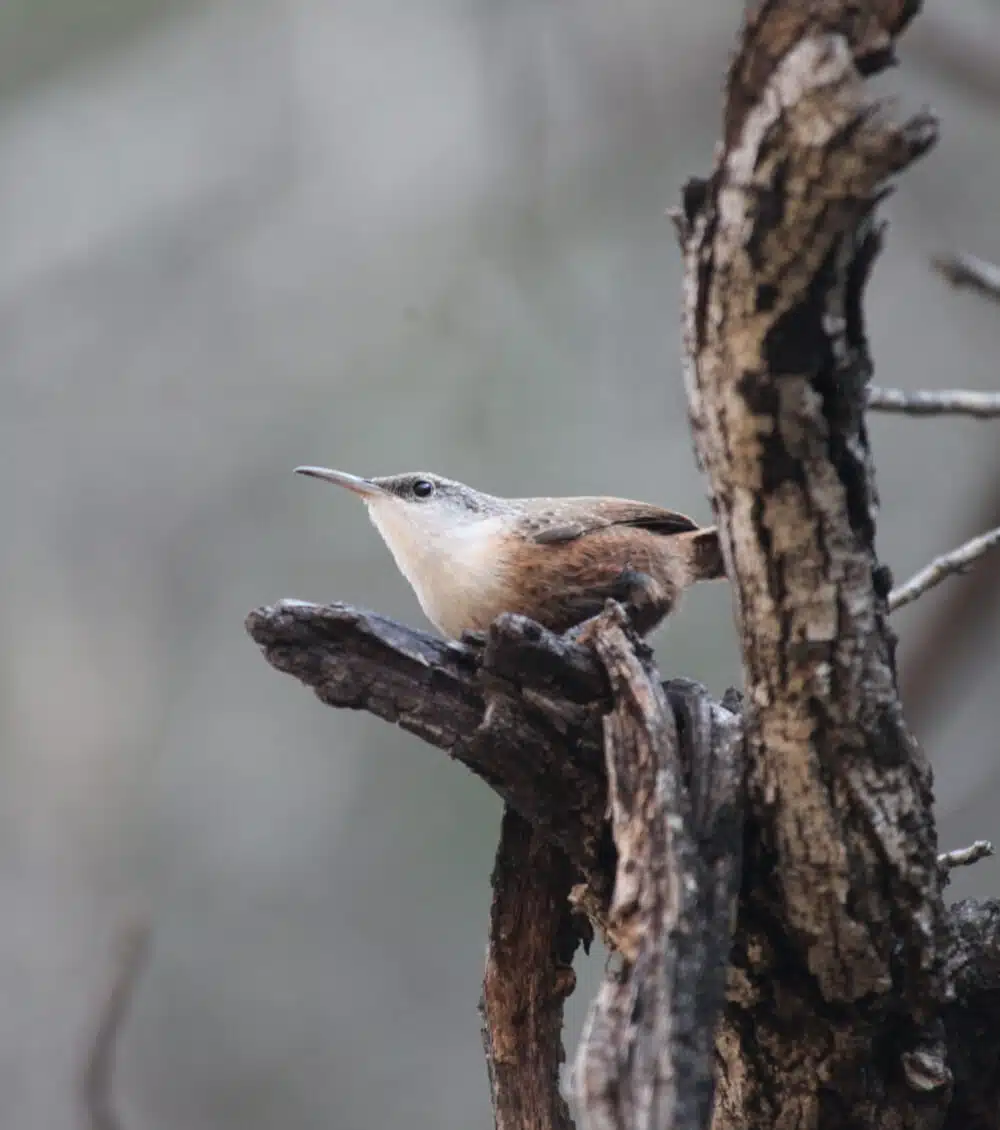
Over the years, Sorola has seen a change in where certain birds can be found. As the planet warms, species that were once primarily found in Central Mexico, like the white wing dove, are common in the Rio Grande Valley and even the Texas Hill Country.
The presence in the Canyon of species like the Audubon’s Oriole, once only found in the Rio Grande Valley and Mexico, makes him wonder, “We should be concerned about our environment and what we’re doing to it.”
Native
Native landscapes develop in harmony with their conditions—like Goldilocks and the three bears, they depend on not too much or too little of any one thing. The food chain, soil nutrients, and climate need to be just right.
“Just right” in the Texas Hill Country means something different than “just right” in the tropics, the Rocky Mountains, or the Serengeti. Non-native plants and animal species can be introduced to the landscape in myriad ways—from agriculture to tourism to private landscaping and recreational hunting. Once a species enters a new ecosystem without natural predators or food scarcity, it can take over.
If native plants and animals are driven out, birds go with them. Some birds, like the golden-cheeked warbler, require very specific habitat—a mix of old-growth cedar and hardwood trees native to the Hill Country. Other birds are picky eaters, dependent on particular plants or insects for food. If Sorola picks up native birds in his surveys, it’s a good sign that native plants and insects are flourishing as well.
DIVERSE
Native Hill Country landscapes were once incredibly diverse, with many species of plants flourishing at the floor, understory, and canopy of the forests, with grasslands and meadows throughout. Diverse plant life supports a food chain with a mix of predators, prey, scavengers, and detritavores (like worms).
Human intervention in the landscape has eliminated some necessary diversity, and Kevin’s team must augment the natural processes that will restore it. They have to regularly initiate controlled fires to burn away aggressive young plants that choke out more delicate grasses. The fires change the nutrients in the soil, nourishing a different variety of plants. In the areas where the Foundation has conducted controlled burns, plant species that had been choked out by cedar and invasive species are actually coming back. “You won’t see that in other ranches in the area,” Sorola said.
Ninety percent of land in Texas belongs to private owners. Most private ranches, Sorola explained, do not manage the land with species diversity in mind. But being the most diverse menu in the neighborhood creates more work for the land management team. Animals will migrate in from far and wide to find the delicious plants they can no longer get elsewhere.
White-tail deer are “preferential grazers,” Kevin explained. They eat in order of their preference, eliminating one species before moving onto the next. Hunts and high-fencing are necessary to keep the discerning eaters from raiding the Foundation’s buffet of grasses, saplings, and shrubs.
BALANCED
When diverse native plants flourish, the ecosystem will exhibit balance, Kevin explained, with the various elements keeping one another in check.
“The balance that they have found here is amazing to me,” said Joyce Moore, a wildlife biologist with Texas Parks and Wildlife.
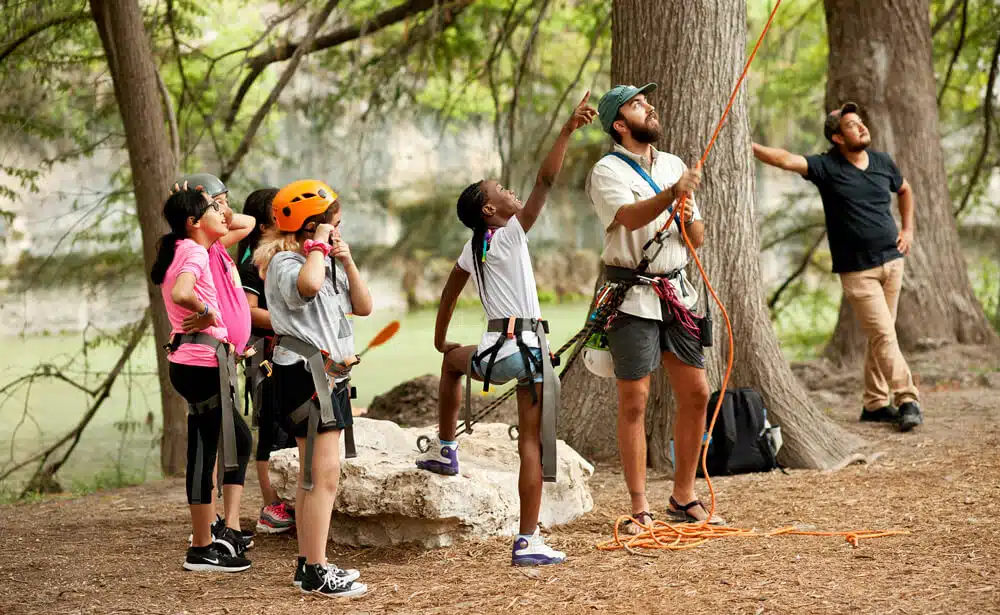
For the long-term preservation of this precious landscape, the Foundation has committed to yet another balance. Hosting thousands of people per year makes the job of stewardship more difficult, but ultimately more sustainable—because guests can walk away with a renewed commitment to land preservation.
The guests of Laity Lodge and H. E. Butt Foundation Camp walk away with a connection to nature, Sorola said. He was particularly encouraged to see students of color from dense urban areas enjoying the property. As the first person of color to become a wildlife biologist with Texas Parks and Wildlife, Sorola has seen firsthand how private ownership of the land has created a gap in appreciation and interaction with the landscape. “That’s what [H. E. Butt] Foundation Camp does. It gives them that experience,” he said.
On the one hand, Kevin quotes naturalist Aldo Leopold in saying, of nature, “Man always kills the thing he loves.” Our desire to be in nature takes a toll on the landscape. However, the words of Baba Dioum, another naturalist, are also true: “In the end we will conserve only what we love; we will love only what we understand; and we will understand only what we are taught.”


More from this issue
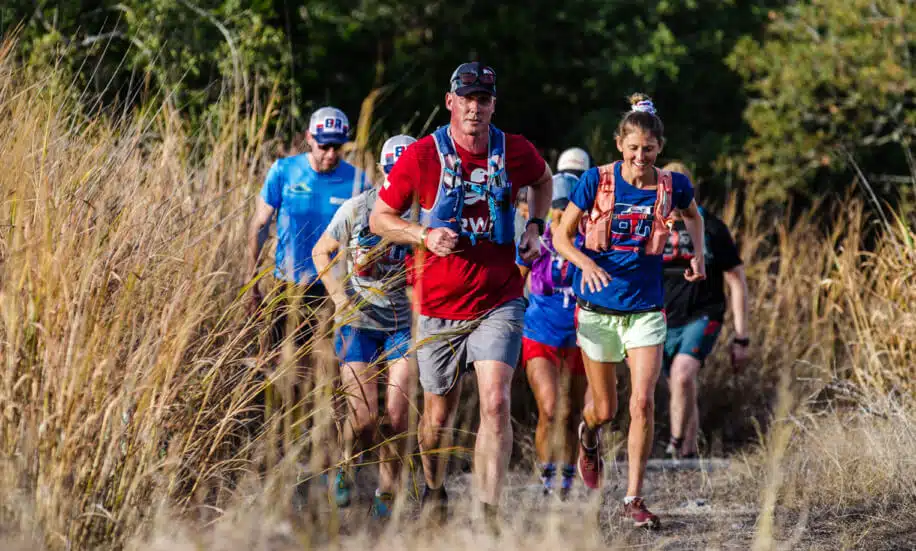
A Band of Runners treks across the Canyon during their Foundation Camp retreat in November.

The Spaniel family in Leakey has adopted five children and fostered seven more.

A Q&A with Senior Director of Laity Lodge Youth Camp—Chandler Pruitt.