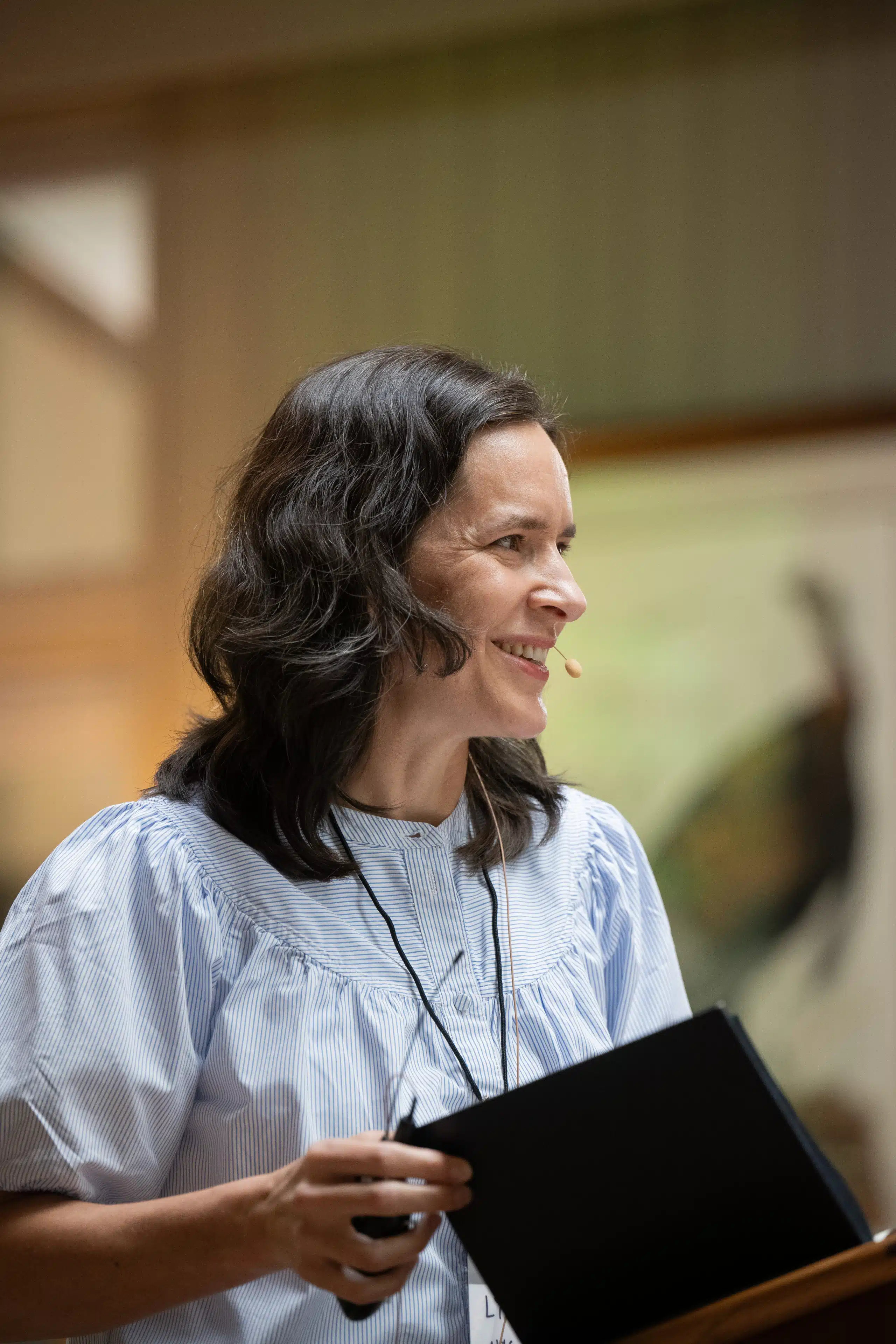


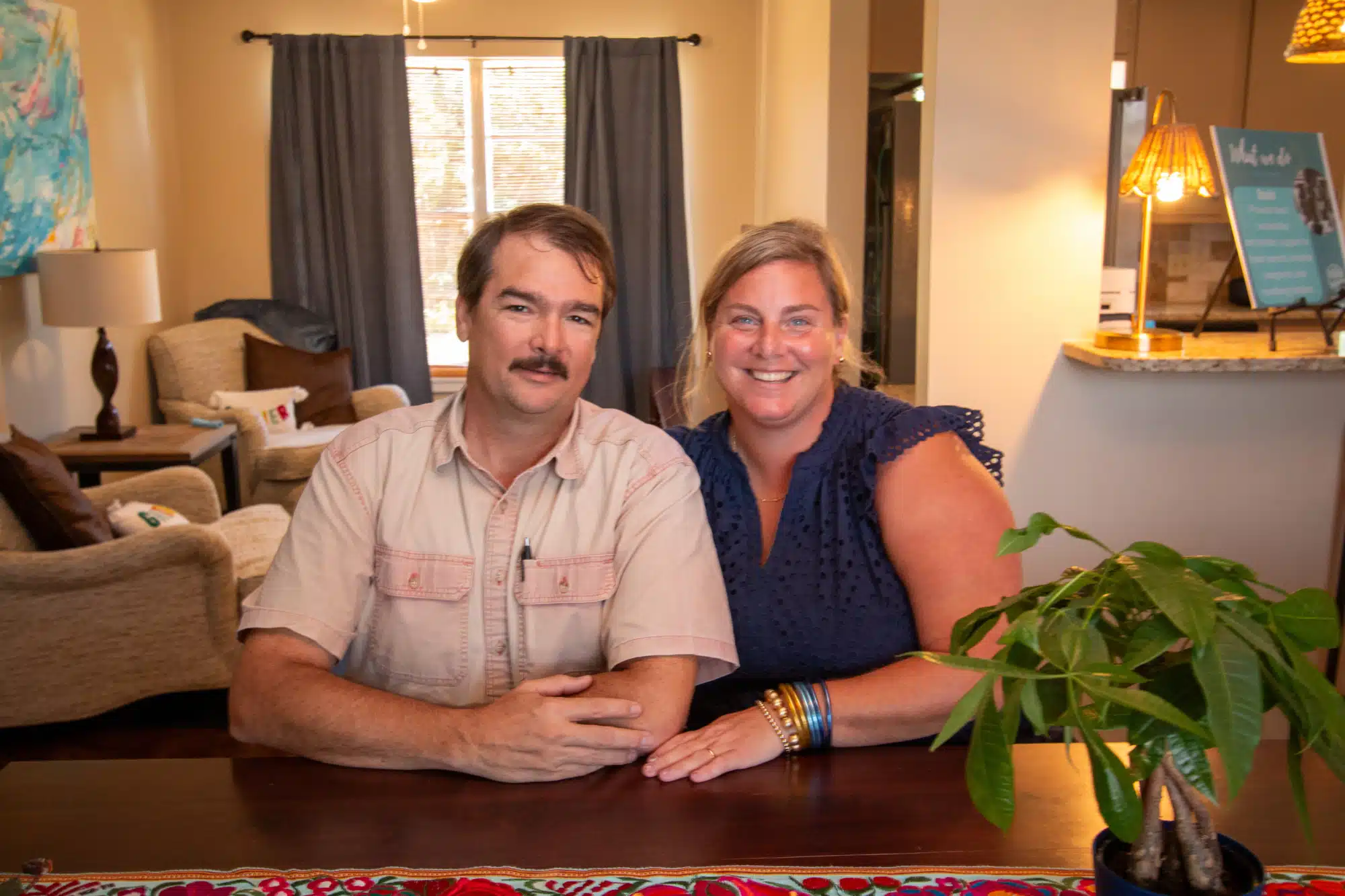
Family Camp helped Rebecca Welch find the confidence to foster and encourage other foster families.
For Rebecca Welch, Laity Lodge Family Camp was part of the package that came with marrying her husband, Jamin. Jamin’s parents, Melissa and Ray Welch, started attending Laity Lodge retreats as newlyweds, in 1972. Melissa’s parents were at the first Laity Lodge retreat ever in 1961. When Rebecca and Jamin married, she knew they’d be spending many of their August anniversaries in the Canyon, carrying on the family tradition.
Foster care, or adoption, was a bit trickier. Having been adopted as an infant, Rebecca wanted to “pay it forward” in some way, but when their oldest biological child, Caroline, began to show signs of autism, the call to foster or adopt seemed to grow more faint. With a child who needed so much from them, she wondered, would it be wise to extend themselves any further?
The question was tugging at her during Family Camp in August 2015 as she ushered Caroline into the pavilion for Roundup one evening, running late and trying to be as unobtrusive as possible, the speaker for the week was posing a question: “What aren’t you doing because you’re comfortable?”
What aren’t you doing because you’re comfortable?
As Rebecca remembers it, one of the stage lights came loose at that moment and pivoted toward the crowd, hitting her like a spotlight. The moment was so powerful, she said, it stopped her in her tracks.
Throughout that session she had watched Terri Spaniel, another mom at camp, interact with Caroline. The Spaniels had raised a child with special needs, and Terri knew how to talk to Caroline and put her at ease. The Spaniels had also fostered eight children beginning in 1989 and adopted five of them. Three of those children had special needs, including one who had Down syndrome and one with a traumatic brain injury. At the end of the week, their car jostled and bumped along the River Road as they headed home. Rebecca was lost in thought, watching the canyon walls go by, contemplating something big, life changing even. Jamin looked at his wife, knowing what she was thinking: she wanted to start fostering.
He told her he was going to say yes, but they had to go slow.
“’Go slow’ meant, to me, like we would be licensed in six months,” Rebecca told us recently. Jamin suppressed a laugh.

More Than Just one Kid
Back home in Dripping Springs, the Welches connected with Foster Village, a nonprofit that helps families navigate Texas’s child welfare system. The number of children in foster care in Texas is hard to pin down, but many reports show that around 30,000 children are in the state’s foster care system. Either way, it’s a lot. The system is underfunded and strained, and lawmakers have tried to reduce reliance on it.
The Welches got their first placement, an infant named Gray, in 2018. Later, when they adopted Gray, they chose open adoption, meaning Gray’s biological mother—whom they met many times during the foster phase—could stay in his life. That became central to their approach. Sitting across from Gray’s mom and the mothers of later foster kids, Rebecca saw herself. “I thought, oh my gosh, they’re just like me. I just got dealt a different deck of cards,” she said.
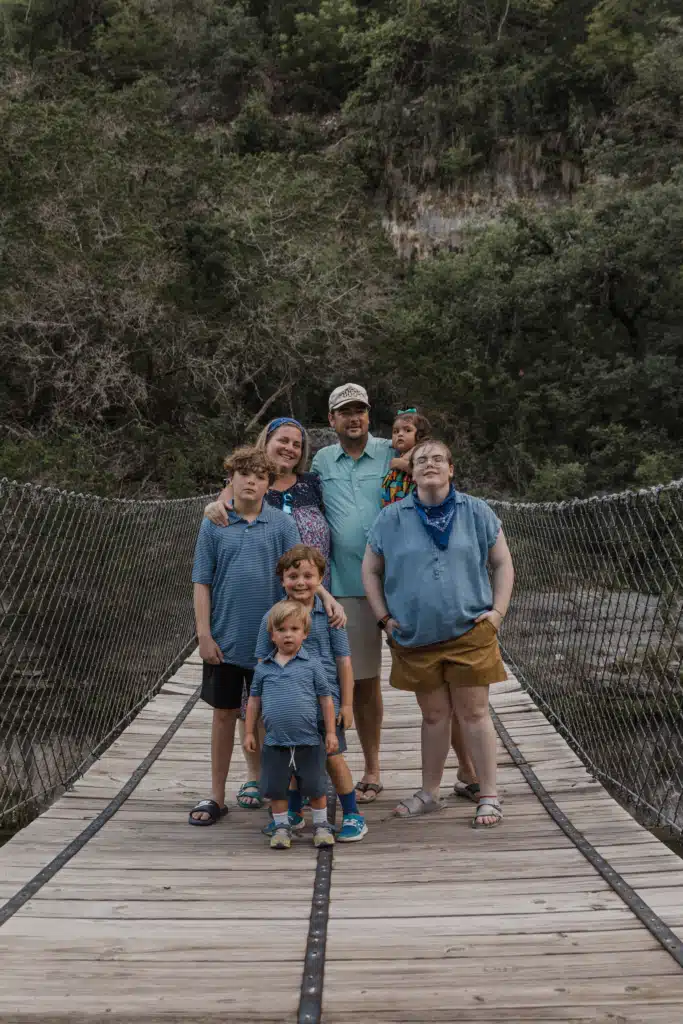
After Gray’s adoption, friends assumed their family was complete—the Welches were a charming family of five. But they didn’t stop fostering—not at one, two, or three. Of their 16 foster placements, they’ve adopted two, including Gray.
Not Just a Village — A Family

In 2022, Jamin and Rebecca moved back to Corpus Christi to be near aging parents. Seeking foster support there, they found nothing like they’d had in Dripping Springs, a small, well-resourced region of the state system. Corpus Christi sits in a vast region stretching from south of San Antonio to Laredo, sparse and short on support.
“We just saw all these gaps that this organization in Austin, Foster Village, had filled,” Rebecca said.
Foster Village provides clothes, baby supplies, toys, and connections to other services. It’s also a place where foster parents talk through fears with a nonjudgmental ear. This is vital, said Sarah Crockett, director of public policy for Texas Court Appointed Special Advocates. “You can only prepare so much,” she said, “We need a community where people can say, ‘this was a hard week.’”
Rebecca wanted more people to have that same support. The Welches fostered one more child in Corpus Christi, but Rebecca went further. In 2024, she opened a Foster Village branch there—the thirteenth in the U.S.
When she welcomed us on a sweltering August day, she was holding a tiny puppy—a gift from one of her adopted sons’ biological mom, the second pet she’d given them. While the kids were at school, the not-yet-housebroken puppy trailed Rebecca, a chaotic picture of what “making your family bigger” means to her.
Whether it’s just for one summer or a lifelong tradition, they are part of the family.
She grafts her sons’ birth moms into her family tree. Same for the kids’ babysitter, who adopted the Welches’ most recent foster placement, toddler Ella. “We’re like grandparents,” Rebecca laughed.
Their extended family has also joined the mission. Both sets of grandparents fold clothes and wash toys at the Foster Village house—a gift from Rebecca’s parents. The house, with its cozy living room, hosts biological parent visits in a natural, supervised setting. Family and friends decorate, organize, and pitch in. “Rebecca plugs us in seamlessly,” said her friend Sam Gates.
Corpus Christi businesses have stepped up, too. This year, a local shoe store donated sneakers for teens. Instead of unloading overstock, they let teens get fitted and choose styles. Some kids were hesitant. “They’re so programmed to think, ‘you just get what you get,’” Rebecca said. One teen girl quietly admitted she loved purple. Staff ran to the back and returned with purple running shoes. The joy on her face convinced Rebecca: this event needed to be annual.
Four years ago, Jamin’s brother Charley in Salado began fostering. One foster child moved to California with his grandmother but came back to Texas to be near “Daddy Charley.” Now the boy, his brother, grandmother, and uncle are part of the family, celebrating holidays together. “Charley and Rachel inherited a whole family unit!” Jamin said.
Family, No Matter What
Keeping connections with biological families, when safe, is central to the Welches and Foster Village. They reject the adversarial framing of “winning” custody of a child. Saying goodbye is heartbreaking, but they refuse to see biological families as their opponents. “If you don’t keep the biological family in the picture, you’re setting yourself up for a divide,” Jamin said, tearing up.
Because of this commitment, Foster Village also supports kinship placements—grandparents, aunts, and other family members who take in children. Such placements often receive little or no state funding. “I love helping them,” Rebecca said, “because they’re trying to keep families together.”
Rebecca celebrates when biological moms achieve stability to have their kids back. Foster Village supports them with bus passes, groceries, and gift cards. Anyone attached to a child is part of the village. The organization also fills gaps for those who don’t qualify for services. And when no program can help, Rebecca sits in the Foster Village living room and works out solutions as if each person were family—because to her, they are.
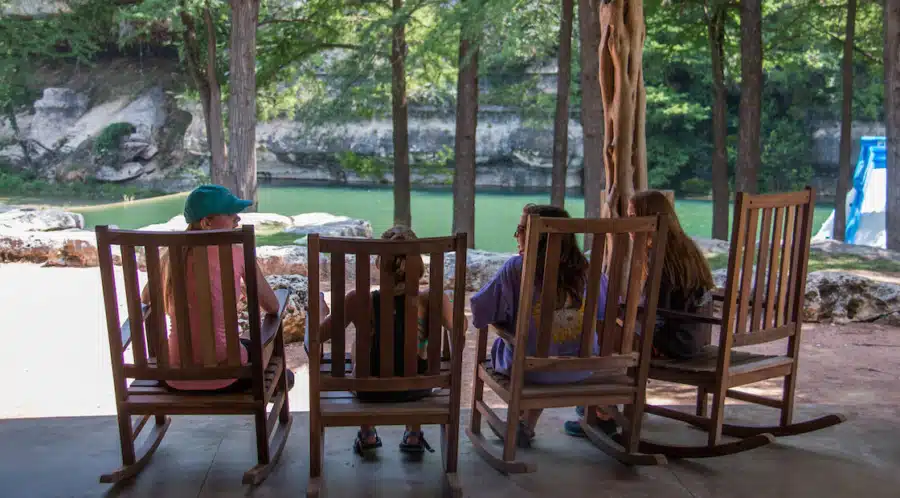
And as a family, the Welches return to the Canyon, almost every summer, for Laity Lodge Family Camp. As best she can remember, Rebecca said, they’ve brought all of their foster kids with them, giving the kids what will be, for some, a once in a lifetime experience. But whether it’s just for one summer or whether they join the Welch’s tradition that spans decades and generations, they are part of the family.